Quick answer
Adjust metal handcuffs so the cuff sits just above the wrist bone and you can slide one finger under the closed ring. Test the quick release and keep the key within reach before you secure both wrists. A snug fit that still allows a finger is safer than a loose cuff that can slide and pinch.
Understand how metal cuffs actually adjust
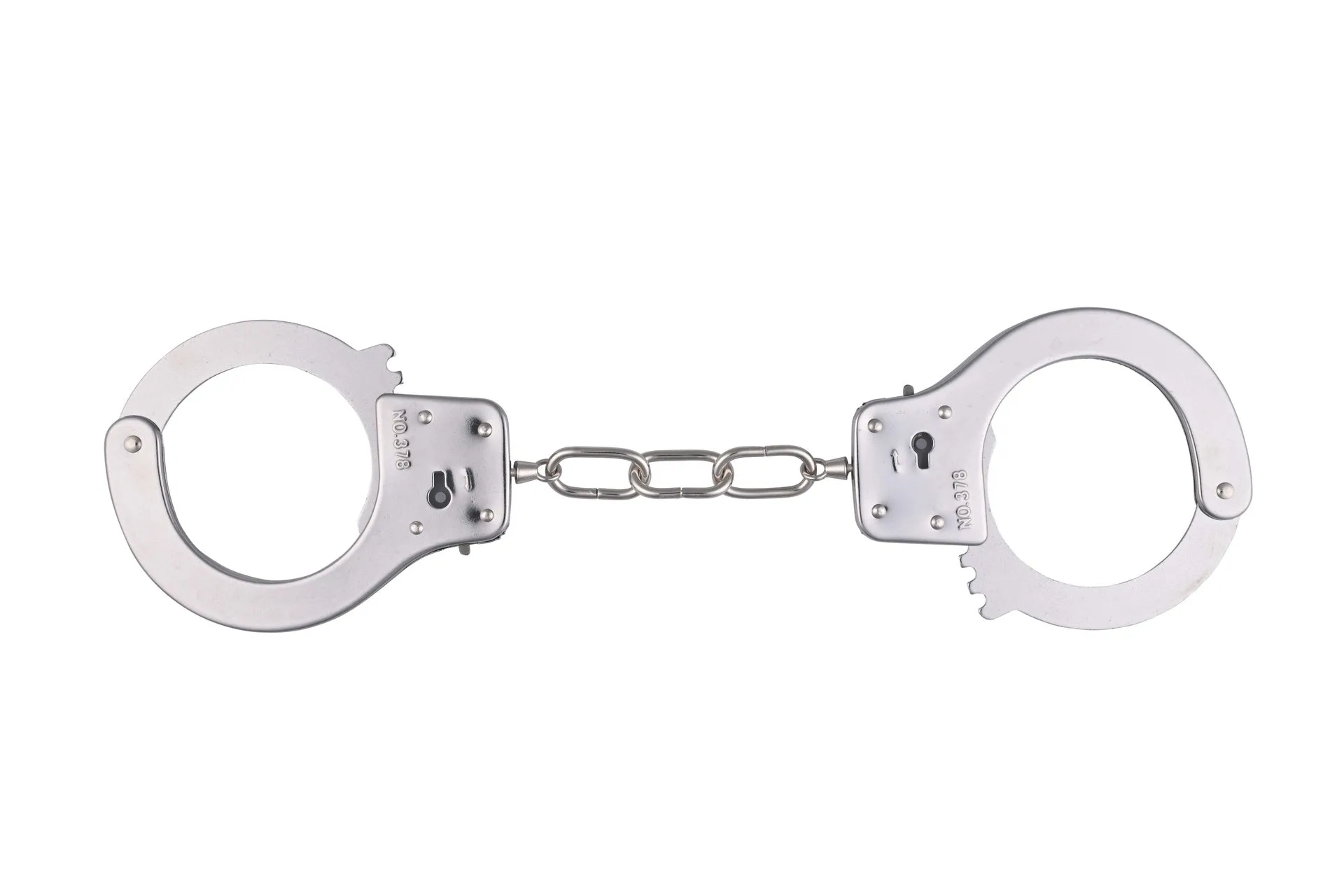
Most metal handcuffs use a ratchet-and-pawl mechanism: the swinging arm clicks through the lock body and tightens in one direction, while a key or a small lever releases it. That means you cannot simply pull a cuff looser once it is closed. You either release it and re-close it at the right notch, or use the double-lock feature if your model has one. Check your specific pair before play so you know which motion tightens and which releases.
Find the right wrist position before you close the cuff
Place the open cuff so the curved body rests against the back of the wrist and the hinged arm crosses over the soft inner side. Sit it just above the wrist bone rather than directly on it, because the bone and the tendons nearby are the spots most likely to ache under pressure. If you are cuffing someone else, ask them to relax the hand and keep the wrist straight; a clenched fist changes the wrist diameter and leads to a fit that feels fine for a minute and painful after ten.
Close to a one-finger fit, then check circulation
Click the arm closed until you can still slip one finger between the metal and the skin. That gap is your working checkpoint, not a suggestion. Then press lightly on the fingertips and watch how quickly the color returns, and ask your partner to wiggle their fingers and report any tingling or numbness immediately. Numbness is a stop signal, not a discomfort to push through, so release and re-close one notch looser.
Use the double lock and keep the key in hand
If your cuffs have a double-lock pin, engage it after you have the fit right. Double-locking stops the ratchet from tightening further if the wearer pulls or rolls over, which is the most common way a comfortable cuff becomes too tight. Keep the key where you can reach it without fumbling, and if you are the one wearing the cuffs, agree on a verbal or physical safety signal before you start. Products like Sportsheets Metal Handcuffs include metal keys, so test that the key turns smoothly in both the lock and the double-lock before any restraint play.
Match the cuff style to the session
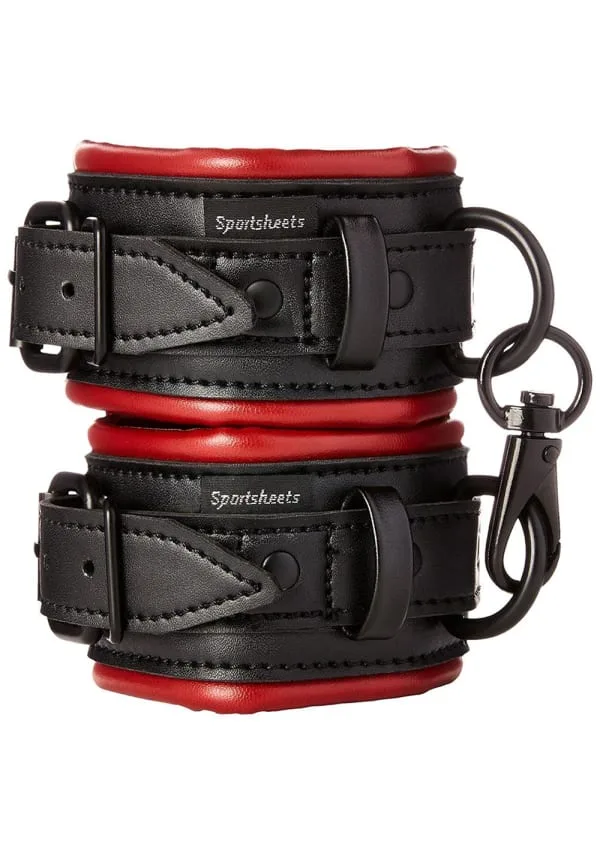
Not every metal cuff is built for the same kind of play. Classic rigid cuffs are best for short, stationary scenes where wrists stay in front or attach to a fixed point. Padded or leather-lined restraints such as Sportsheets Saffron Handcuffs are a better choice for longer wear or for anyone with sensitive skin, because the soft inner lining spreads pressure. The Saffron cuffs also separate, so you can link them as a standard pair or attach each side to a spreader bar, chain, or other accessory. If your priority is a decorative look rather than heavy restraint, accessories like Chain Lace Garters are styling pieces, not load-bearing restraints, so do not use them to anchor a partner.
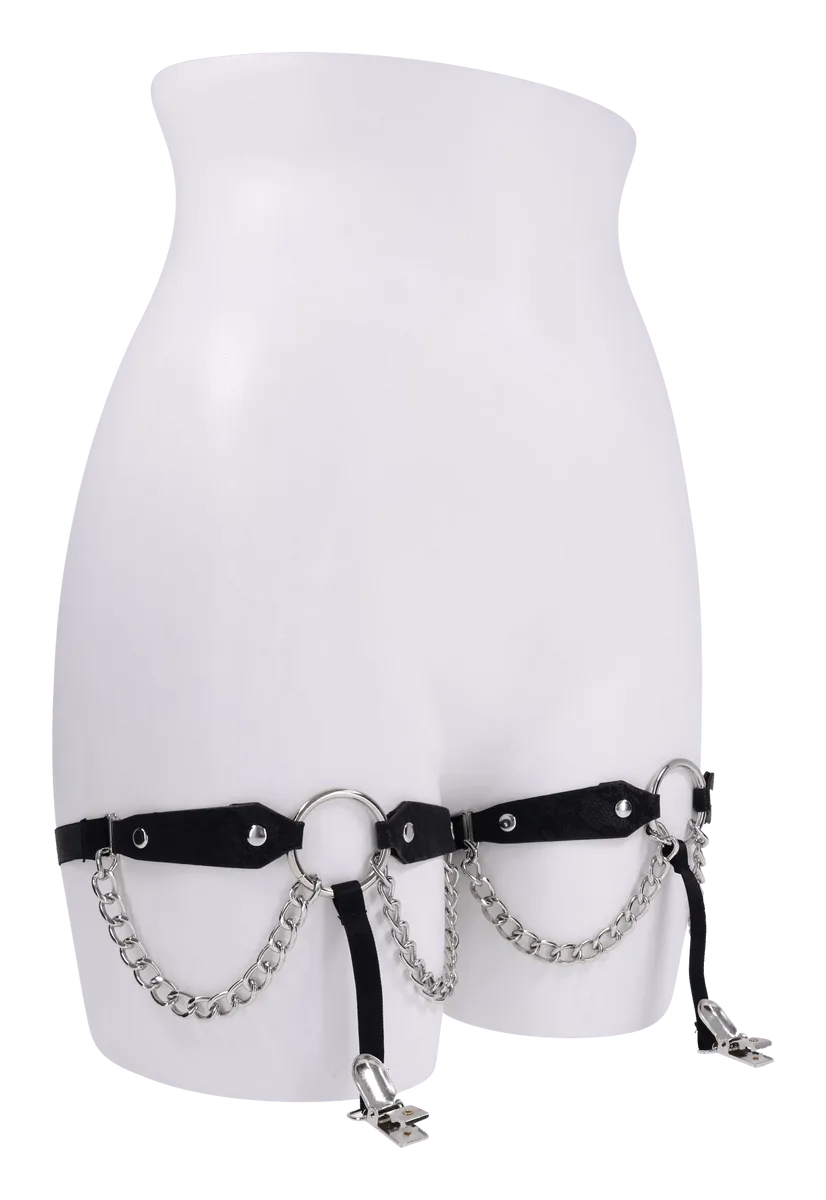
Chain Lace Garters
Check the fit again during and after wear
Fit changes as the body shifts. Recheck the one-finger gap every fifteen to twenty minutes, especially if the wearer has been pulling against the cuffs or lying on their wrists. After you remove the cuffs, look for red marks that fade within a few minutes, which is normal, versus deep grooves, bruising, or lingering numbness, which mean the fit was too tight. Clean and dry the cuffs before storing them so the ratchet and lock keep moving freely.
Step-by-step cuff adjustment routine
- Inspect and unlock before you start: Open both cuffs fully, confirm the key turns the lock and any double-lock pin, and check that the ratchet arm moves freely. Mistake to avoid: assuming a new pair is already unlocked or that the key fits smoothly. Checkpoint: both cuffs open, key tested in both directions.
- Position the cuff above the wrist bone: Rest the curved body on the back of the wrist with the hinged arm crossing the inner side, just above the wrist bone. Mistake to avoid: centering the cuff directly on the bone, which concentrates pressure. Checkpoint: the cuff sits above the bone, not on it.
- Close to a one-finger gap: Click the arm closed until one finger still slides under the metal, then stop. Mistake to avoid: tightening until the cuff feels snug with no gap, which is too tight for extended wear. Checkpoint: one finger fits under the closed cuff.
- Test circulation and sensation: Press a fingertip and watch the color return, then ask the wearer to wiggle their fingers and report tingling or numbness. Mistake to avoid: ignoring numbness because the cuff looks fine from the outside. Checkpoint: normal color return, no tingling, full finger movement.
- Engage the double lock if available: Once the fit is right, set the double-lock pin so the ratchet cannot tighten further during movement. Mistake to avoid: skipping the double lock, which lets a pulling motion tighten the cuff by a notch. Checkpoint: the ratchet no longer clicks tighter when pulled.
- Keep the key reachable and agree on a signal: Place the key where the wearer or the person restraining can grab it instantly, and agree on a clear stop signal before play. Mistake to avoid: leaving the key across the room or assuming a safeword alone is enough when speech is restricted. Checkpoint: key within arm's reach and a signal both partners can give and recognize.
- Recheck the gap every fifteen to twenty minutes: Re-test the one-finger gap during wear, particularly after pulling, rolling, or changing position. Mistake to avoid: treating the initial fit as permanent for the whole session. Checkpoint: gap still present, skin color normal, no new numbness.
Products that fit this routine
- Metal Handcuffs: Classic metal handcuffs supplied with metal keys, sized for light bondage play and attachable to a bedpost, table leg, ceiling chain, or similar anchor. A rigid, keyed cuff is the style this adjustment routine is written for, and the included keys let you practice the release before a scene.
- Saffron Handcuffs: Heavy-duty wrist restraints with soft inner lining, linkable as a standard pair or separable for use with a spreader bar or chains. The padded inner surface and separable design make these a better pick for longer wear or for anyone who finds bare metal uncomfortable.