Quick answer
For most backyard wooden playsets, ground stakes are the simplest way to secure a swing set and are the right first choice when you want stability without pouring concrete. Choose concrete footings only when you need maximum holding power in loose or wet soil and you accept a permanent installation. Whichever method you pick, anchoring matters most on the swing beam and slide end, where movement and leverage are greatest.
Anchoring is the difference between a playset that feels solid under a running kid and one that rocks, walks, or tips. The good news is that you do not need to overbuild it. You need to match the anchoring method to your soil, your climate, and whether you ever plan to move the set.
This comparison looks at the three methods most homeowners actually choose: ground stakes, concrete footings, and surface or deck mounts. It covers how each one behaves, what it costs you in effort and reversibility, and how to decide. Along the way, we will use real Gorilla Playsets products to show how anchoring interacts with the set you buy.
Why anchoring matters more than most buyers expect
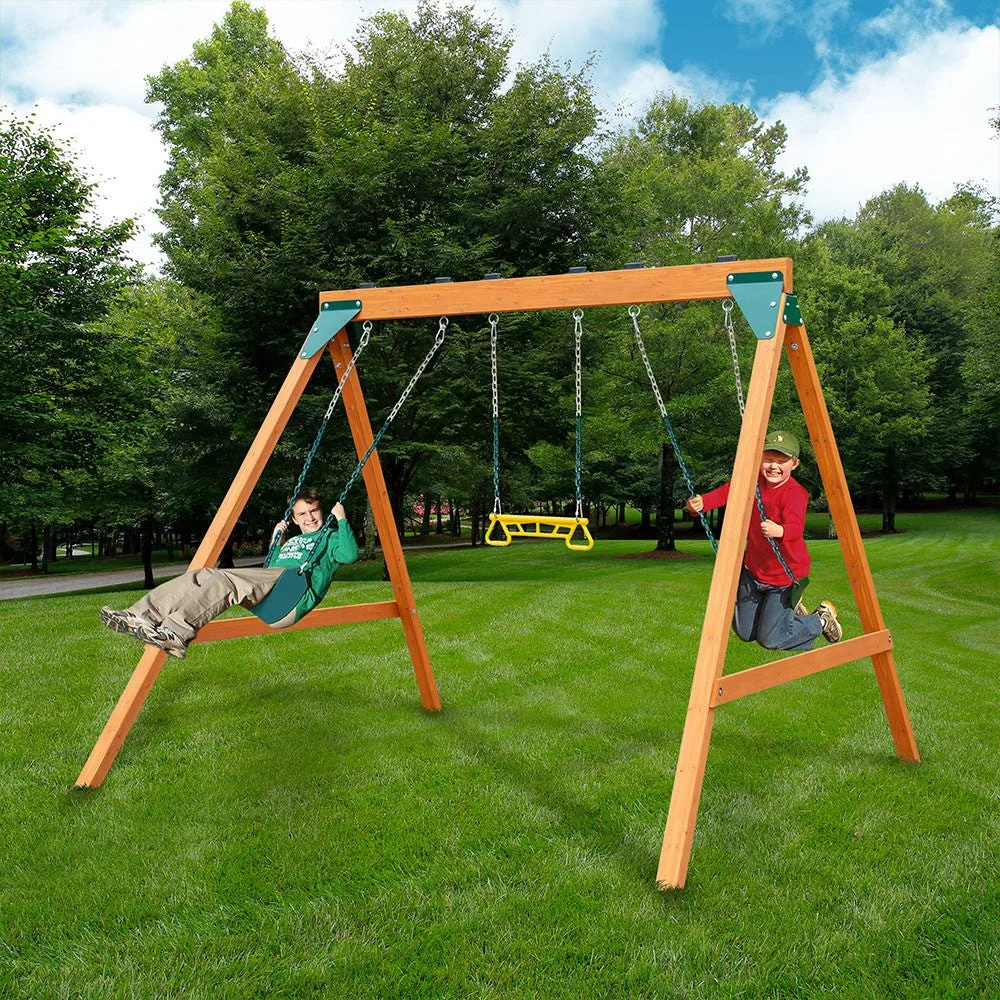
A swing set carries dynamic loads, not static ones. When a child swings, the force pushes and pulls on the frame in a rhythm, and that repeated motion is what loosens legs, walks a set across the lawn, or tips it if the legs lift. Anchoring resists that motion by tying the legs to something that will not move: the ground itself.
The two highest-stress points are the swing beam and the slide end. The swing beam takes the pendulum force of every swing, and the slide end takes the weight and speed of a child arriving at the bottom. If you anchor only the front legs, the back of the set can still lift. A good anchoring plan addresses all four corners, or at minimum the two ends of the main structure.
- Check the set's manual for the manufacturer's recommended anchoring points before you buy hardware.
- Recheck anchors after the first heavy rain and again at the start of each season.
Ground stakes: the practical default for wooden playsets
Ground stakes are metal or heavy-duty plastic anchors driven through the playset's leg brackets and into the soil. They work by friction and by the undisturbed soil around them. On a typical wooden set, stakes are quick to install, require no mixing or curing, and can be removed if you move the set or rearrange the yard.
The trade-off is holding power. Stakes perform well in firm, well-drained soil and poorly in loose sand, saturated clay, or fill dirt. If your soil is soft, a stake can pull free under repeated swinging. That does not make stakes a bad choice; it makes them a choice that depends on your ground conditions. If you are unsure, dig a small test hole and see how the soil holds a stake before committing.
- Drive stakes at the leg brackets, not beside the legs, so the hardware, not the wood, takes the load.
- In soft soil, use longer stakes or add a second set at the opposite corners.
Concrete footings: maximum hold, maximum commitment
Concrete footings set the legs or anchor posts into poured concrete below the frost line. This is the strongest common method and the one least likely to move in wet or loose soil. It is also permanent: once the concrete cures, the set is not moving without demolition, and the concrete collar can trap moisture against wood if it is not detailed correctly.
Concrete is worth the effort when you have unstable soil, a large set, or a location where the set must not shift. It is overkill for a compact set on firm ground, and it is a poor fit for renters or anyone who may relocate the playset. If you go this route, keep the concrete below grade and slope the surrounding soil away from the legs so water drains rather than pools.
- Never encase the wood leg itself in concrete; use a metal anchor embedded in the concrete and bolt the leg to it.
- Let concrete cure fully before the set is used.
Surface and deck mounts: for patios, decks, and hard ground
Surface mounts bolt the playset to an existing hard surface such as a concrete patio or a wooden deck. They are the right answer when you cannot dig, whether because of buried utilities, rocky ground, or a rental agreement. They also keep the set at a fixed height, which can simplify installation on uneven yards.
The trade-off is that the mount is only as strong as the surface it is attached to. A deck must be structurally sound and the fasteners must reach real framing, not just decking boards. A concrete patio must be thick enough to hold anchors without cracking. Surface mounts also concentrate force at the bolt points, so inspect them for loosening more often than you would with stakes.
- Confirm what is under the surface before drilling; utilities and irrigation lines are common surprises.
- Use washers and lock nuts, and re-torque after the first week of use.
How to choose between the three methods
Start with your soil and your permanence. Firm soil and a set you might move: ground stakes. Loose or wet soil and a set that stays put: concrete. No digging possible: surface mounts. Then check the set itself. Larger, taller playsets with multiple slides and swing beams generate more leverage and benefit from stronger anchoring than a compact starter set.
Whichever method you choose, install it before the kids use the set, not after. A set that has already walked or tipped may have loosened joints that need retightening, and anchoring a damaged frame does not fix the underlying problem.
- Match the anchor to the soil first, then to the set size.
- When in doubt, over-anchor the swing beam end.
Trade-offs at a glance
- Ground stakes: Fast, removable, and inexpensive, but holding power drops sharply in loose, sandy, or saturated soil. Best first choice on firm, well-drained ground and for sets you may relocate.
- Concrete footings: Strongest hold in poor soil, but permanent, slower to install, and requires correct detailing so water does not sit against the wood. Choose when the set stays put and the soil is unreliable.
- Surface mounts: No digging required, but the mount is only as strong as the deck or slab it bolts to, and fasteners can loosen with use. Choose for patios, decks, and hard ground where digging is not an option.
- Set size and layout: More slides, more swing beams, and taller decks increase leverage and the load the anchors must resist. Anchor the swing beam and slide ends first, then the remaining corners.
How real Gorilla Playsets sets change the anchoring decision
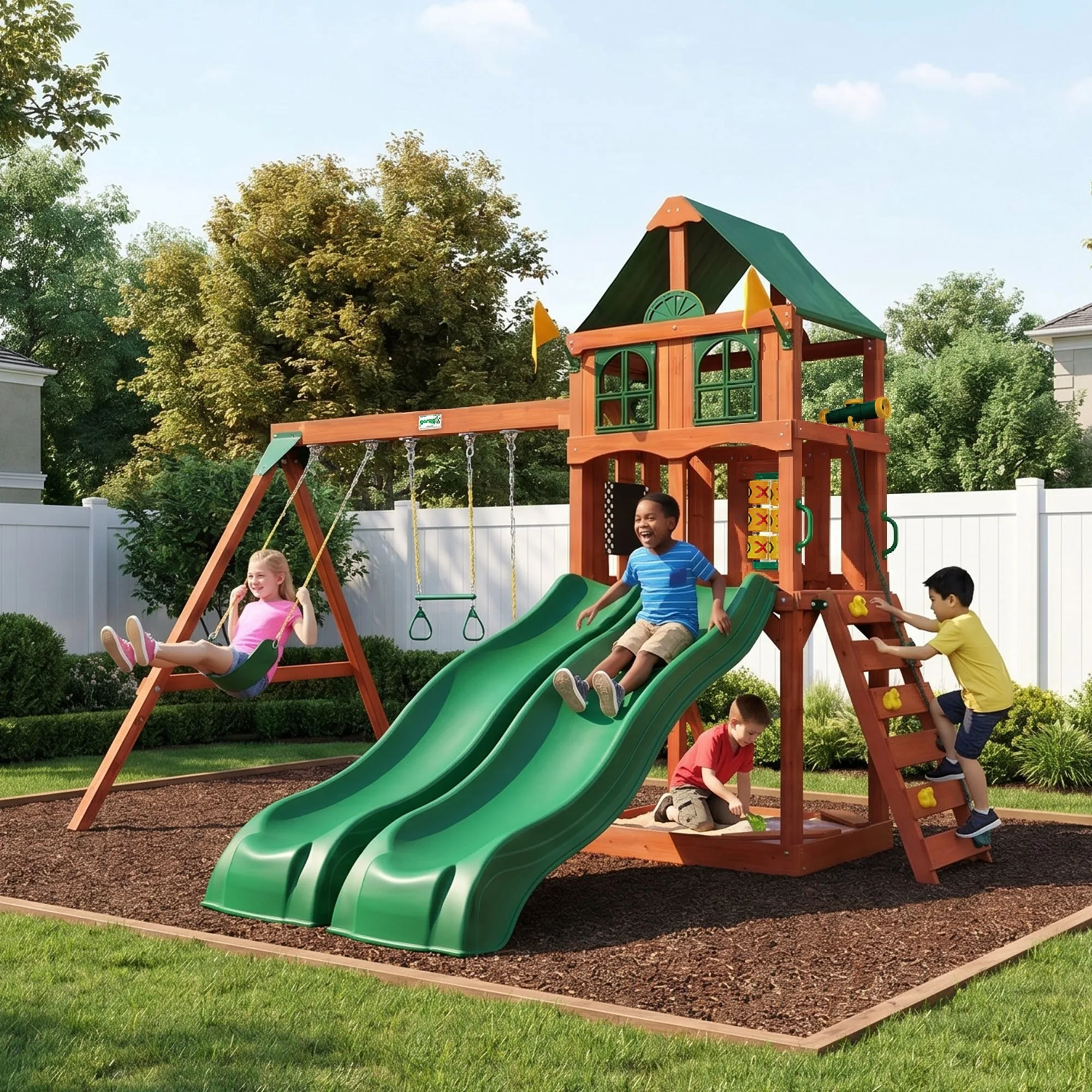
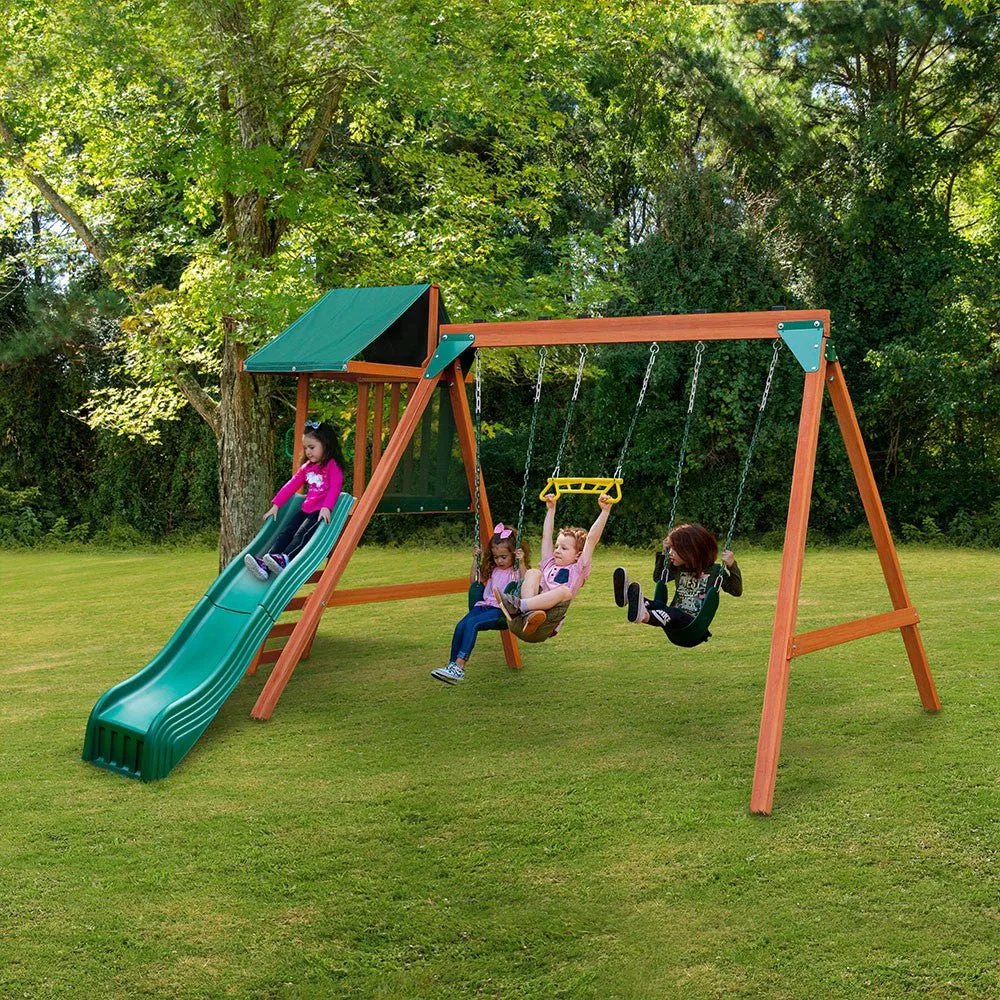
- https://gorillaplaysetsenm.com/products/basic-swing-set-with-slide-d5b4a4289a2104bc7914c4a4-1596662Basic Swing Set with Slide: Compact wooden playset with swings, a climbing wall, a wave slide, and an elevated play deck with a canopy roof, crafted from premium pre-cut cedar. A smaller footprint and lighter frame are a good match for ground stakes on firm soil, and the pre-cut cedar design keeps assembly straightforward if you are anchoring as you build.
- Adventure Wave Swing Set: Two slides, two swing beams, and 12 action-packed play activities, with a premium wood roof over the play deck and durable cedar construction. Two swing beams and two slides create more dynamic load and more leverage, so this is a set where anchoring all four corners, and especially the beam ends, matters more.
- PlayMaker Deluxe Swing Set: Two Alpine Wave Slides, a rock wall, a two-story clubhouse, and a built-in sandbox below, crafted from premium cedar. A two-story structure with a sandbox below means more weight up high and more traffic through the lower level, so a secure, well-planned anchor layout is worth the extra effort.
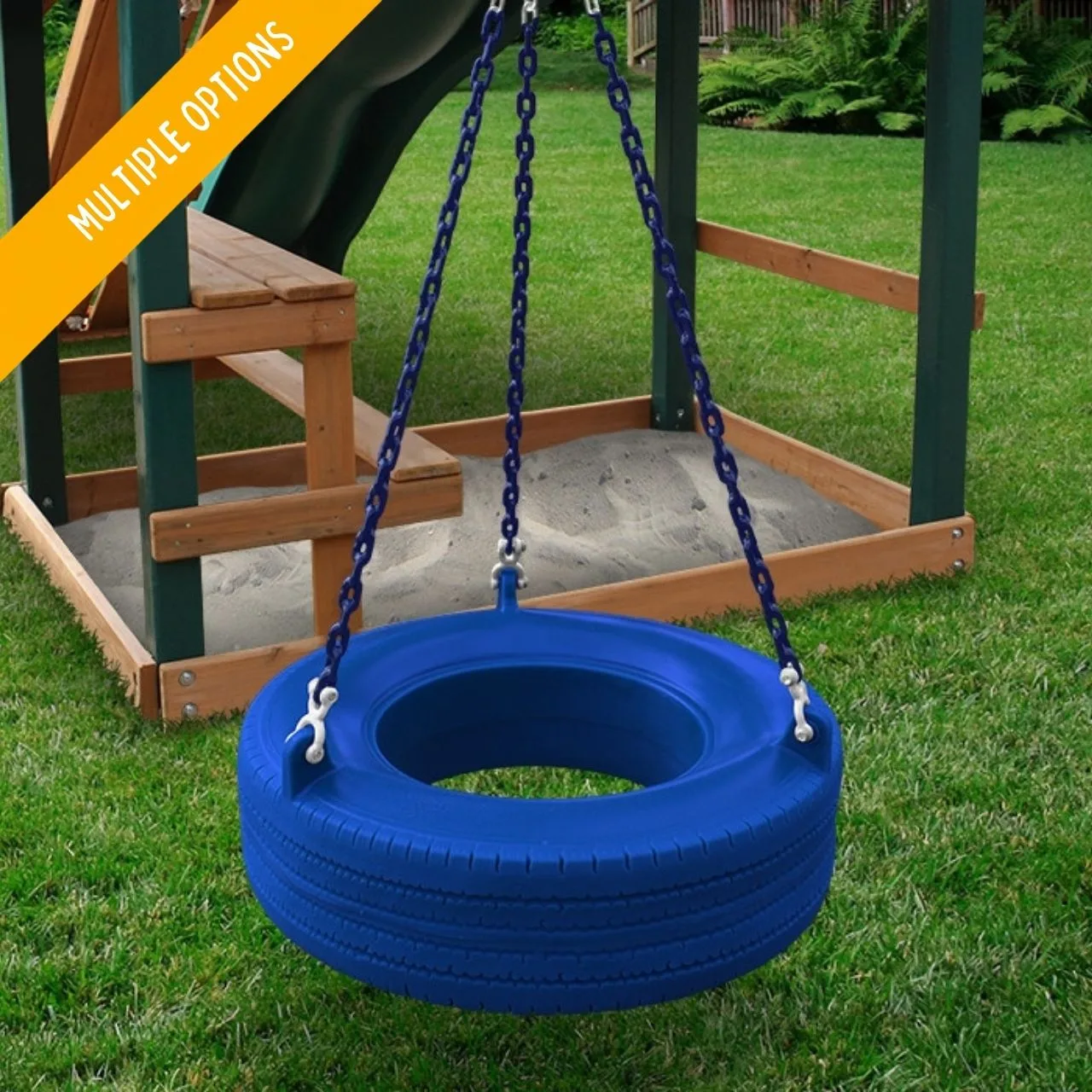
- 360° Turbo Tire Swing: Totally enclosed molded plastic design that will not take on water, insects, or other elements, with 360° swivel from the chain and mount and coated chains that will not pinch. A tire swing adds rotational and lateral force to the swing beam, so if you add one to an existing set, recheck the beam anchors and the set's overall stability.
Which anchoring method fits your yard
Best for
- Firm, well-drained soil where you want a secure set without pouring concrete
- Renters or families who may move or rearrange the playset later
- Compact wooden sets such as the Basic Swing Set with Slide
Not for
- Loose sand, saturated clay, or fill dirt where stakes can pull free
- Patios, decks, or hard ground where you cannot drive a stake
- Large multi-slide sets where concrete footings are the more reliable long-term choice
Anchor your swing set before the first swing, not after the first wobble. Pick the method that matches your soil and how permanent the set needs to be, put the strongest hold at the swing beam and slide end, and recheck the anchors each season. That is what keeps a playset feeling solid year after year.