Quick answer
Slide the poop pocket's loop or clip onto the harness strap near the dog's back, then secure it with the built-in elastic or buckle. Adjust the position so the pocket hangs flat and doesn't swing.
Why attach a poop pocket to a harness instead of a collar?
A harness distributes weight evenly across the chest and back, making it a stable base for attaching accessories. Unlike a collar, a harness won't slip or twist under the pocket's weight, especially during active walks or runs.
Attaching the pocket to the harness also keeps it out of your dog's way and prevents it from dangling near the ground where it could snag on bushes or debris.
What to check before attaching
Make sure your harness has a flat, wide strap on the back or side—narrow or thin straps may not hold the pocket securely. Most standard back-clip or front-clip harnesses work well.
If your poop pocket uses a loop design, confirm the loop is large enough to slide over the strap. For clip-on pockets, ensure the clip is rated for light weight and won't pop open during movement.
Step-by-step: Attaching a poop pocket to a harness
- 1. Position the pocket on the harness: Place the poop pocket against the back or side strap of the harness, with the opening facing upward or outward (whichever is easier for you to access). The pocket should sit between your dog's shoulder blades or just behind them. Avoid placing the pocket too far forward—it can shift during movement and chafe the dog's chest.
- 2. Slide the loop or clip over the strap: If using a loop-style pocket, open the loop and slide it onto the harness strap. For clip-on pockets, open the clip and snap it around the strap. Ensure the pocket is oriented so the bag opening points away from the dog's body. Double-check that the loop or clip is fully seated and not twisted—a twisted attachment can cause the pocket to sag or fall off.
- 3. Secure with the built-in fastener: Many poop pockets have an elastic cord, drawstring, or small buckle that cinches the pocket closed or holds it in place. Tighten this fastener so the pocket sits snugly against the harness without sliding. Don't overtighten—leave a finger's width of slack so the harness can still move naturally with your dog's gait.
- 4. Test the attachment before walking: Gently tug the pocket in different directions to confirm it doesn't shift or detach. Walk your dog a few steps indoors and check that the pocket stays in place and doesn't bounce excessively. If the pocket rotates or flops, reposition it slightly or add a small strap keeper (a rubber band works in a pinch) to lock it in place.
- 5. Adjust for comfort and access: Once the pocket is secure, reach back and simulate grabbing a bag. If you have to twist or stretch uncomfortably, slide the pocket a few inches forward or backward on the strap until it feels natural. A pocket that's too far back may be hard to reach; one too far forward can interfere with the leash clip or front attachment point.
Poop pocket options for harness attachment
-
PupClub Poop Pocket - Mauve (Wholesale): The PupClub Poop Pocket in Mauve is designed with a simple loop-and-tie closure that slips over a harness strap. The loop fits most standard harness straps, and the tie-top keeps used bags sealed and out of sight during the walk.
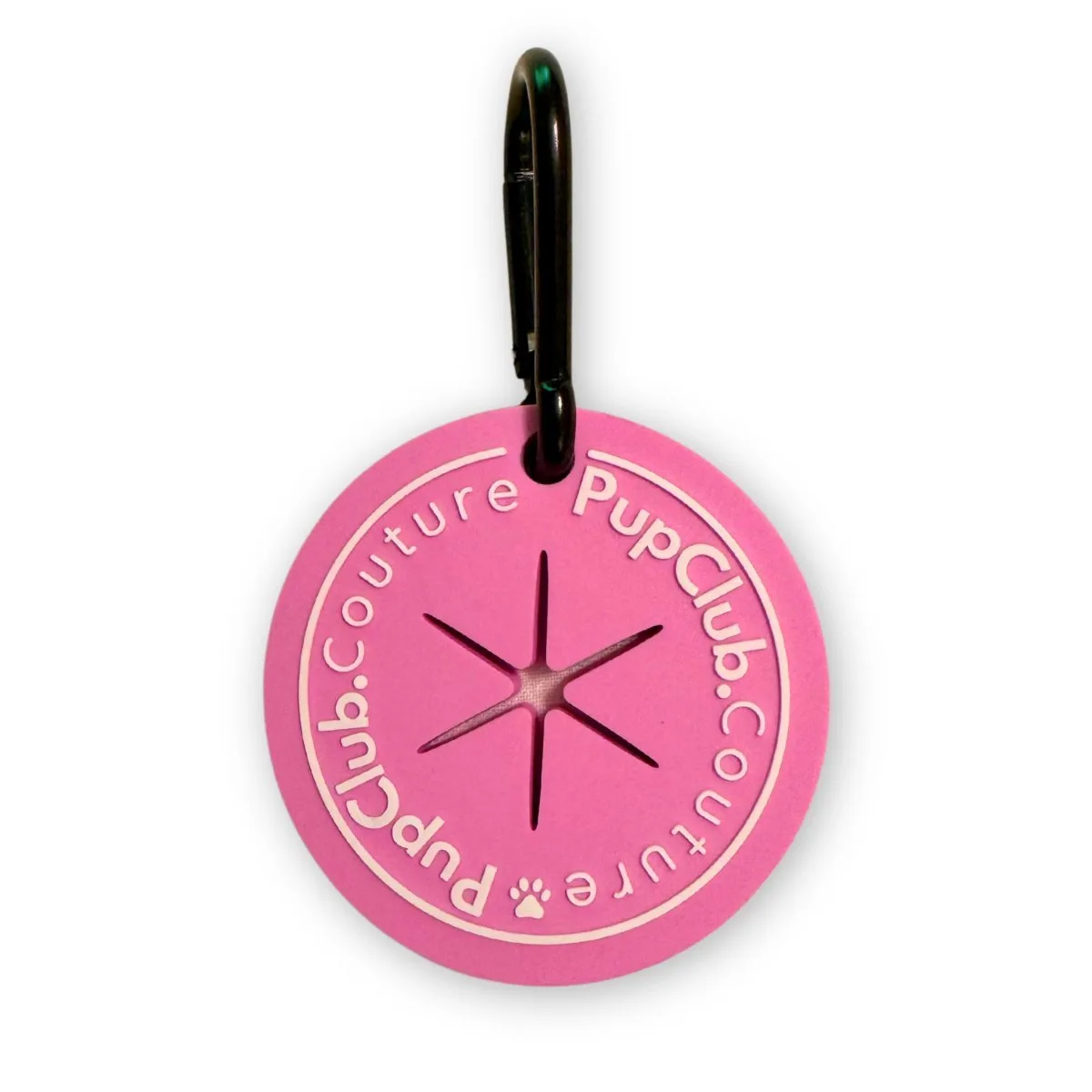
PupClub Poop Pocket - Mauve (Wholesale)