Quick answer
To back carry with a mesh Explore carrier, start by putting the carrier on like an apron, then lift your child onto your back, secure the waistband, and tighten the shoulder straps. Always keep one hand supporting your child until both waist and shoulder straps are snug.
Why use a mesh carrier for back carries?
The mesh fabric of carriers like the Baby Tula Overcast Mesh Explore Baby Carrier promotes airflow, which helps keep both you and your child cooler during active use or warm weather. This makes it a practical choice for longer walks or hikes where a back carry can feel warmer than a front carry.
However, the mesh material is less structured than padded or woven carriers. You may need to adjust the straps more carefully to distribute weight evenly and prevent digging into your shoulders.
When to start back carrying
Back carries are generally suitable once your child has good head and neck control and can sit unsupported, typically around 6 months. Always check your carrier’s weight and age recommendations—most Explore carriers support back carries from this stage up to toddler size.
If you are new to back carrying, practice with a spotter or over a soft surface until you feel confident with the lifting motion.
Step-by-step guide to back carry with a mesh Explore carrier
- 1. Prepare the carrier: Put the carrier on like an apron with the waistband around your natural waist and the shoulder straps hanging loosely. Do not buckle the waistband yet. Make sure the waistband is positioned at your natural waist, not too high or low, to ensure proper weight distribution.
- 2. Lift your child onto your back: Stand with feet shoulder-width apart. Hold your child securely against your chest, then lean forward slightly and gently swing them onto your back. Keep one hand on them at all times. If your child is heavy or wiggly, ask a partner to help guide them onto your back for the first few tries.
- 3. Secure the waistband: Reach behind you, pull the waistband around your child’s hips, and buckle it at the front. Tighten the waistband so it is snug but not restrictive. A loose waistband will cause the carrier to sag and put pressure on your shoulders. The waistband should sit at your natural waist, not on your hips.
- 4. Adjust the shoulder straps: Reach over your shoulders, grasp the shoulder straps, and pull them forward to tighten. The straps should form an 'X' on your back if the carrier allows it. Tighten until your child is snug against your back and their knees are above their bottom. Over-tightening the shoulder straps can restrict your movement and make breathing difficult. Aim for a firm but comfortable fit.
- 5. Check the fit: Ensure your child’s face is visible and clear of the carrier fabric, their chin is off their chest, and their back is supported in a natural curve. The carrier should not dig into your child’s thighs or armpits. If your child seems uncomfortable or is slumping, loosen the straps and reposition them. You should be able to kiss the top of their head without straining.
Product fact
-
Overcast - Mesh Explore Baby Carrier: The Baby Tula Overcast Mesh Explore Baby Carrier features light grey mesh fabric that provides a breathable, airy feel and is designed to offer extra airflow for enhanced comfort. This breathability helps reduce heat buildup during back carries, making it more comfortable for both you and your child on warm days or during active outings.
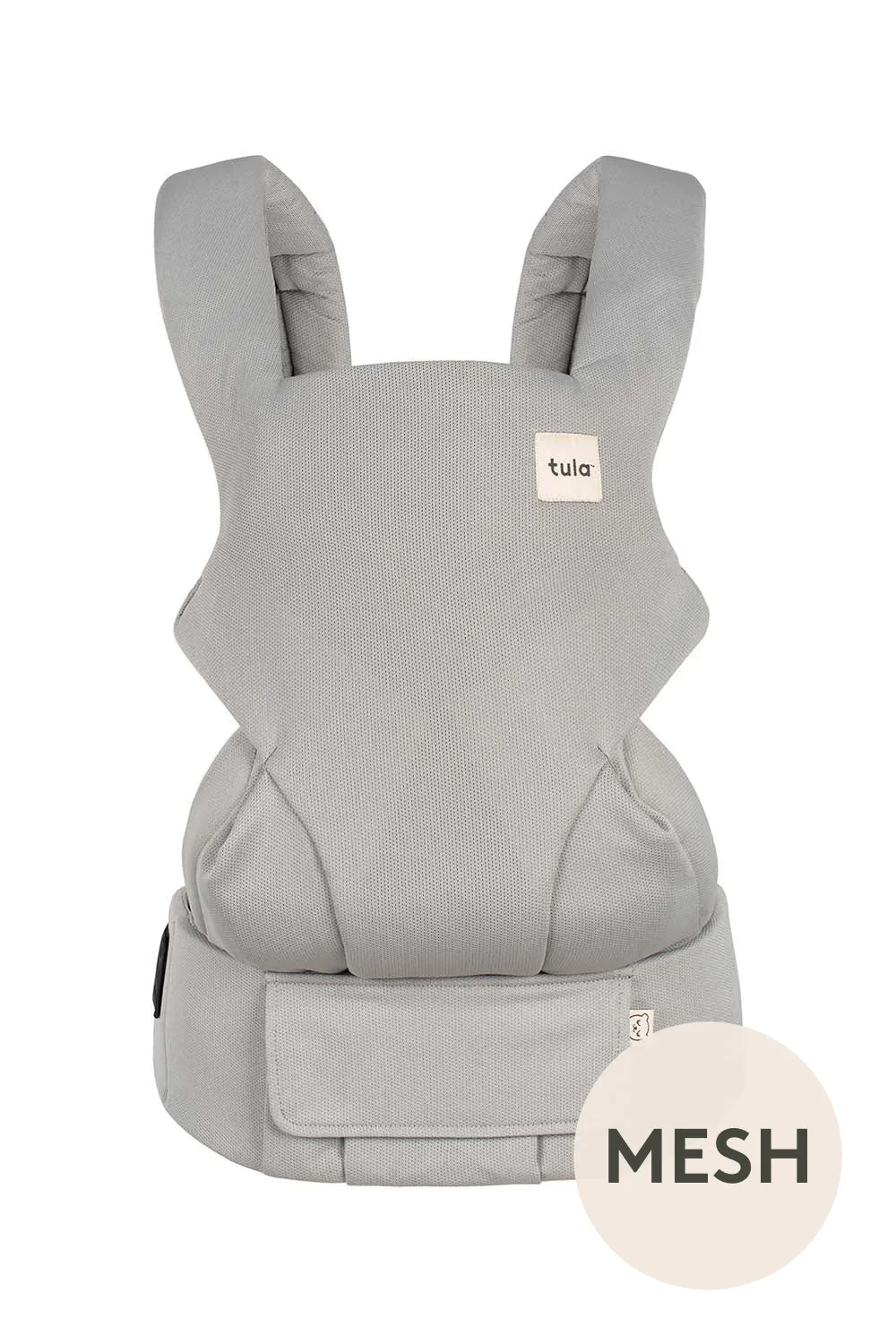
Overcast - Mesh Explore Baby Carrier