Quick answer
Break in new leather ankle boots gradually: wear them 30 to 60 minutes indoors on day one, then add 15 to 20 minutes per day until they feel comfortable. Always wear thin wool or moisture-wicking socks, and use a heel patch or blister bandage on hot spots before they turn into blisters. If pain is sharp, burning, or numbing rather than a dull pressure, stop and size up or choose a different pair.
Why new leather ankle boots hurt (and what is normal)
Leather is skin: it has to flex and mold to your foot. New boots hurt most at the heel counter, the top of the ankle shaft, and the flex point over the toes because those areas are still rigid. A dull, even pressure that fades as you walk is normal break-in discomfort. Sharp pain, a burning sensation, or numbness is not, and no amount of time will fix a boot that is the wrong size or shape.
Ankle boots add a second variable that shoes do not have: the shaft. A stiff shaft rubs the ankle bone and the Achilles tendon, so even a boot that fits your foot can irritate your leg. That is why break-in advice for sneakers does not transfer directly. You are softening two zones at once, and the shaft often takes longer than the sole.
A 10-day break-in schedule that prevents blisters
Treat break-in like training. Start with short indoor sessions so you can take the boots off the moment a hot spot appears. Increase time gradually, and switch to outdoor walking only after the boots feel neutral indoors. If you feel a hot spot during any session, stop, cover the area with a blister bandage, and repeat the previous day's duration instead of pushing forward.
Socks do more work than most people expect. Thin merino wool or synthetic moisture-wicking socks reduce friction and keep skin dry, while cotton holds sweat and makes rubbing worse. If you plan to wear the boots with bare feet or tights, break them in with the same setup you will actually use, because a boot molded to a thick sock will feel loose and rub when worn thin.
- Day 1-2: 30-60 minutes indoors, sitting and standing, no long walks
- Day 3-4: 60-90 minutes indoors, including stairs
- Day 5-6: 2 hours indoors or a short errand run
- Day 7-8: half a workday outdoors with blister patches on standby
- Day 9-10: a full day; if hot spots return, drop back one step
Targeted fixes for tight shafts, heels, and toe boxes
For a tight ankle shaft, lace the boots loosely at the top and snug through the midfoot. Tight top laces pull the shaft into your ankle bone and create the exact rub you are trying to avoid. If the leather is stiff, a conditioner or a purpose-made leather stretch spray can add temporary flexibility; test on a hidden area first, and never soak the whole boot in water.
For heel slip, a heel grip or a thin insole can lift your foot into the correct position and stop the counter from sawing at your skin. For toe pressure, check whether your toes touch the front when you stand, not just when you sit. Toes that touch while standing mean the boot is too short, and no break-in routine will create length that is not there.
When to stop breaking in and choose another pair
Set a hard deadline: if the boots still cause pain after roughly two weeks of consistent, gradual wear, they are the wrong fit, not under-broken. Stop immediately if you feel numbness, tingling, or a burning sensation, if a blister has opened, or if your toes go numb while walking. Those are fit problems, and continuing risks injury and a pair you will never wear.
Also stop if the pain is in one specific spot that never improves. Leather stretches, but it does not reshape around a bunion, a high instep, or a narrow heel. In that case, look for a different last or size rather than forcing the pair you already own.
Diagnose your break-in problem
- Symptom: rubbing at the heel or ankle bone: Cause: a stiff heel counter or an over-tight top lace pulling the shaft into bone. Action: loosen the top laces, add a heel grip or blister bandage, and shorten wear sessions until the leather softens. If the rub returns every session after two weeks, the boot is too narrow or too long for your heel.
- Symptom: pressure across the top of the foot or toes: Cause: a low instep volume or a boot that is too short. Action: try a thinner sock and a stretch spray on the vamp; check toe room while standing. Toes touching the front while standing means stop and size up; stretching cannot add length.
- Symptom: burning, tingling, or numbness: Cause: nerve pressure from a fit that is too tight, not ordinary break-in discomfort. Action: remove the boots immediately and do not continue the schedule. This is a stop signal, not a stretch goal. Return or replace the pair.
What to look for in a break-in-friendly pair
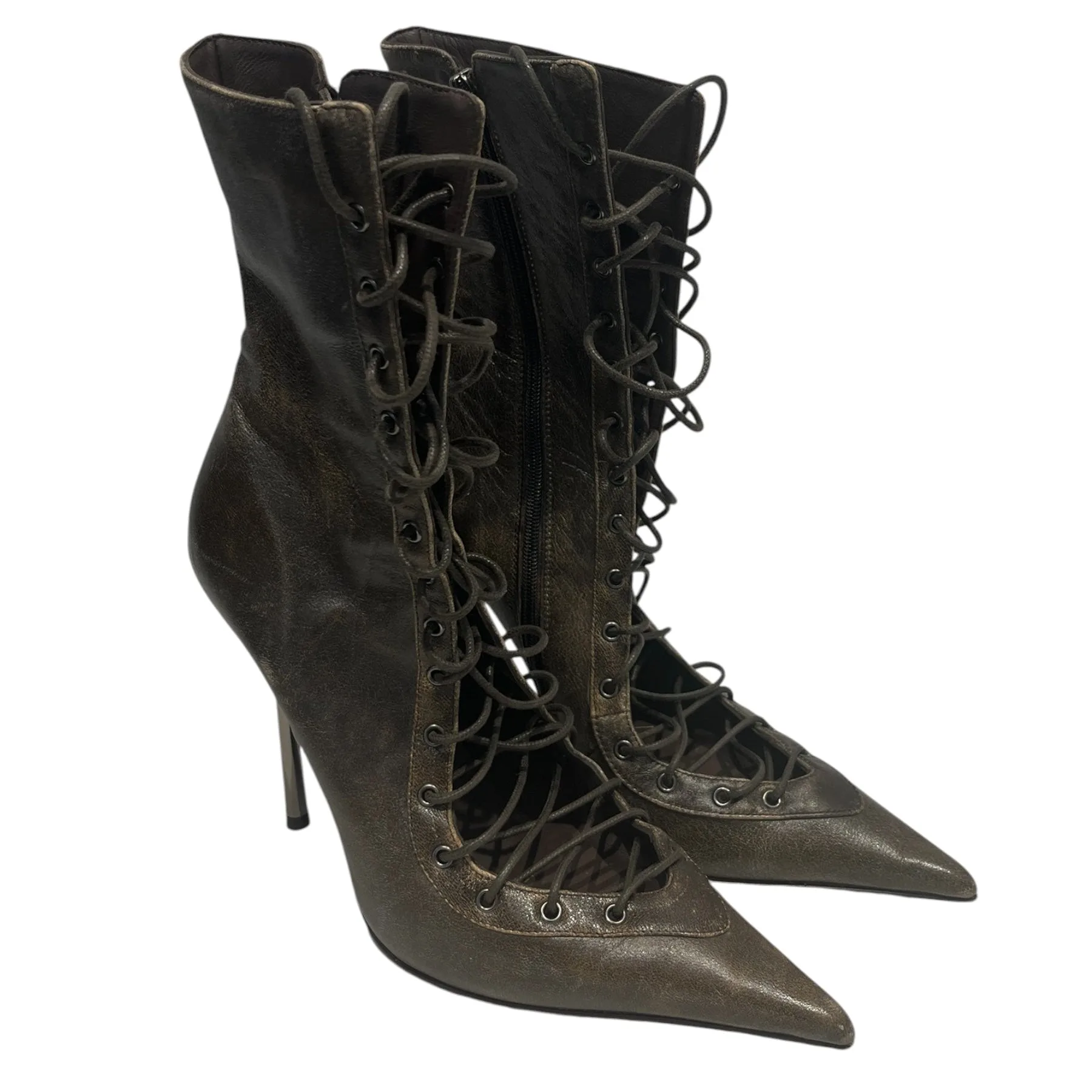
- LE SILLA/Lace Up Boots/US 10/Leather/BRW/CORSETTE ANKLE BOOTS: LE SILLA lace-up corsette ankle boots in brown leather, US size 10, listed in used good condition. A lace-up corsette design lets you loosen the shaft independently of the foot, which is exactly the adjustment that prevents ankle-bone rubbing during break-in. Because these are pre-owned and already softened, they typically need less break-in time than a new pair, though the listing notes material is not specified, so check the leather feel in person.
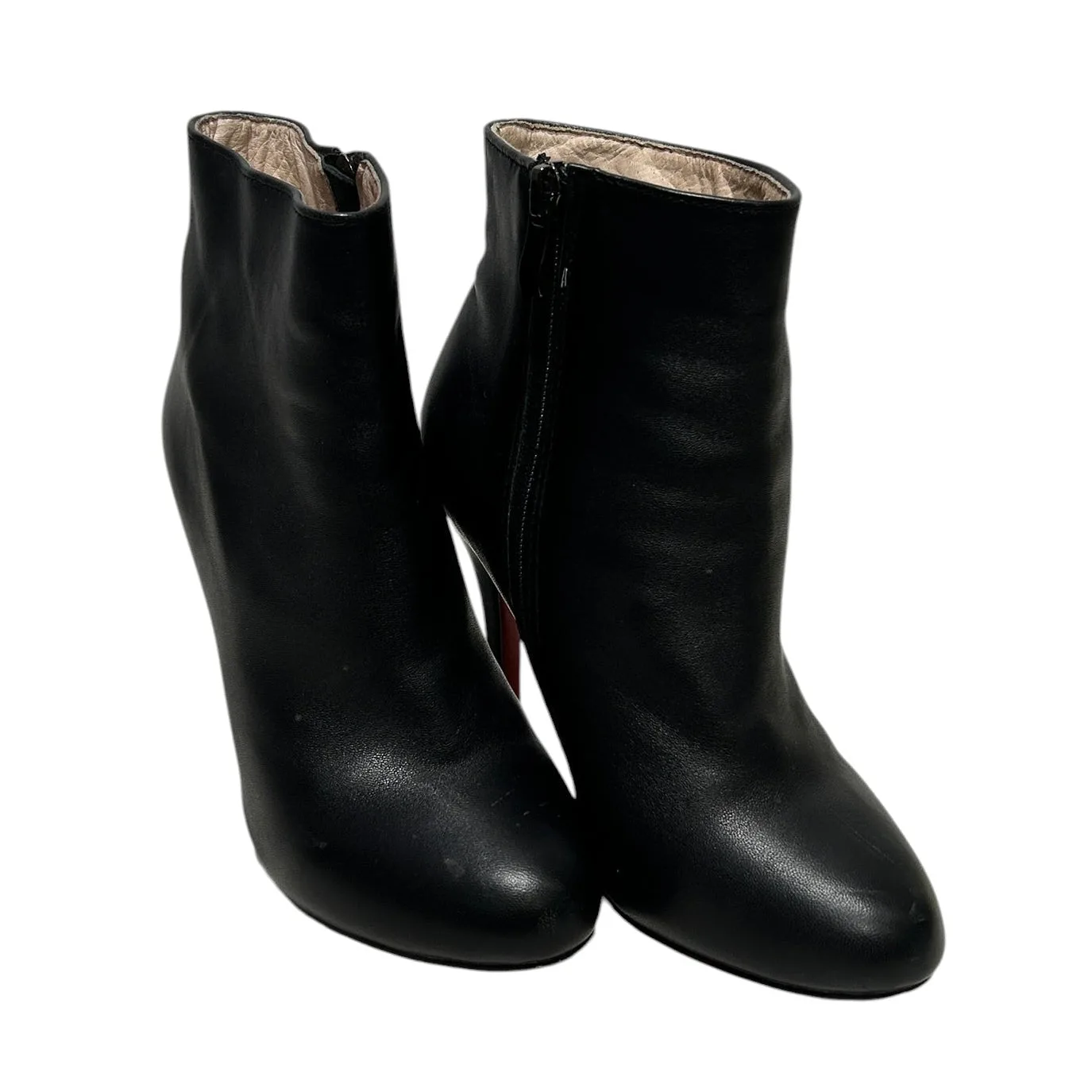
- Christian Louboutin/Heels/EU 37/Leather/BLK/SO KATWE ROUNDED HEEL: Christian Louboutin SO KATWE rounded-heel heels in black leather, EU 37 / US 6, listed in used, worn condition, sold as a single pair from 2nd STREET Sherman Oaks. A rounded heel spreads pressure differently than a stiletto, which can reduce the pinpoint heel rub that makes new leather footwear painful. The used, worn condition means the leather has already molded to someone's foot, so expect a shorter break-in but also check that the previous wearer's creasing does not press on your own foot.