Why LIVER Tea Can Turn Bitter
LIVER Daily Support Herbs Tea combines Bo He (mint) and Yu Jin (turmeric), two ingredients with very different brewing behavior. Mint releases its aroma quickly, while turmeric can turn harsh if you push the water too hot or steep too long. The goal is to extract the gentle, earthy notes without pulling out the dry, sharp edges.
The product record does not include official steeping times or water temperatures. That means the guidance below is a practical starting point, not a manufacturer instruction. Treat your first cup as a calibration step, then adjust to your taste.
A Sensible Brewing Sequence When the Label Is Silent
- Start with fresh, filtered water: Chlorine and heavy minerals can mask the mint and make turmeric taste dull. Filtered water gives the herbs a cleaner backdrop.
- Use water just below a rolling boil: Let boiled water rest briefly before pouring. Water that is too hot can pull bitter compounds from turmeric and other roots. If you have a thermometer, aim for a gentle steam rather than a hard boil.
- Measure the herbs, not the water: Use one tea bag or a level teaspoon of loose herbs per cup as a starting point. Too much leaf is a common cause of bitterness. You can always add more later.
- Steep briefly, then taste: Begin with a short steep and check the color and aroma. If the cup tastes thin, steep a little longer. If it turns sharp, shorten the next steep. Because the record gives no official time, your palate is the checkpoint.
- Remove the herbs when the cup tastes right: Leaving the bag or leaves in the water keeps extracting. Pull them out once the flavor is balanced to avoid a bitter finish.
The Bitter Herbal Tea Fix: Adjust One Variable at a Time
When a cup turns bitter, change only one thing next time: cooler water, a shorter steep, or less leaf. That way you learn which variable caused the problem. If you are brewing for several people, make a concentrated batch and dilute each cup with hot water to taste.
Mint can also turn dull if it sits too long. If the aroma fades before the turmeric flavor develops, try a slightly cooler steep rather than a longer one.
What the LIVER Blend Actually Contains
-
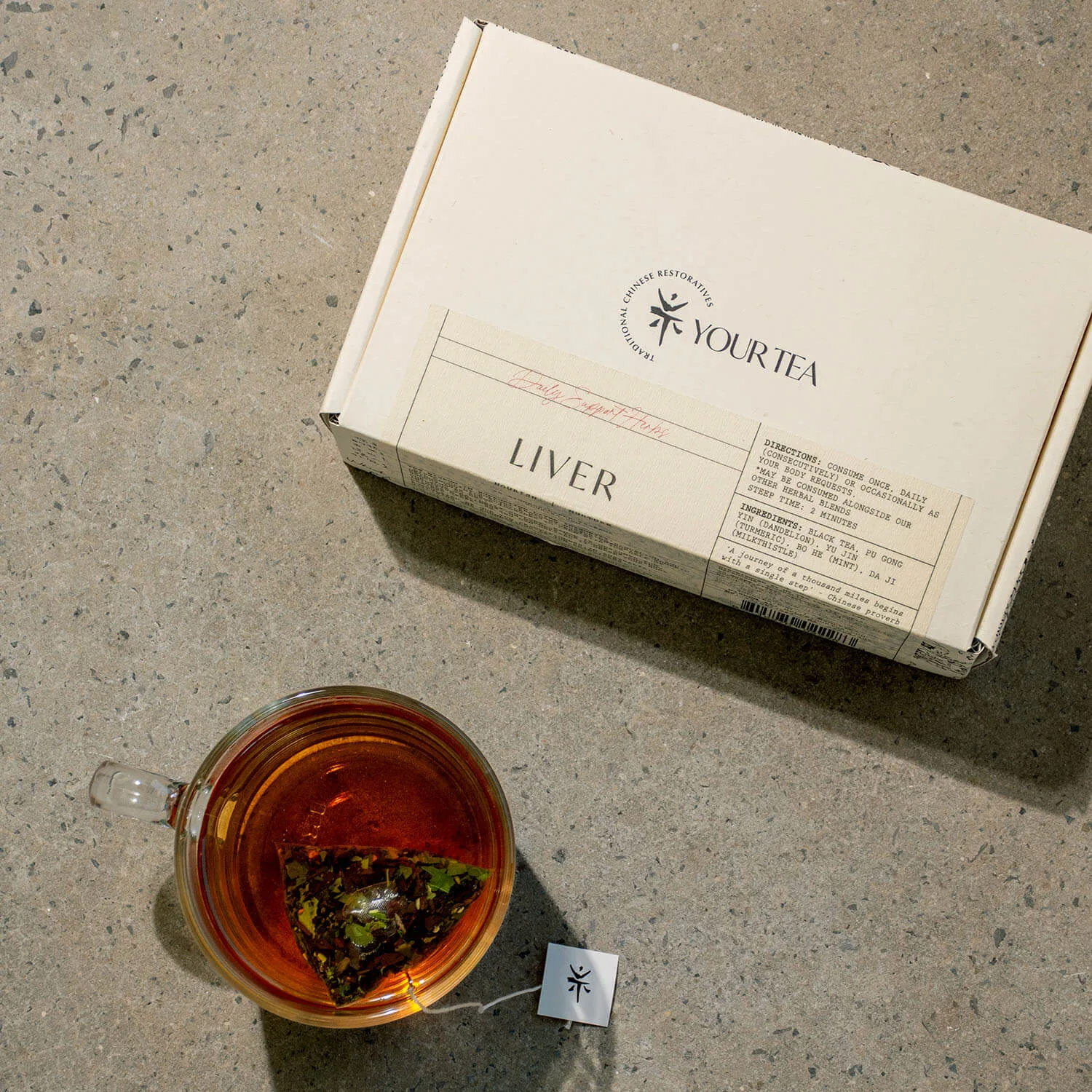
LIVER | Daily Support Herbs Tea: LIVER Daily Support Herbs Tea features Bo He (mint) and Yu Jin (turmeric), with Da Ji added for digestive support in Traditional Chinese Medicine thinking. Knowing the ingredients helps you anticipate flavor: mint brings aroma, turmeric brings earthiness, and both can turn harsh with over-steeping.
LIVER | Daily Support Herbs Tea
-
LIVER | Daily Support Herbs Tea: The product is described as organic and EU standard ingredients, gluten free, non-GMO, and vegan. These labels matter if you are brewing for a household with dietary preferences, but they do not change the brewing method.
What to Do When the Label Gives No Steeping Time
Many herbal blends rely on the drinker's taste rather than a fixed time. Start with a short steep, taste, and extend only if needed. Keep a small notebook or note on your phone with the water temperature and steep length that worked, so you can repeat it.
If you prefer a stronger cup, increase the amount of herbs slightly rather than steeping much longer. A longer steep extracts more bitter compounds, while more leaf can add body without the same harshness.
Serving and Storage Notes
The product record does not supply official serving size or storage instructions beyond the ingredient list. As a general practice, store the tea in a cool, dry place away from strong odors, and reseal the packaging after opening. Because the record does not confirm shelf life, check the package for any date or lot information.
The label also states that this product has not been evaluated by the Food and Drug Administration and is not intended to diagnose, treat, or cure any disease. Brew it as a daily beverage, not as a replacement for medical care.