Quick answer
Brush your dog's teeth with a triple flex toothbrush by starting with a calm, short session, applying dog-safe toothpaste, and using gentle circular strokes along the gum line. A triple flex head bends to follow the curves of your dog's mouth, which helps you reach back molars without forcing the jaw open. Aim for daily sessions, but even three to four times a week makes a real difference.
Brushing your dog's teeth is one of those tasks that feels awkward until you find the right tool and a repeatable routine. A triple flex toothbrush is designed for that learning curve: the flexible head angles to match the shape of your dog's mouth, so you spend less time wrestling with the brush and more time actually cleaning teeth.
This guide walks through the brushing dog teeth steps in order, from the first calm touch to finishing the back molars. It also covers the small-dog oral care products that pair well with a triple flex brush, and the checkpoints that tell you when to slow down or stop for the day.
Set up before your dog sees the brush
Gather everything within arm's reach: the triple flex toothbrush, dog-safe toothpaste, a towel, and a few treats. If your dog is small, a kit like the TropiClean Oral Kit Small gives you a toothbrush and toothpaste sized for a little mouth, which means less fumbling and a shorter session. Put the toothpaste on the brush before you call your dog over so you are not squeezing a tube one-handed while they wait.
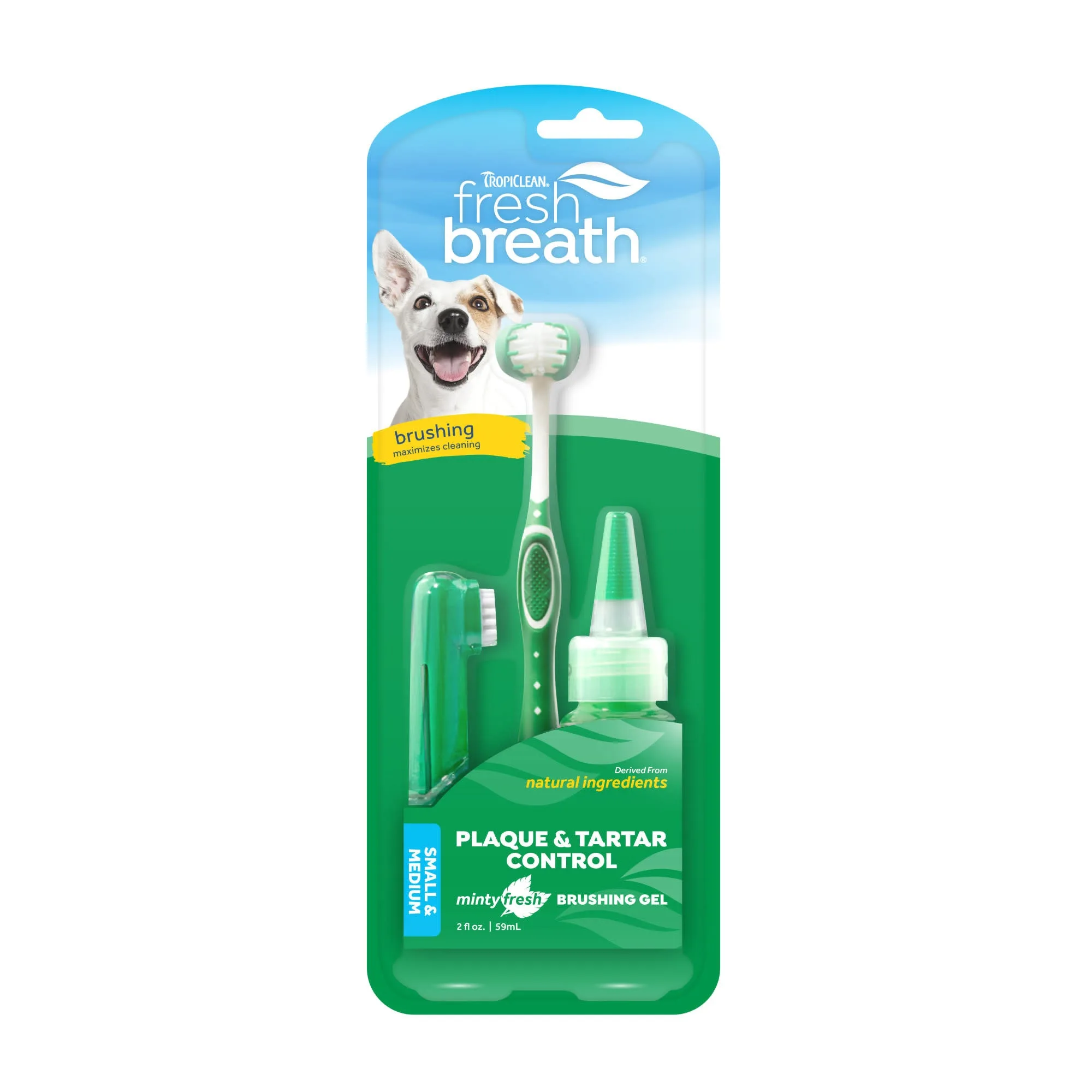
TropiClean Oral Kit Small
Pick a spot where your dog already feels relaxed, like the couch or a favorite bed, rather than a cold bathroom floor. Keep the first few sessions under a minute. The goal is not a perfect clean on day one; it is teaching your dog that the brush is boring and predictable.
- Common mistake: chasing your dog around the house with the brush. If they walk away, end the session and try again later.
- Checkpoint: your dog stays in place for 10 seconds while you hold the brush near their muzzle.
Let your dog taste the toothpaste first
Squeeze a pea-sized amount of dog toothpaste onto your finger and let your dog lick it off. Dog toothpaste is usually flavored and does not need rinsing, so this step doubles as a reward. Never use human toothpaste; the ingredients are not meant to be swallowed by dogs.
Once your dog is licking the paste willingly, smear a little on the triple flex brush head and let them lick that too. This builds the association between the brush and something pleasant before you ever put it in their mouth.
- Common mistake: skipping the taste test and going straight to brushing. That is how brush-shy dogs are made.
- Checkpoint: your dog takes the toothpaste from the brush head without backing away.
Position the triple flex brush at a 45-degree angle
Hold the triple flex toothbrush like a pencil, with the bristles angled about 45 degrees toward the gum line. That angle lets the bristles sweep just under the gum edge, where plaque starts. The flex head will bend as you move along the cheek teeth, so use light pressure and let the brush do the adapting.
Start on one side of the mouth and work back to front. Lift the lip gently with your free hand rather than prying the mouth open. If your dog clamps down, pause, let them relax, and resume with a softer touch.
- Common mistake: pressing hard to force the bristles into the gum line. Firm pressure causes irritation and makes dogs resist future sessions.
- Checkpoint: you can brush the outside of the upper teeth on one side without your dog pulling away.
Brush in small circles along the gum line
Use small circular strokes, spending a few seconds on each tooth. Focus on the outer surfaces of the teeth, which is where plaque builds up most; the tongue side stays cleaner on its own. The triple flex head is most useful on the back molars, where a straight brush tends to bump into the cheek.
Work in a consistent order every time, such as upper right, upper left, lower right, lower left. Predictability helps dogs tolerate the process because they know what is coming next.
- Common mistake: scrubbing back and forth like you would on your own teeth. Small circles clean the gum line more effectively and feel gentler.
- Checkpoint: you have brushed all four quadrants, even if each one only got a few seconds.
Finish with the back molars and a reward
The back molars are the teeth most likely to collect tartar, so give them a final pass with the flex head angled to follow the curve of the jaw. Keep the session short; if you have been brushing for more than two minutes, wrap up. A stressed dog gains nothing from a longer brush.
End every session with praise and a treat, even if you only brushed a few teeth. This is the step that makes tomorrow easier. If your dog's gums bleed regularly, have a veterinarian check for gum disease rather than brushing harder.
- Common mistake: ending on a struggle. Stop while your dog is still calm so the last memory of brushing is a good one.
- Checkpoint: your dog comes back to the brushing spot the next day without hiding.
Brushing dog teeth steps at a glance
- Step 1: Set up your station: Put the triple flex toothbrush, dog toothpaste, towel, and treats within reach before your dog joins you. Checkpoint: your dog stays nearby for 10 seconds while you hold the brush.
- Step 2: Introduce the toothpaste: Let your dog lick dog-safe toothpaste off your finger, then off the brush head. Checkpoint: your dog takes paste from the brush without flinching.
- Step 3: Angle the brush at 45 degrees: Hold the triple flex brush like a pencil and lift the lip gently instead of prying the mouth open. Checkpoint: you can reach one side of the upper teeth calmly.
- Step 4: Brush in small circles: Use gentle circular strokes along the gum line, working in the same order each session. Checkpoint: all four quadrants get a few seconds of brushing.
- Step 5: Finish the molars and reward: Give the back molars a final pass with the flex head, then end with praise and a treat. Checkpoint: your dog returns to the brushing spot the next day.
Products that pair with a dog dental care routine
- TropiClean Oral Kit Small: The TropiClean Oral Kit Small is designed for small dogs and includes a toothbrush and toothpaste formulated for small dogs, with natural ingredients that help reduce plaque and tartar buildup. If you are brushing a small dog's teeth, a kit sized for small mouths means less fumbling and a more consistent angle on the back teeth.
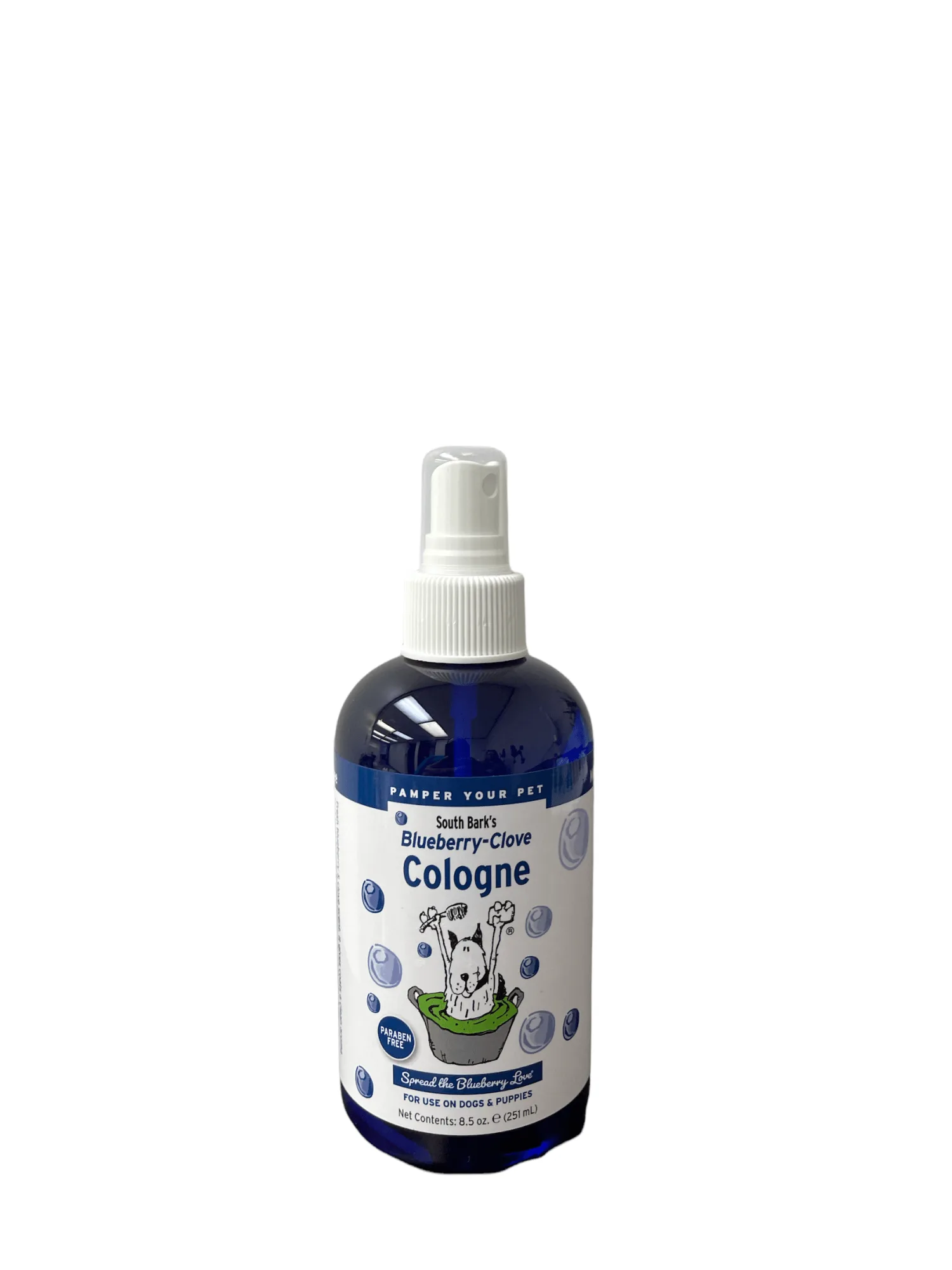
- Showseason Blueberry Clove Cologne-8.5oz.: This cologne gives coats a clean aroma that lasts for weeks and helps control odor, and it matches the Blueberry-Clove Pet Conditioner. Brushing sessions are a good time to check overall freshness. A coat cologne controls between-bath odor without replacing the dental routine.
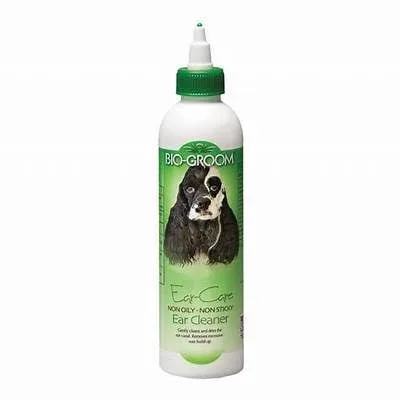
- Bio Groom Ear Cleaner-4oz.: Bio Groom Ear Care is a natural ear cleaner specifically designed for dogs, with a formula that contains natural ingredients to clean the ears. Handling your dog's head during tooth brushing is a natural moment to also check ears, so keep an ear cleaner nearby for quick weekly maintenance.
A triple flex toothbrush makes the awkward parts of dog dental care easier, but consistency matters more than the tool. Keep sessions short, angle the bristles at the gum line, and reward every attempt. If you are brushing a small dog, a kit like the TropiClean Oral Kit Small removes the guesswork, and a few minutes a few times a week protects your dog's teeth between veterinary cleanings.