Quick answer
Hand wash acacia wood serving pieces in warm water with a little mild dish soap, then dry them immediately. Once they are fully dry, rub in a food-safe mineral oil every four to six weeks to prevent cracking. Never soak them, put them in the dishwasher, or leave them wet on the counter.
Acacia wood servers earn their place on the table because the rich dark grain looks good with almost any décor, and the surface is gentle on knives and cheese. But wood is a living material that reacts to water, heat, and dry air. A few consistent habits keep the surface smooth and the color deep.
The routine below works for any acacia piece, including bark-edged servers and footed styles. It takes only a few minutes after each use, plus a longer conditioning session once a month or so. The goal is simple: control moisture, then replace the oil that washing and time remove.
Why acacia wood needs a different routine than ceramic or glass
Acacia is a dense hardwood, but it still absorbs and releases moisture as humidity changes. When water sits on the surface, the wood swells; when it dries too fast, it shrinks. That cycle is what causes small cracks, raised grain, and a dull, chalky look. A server that is never oiled will eventually feel rough even if you clean it carefully.
The fix is not complicated. You are managing two things: keeping excess water out, and keeping a thin layer of food-safe oil in the wood so it stays supple. Ceramic and glass can go in the dishwasher and shrug off heat. Acacia cannot. Treat it like a good knife: wash it by hand, dry it right away, and give it a little maintenance.
- Skip the dishwasher entirely, even on a short cycle with low heat.
- Do not leave a wet server in the sink while you eat; wash it as soon as you clear the table.
Everyday cleaning without soaking
For cheese, crackers, and hors d'oeuvres, most residue comes off with a quick hand wash. Use warm water, a drop of mild dish soap, and a soft sponge or dishcloth. Work with the grain rather than scrubbing across it. Rinse quickly under running water instead of filling the sink and letting the piece sit.
Dry immediately with a clean towel, then let the server air-dry completely on a rack before putting it away. If you served something oily or strongly flavored, a paste of baking soda and water can lift odors and residue; apply it gently, rinse fast, and dry thoroughly. Avoid scouring pads, bleach, and abrasive cleansers, which scratch the surface and strip the oil.
- Common mistake: soaking a bark-edged server to loosen dried cheese. The bark and the wood core absorb water at different rates, which can lift the edge.
- Checkpoint: run your fingers over the surface after drying. If it feels fuzzy or rough, it is ready for oiling.
How and when to oil an acacia server
Oil when the wood looks pale, feels dry, or has not been conditioned in a month or two. Use a food-safe mineral oil or a butcher-block conditioner. Avoid olive oil, vegetable oil, and other cooking oils, because they can turn rancid and leave a sticky film. Pour a small amount onto a lint-free cloth and rub it into the wood with the grain.
Let the oil sit for 15 to 20 minutes, then wipe off anything that has not absorbed. If the piece still looks thirsty, repeat once. A well-oiled server has a soft sheen, not a wet look. New pieces may need oiling more often at first; once the surface stops drinking it in quickly, you can stretch the interval to every four to six weeks.
- Common mistake: pouring oil directly onto the server. You will use too much and leave a tacky surface.
- Checkpoint: if the cloth comes away clean after the wait, the wood has absorbed what it needs.
Storing and serving so cracks do not start
Store acacia pieces in a dry, room-temperature cabinet rather than above the stove, next to the dishwasher, or in a damp basement. Heat and steam pull moisture out of the wood and encourage warping. If you stack servers, put a cloth or felt pad between them so the bark edges and feet do not scratch the piece below.
At the table, use a small dish or liner under oily or wet foods, and wipe up spills promptly. Do not cut directly on a decorative server if you want to preserve the finish; use a cutting board for heavy chopping. A footed server is meant for presentation, so keep it out of the oven, microwave, and refrigerator, where temperature swings are hardest on wood.
- For long storage, oil first, let it dry completely, then wrap loosely in a breathable cloth rather than sealing it in plastic.
- Checkpoint: if a server feels cold and damp when you take it out, let it come to room temperature and dry before using it.
Your acacia care steps
- Step 1: Wash by hand, fast: Use warm water, a drop of mild dish soap, and a soft sponge. Rinse quickly instead of soaking, and never put the piece in the dishwasher. Checkpoint: the server should never sit in standing water.
- Step 2: Dry immediately and completely: Towel dry, then air-dry on a rack until no cool dampness remains, including the bark edge or the feet. Common mistake: stacking a still-damp server in a cabinet, which traps moisture.
- Step 3: Oil with a food-safe product: Rub mineral oil or butcher-block conditioner in with the grain, wait 15 to 20 minutes, then wipe off the excess. Repeat monthly or whenever the wood looks pale. Checkpoint: a soft sheen means enough oil; a sticky feel means you used too much.
- Step 4: Store dry and cool: Keep acacia away from the stove, dishwasher, and damp rooms. Pad stacked pieces so edges and feet do not scratch. Next step: if cracks or deep scratches appear, sand very lightly with fine grit, re-oil, and let it cure overnight.
Acacia pieces this routine fits
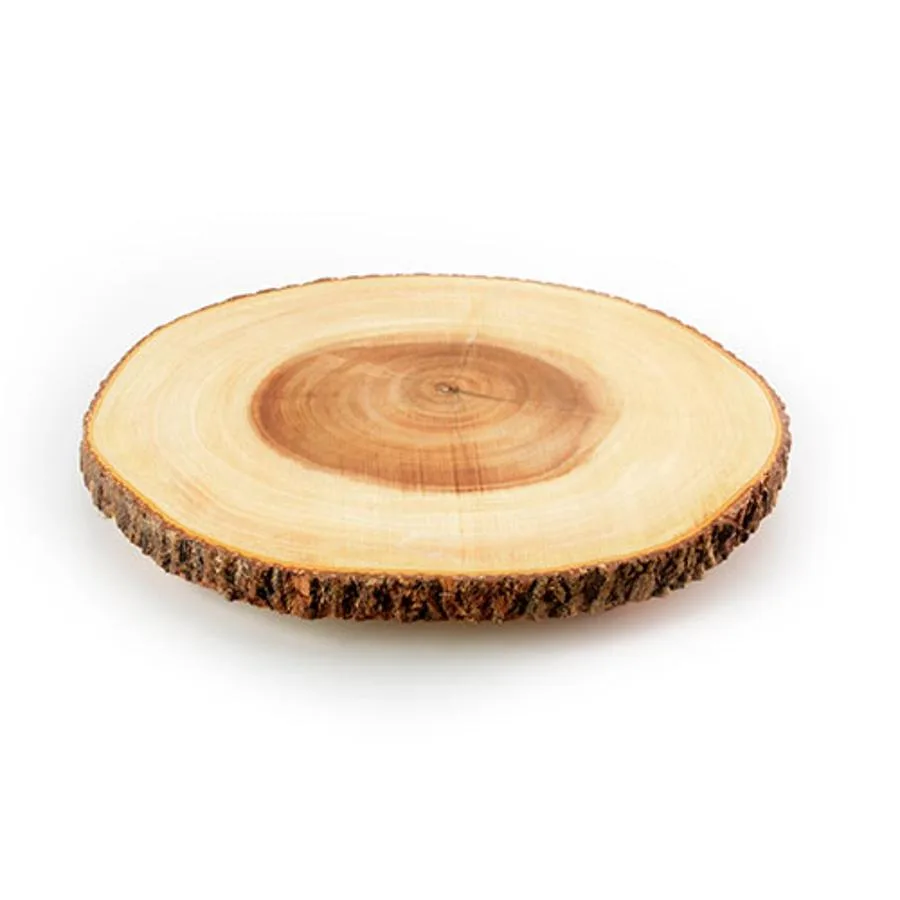
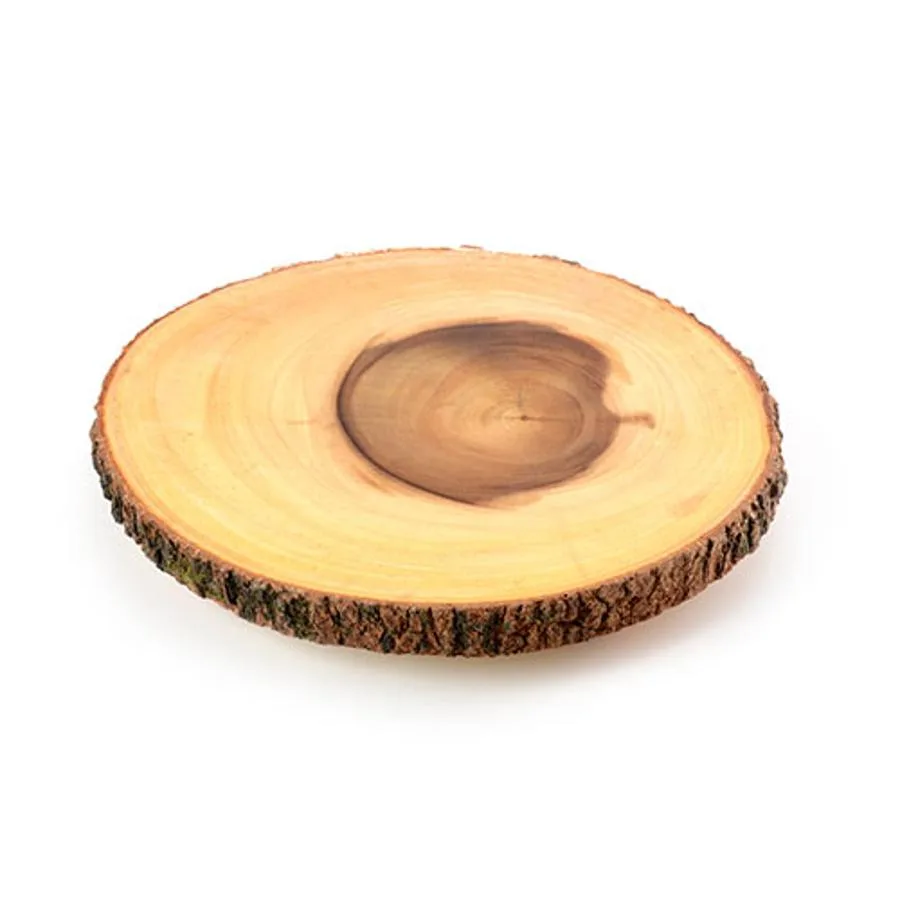
- Acacia 10-12in. Tree Bark Server: Handcrafted acacia wood with a rustic, dark finish, sized 10 to 12 inches for cheese, crackers, and hors d'oeuvres. The bark edge is the most moisture-sensitive part, so dry it immediately and oil the whole surface, not just the flat center.
- Acacia Footed Server: Handcrafted acacia wood with a footed base and a rich dark color for serving cheese and hors d'oeuvres. The feet raise the server off the table, which helps air circulate underneath; still dry the base fully before storing so moisture does not sit in the grain.
Acacia wood serving pieces stay beautiful when you keep water out and oil in. Wash by hand, dry right away, condition every few weeks, and store them somewhere dry. That short routine is all it takes to keep a bark server or footed server ready for the next gathering.