Quick answer
To make your Magic Puzzle pieces last, keep them dry, store them flat in a cool space, and clean only with a soft dry cloth or a barely damp one. Avoid heat, moisture, and stacking heavy objects on assembled puzzles. A five-minute routine after each build prevents warping, delamination, and lost pieces.
Why puzzle piece maintenance matters for Magic Puzzles
Magic Puzzle pieces are designed to be assembled, disassembled, and rebuilt, so they see more handling than a typical jigsaw. That extra handling means edges soften, surfaces pick up oils, and pieces can warp if they sit in a damp basement or a hot attic. The good news is that you do not need special products. You need consistency: a dry, flat storage spot and a quick clean after each session.
Everyday habits that prevent most damage
Before you start a build, wash and dry your hands. Oils and lotions transfer to puzzle pieces and attract dust. Work on a clean, hard surface rather than carpet or a fuzzy tablecloth, which can catch on piece edges. When you pause, slide the puzzle onto a puzzle board or a stiff piece of cardboard instead of leaving it on the floor where it can be stepped on or bent.
- Keep drinks and snacks away from the build area.
- Use a puzzle mat or board if you need to move an in-progress puzzle.
- Do not force pieces together; if a piece does not fit, check the surrounding area.
How to clean puzzle pieces without damaging them
For routine dust, a dry microfiber cloth is enough. Wipe each piece gently or run the cloth over the assembled puzzle surface. If a piece has a sticky spot, dampen a cloth very lightly with water, wring it out, and dab the spot. Never soak pieces or use cleaning sprays, alcohol, or vinegar, which can break down the printed surface and cardboard. Let pieces air-dry completely before storing them.
Storing puzzle pieces so they stay flat
Store pieces in a cool, dry place, ideally between 60 and 70°F with low humidity. Heat and moisture are the main causes of warping and delamination. Keep pieces in their original box or a resealable bag, and place the bag flat inside a larger box rather than standing it on its side. If you stack multiple puzzle boxes, put the heaviest on the bottom and avoid pressing down on the box holding your pieces.
Your step-by-step puzzle care routine
- 1. Prep your hands and workspace: Wash and dry your hands before touching pieces. Work on a clean, hard, dry surface. Common mistake: building on carpet or a fuzzy tablecloth, which can snag edges and trap dust. Checkpoint: your hands are clean and the surface is smooth.
- 2. Build gently: Press pieces together with even, light pressure. Do not force a piece; if it resists, check the orientation or the surrounding pieces. Common mistake: jamming pieces together, which bends tabs and causes delamination. Checkpoint: pieces click without resistance.
- 3. Clean after each session: Wipe the assembled surface with a dry microfiber cloth. For sticky spots, use a barely damp cloth and dab, then air-dry fully. Common mistake: using sprays or soaking pieces, which damages the print and cardboard. Checkpoint: pieces are dry before storage.
- 4. Disassemble and store flat: Take the puzzle apart carefully, place pieces in the original box or a resealable bag, and store flat in a cool, dry place. Common mistake: storing pieces in a damp basement or hot attic, which warps them. Checkpoint: pieces lie flat in the box with no pressure on top.
- 5. Rotate and inspect: Every few months, open each stored puzzle and check for warping or dust. Re-bag if needed and keep boxes off the floor. Common mistake: leaving puzzles untouched for years in a garage, where humidity causes damage. Next step: schedule a seasonal check for your whole collection.
Product notes for your collection
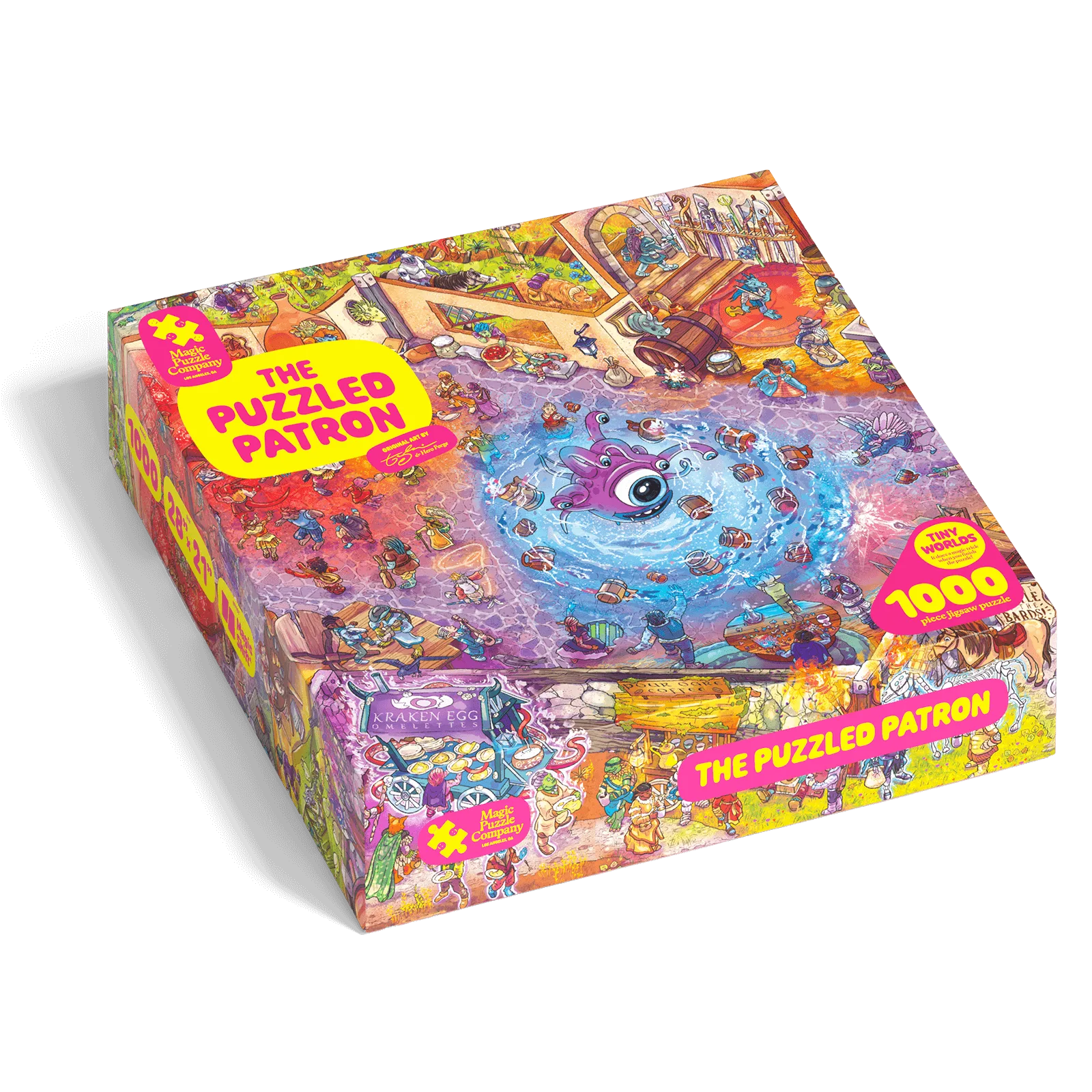
- The Puzzled Patron: The Puzzled Patron is part of Series 3 and features art by Taylor Rose, a New Hampshire illustrator who works in scientific illustration. Knowing the artist and series helps you store pieces with similar themes together, so you can find them easily when you want to rebuild.
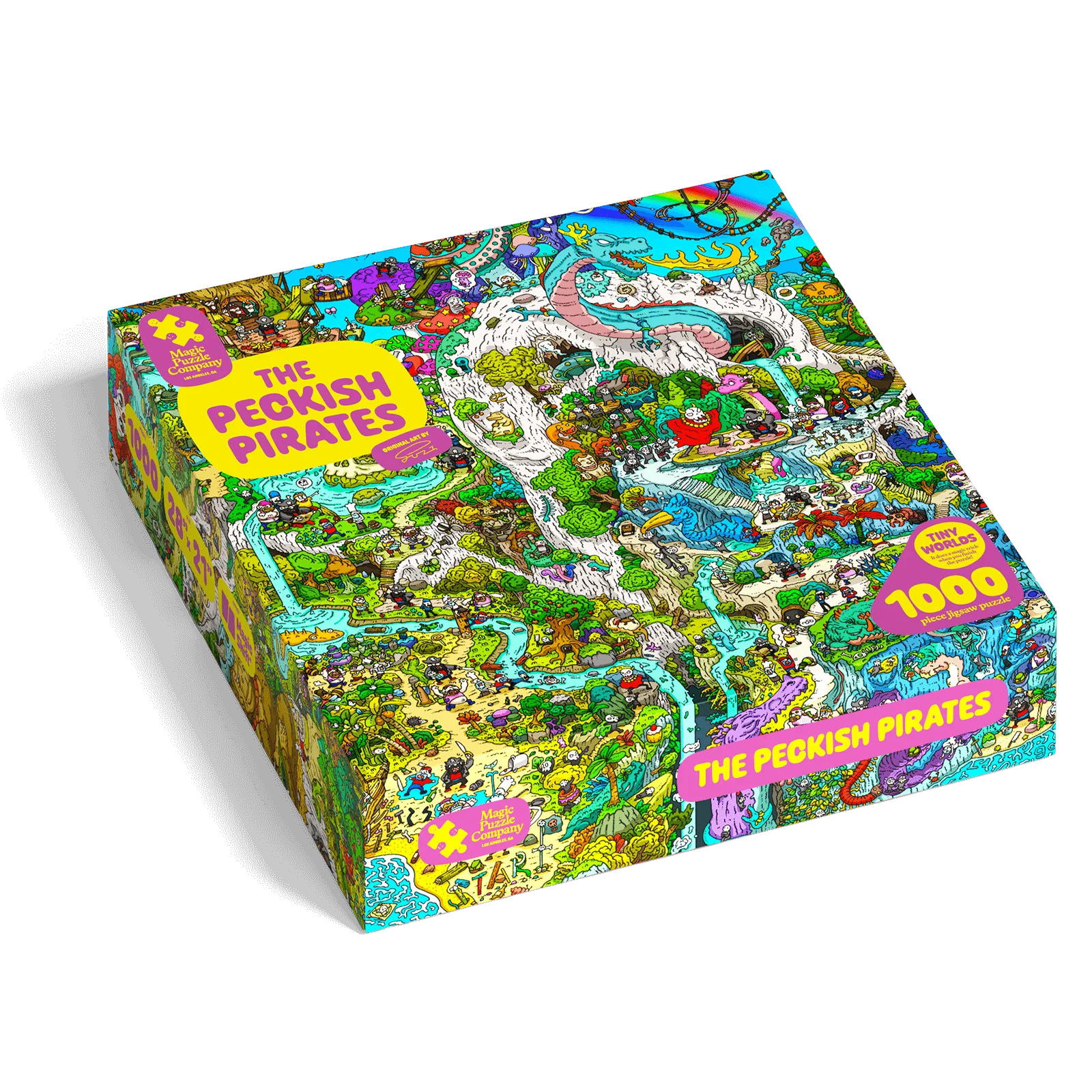
- The Peckish Pirates: The Peckish Pirates is a Series 4 puzzle illustrated by gozz, a Japanese artist known for intricate, whimsical worlds with hidden narrative details. Detailed art means more surface area to keep clean; a dry microfiber cloth is safe for these intricate scenes.
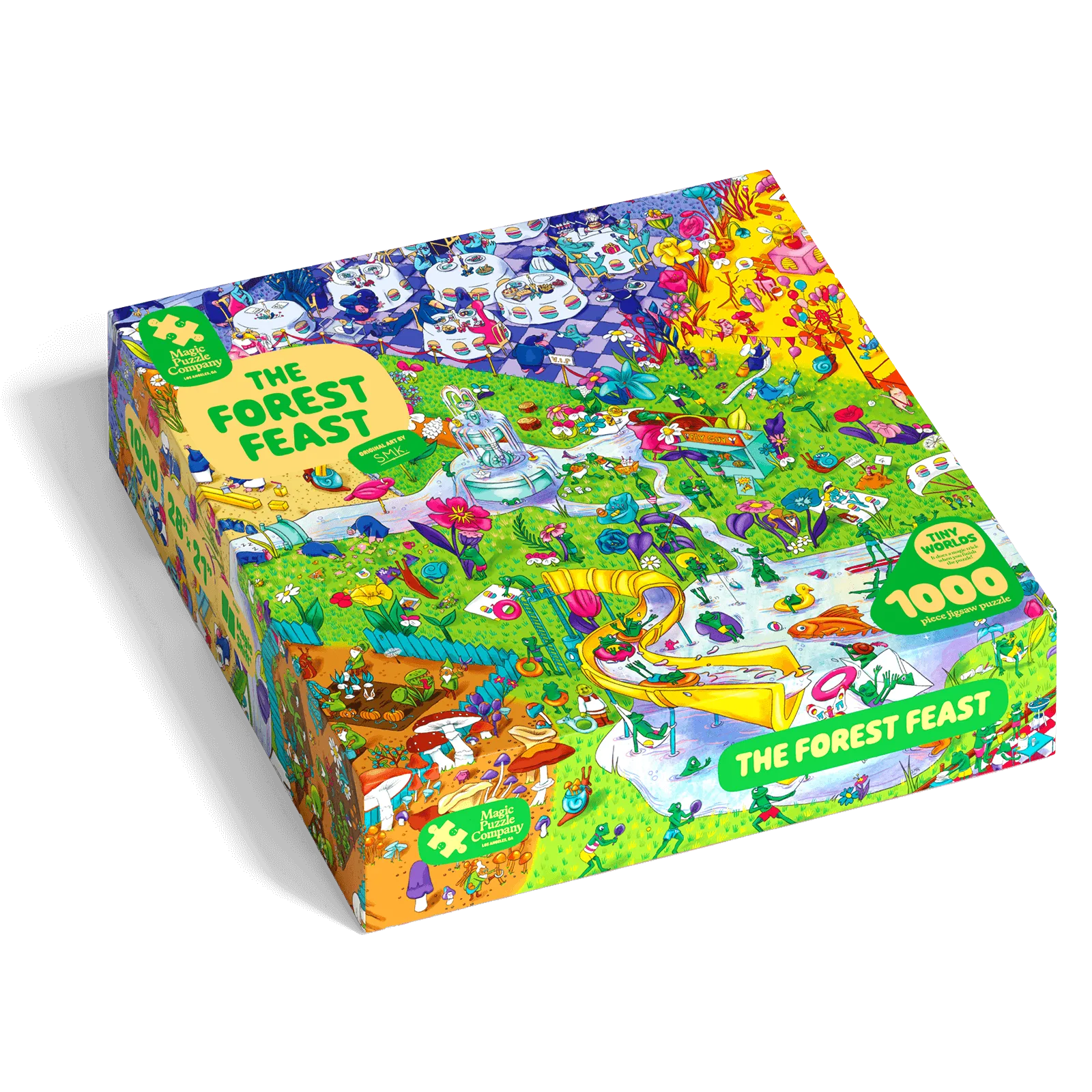
- The Forest Feast: The Forest Feast is a Series 2 puzzle with art by Sanne-Marie Kohlmann, who creates illustrations to connect people with emotions. Series 2 puzzles may have different piece cuts, so store each series separately to avoid mixing pieces between builds.