Quick Answer
For a durable, easy-to-clean card set that lasts through frequent play, choose a 100% plastic deck in the right size and index for your game. Prioritize plastic composition, card size, and index legibility.
Why 100% Plastic Matters
100% plastic playing cards are made from a durable plastic material, not a paper core with a plastic coating. This means they resist bending, moisture, and wear far better than paper cards, making them a smart choice for regular players.
The feel is different from paper cards: plastic cards are often slicker and more flexible. Some players love this, while others need a short adjustment period. Knowing this trade-off helps you decide if a plastic set is right for you.
Size and Index: Match Your Game
Card size matters. Poker-size cards (2.5 x 3.5 inches) are wider and are the standard for poker and most casual games. Bridge-size cards (2.25 x 3.5 inches) are narrower, designed for bridge players who hold many cards in hand.
The index is the number and letter in the corner. A jumbo index makes it easier to read your cards at a glance, which is especially helpful for players with vision concerns or those who play in low light. Choose jumbo index if you value quick readability.
Color and Design: Style Meets Function
Card backs come in a variety of colors and patterns. While aesthetics are personal, consider contrast: a light-colored back with a clear pattern helps prevent accidental card orientation errors. Some sets offer a classic two-color combination, which can be useful for games that require two decks.
Remember that the back design does not affect gameplay, but it can add a touch of personality to your table. Choose a design you enjoy looking at during long sessions.
Decision Rules for Choosing a Plastic Card Set
- Check the material: Look for '100% plastic' on the packaging. If it says 'plastic-coated' or 'plastic finish', it is not a true plastic set and will not offer the same durability.
- Match the size to your game: Choose poker size for poker, Texas hold'em, and casual games. Choose bridge size for bridge and games where you hold many cards. If you play multiple games, consider getting a set in each size.
- Decide on index size: Choose jumbo index if you want easier readability, especially for long sessions or if you have vision concerns. Standard index is fine if you prefer a more traditional look.
- Consider the number of decks: Many games require two decks (e.g., some poker variants). A set with two decks is convenient and ensures you have a spare.
- Evaluate the feel: If possible, handle a sample or read reviews about the slickness and flexibility. Plastic cards feel different from paper; some players prefer a bit of texture. If you are new to plastic, start with a budget-friendly set to see if you like the feel.
Plastic Card Sets to Consider
-
Marion Red Blue Poker Jumbo Index: This set includes one red deck and one blue deck, both 100% plastic with a jumbo index, designed for poker. The two-deck set is ideal for games that require a backup deck or for players who like to alternate colors.
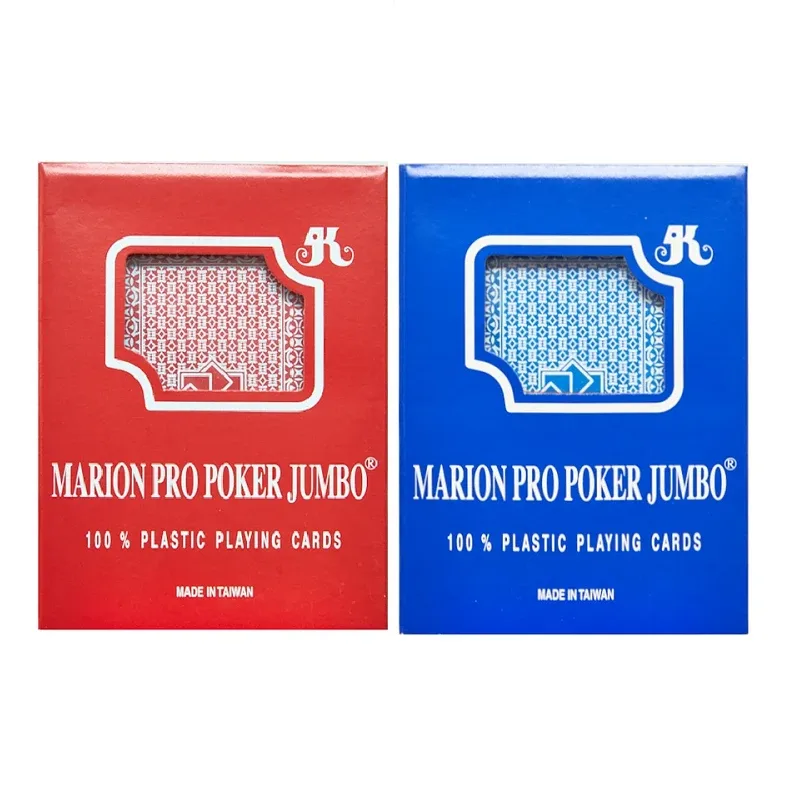
Marion Red Blue Poker Jumbo Index
-
Marion Green / Purple Diamond Bridge Jumbo Index: This set includes one green deck and one purple deck, both 100% plastic with a jumbo index, in bridge size with a diamond pattern. The bridge size and jumbo index make it easy to read and handle for bridge players, while the diamond pattern adds a touch of style.
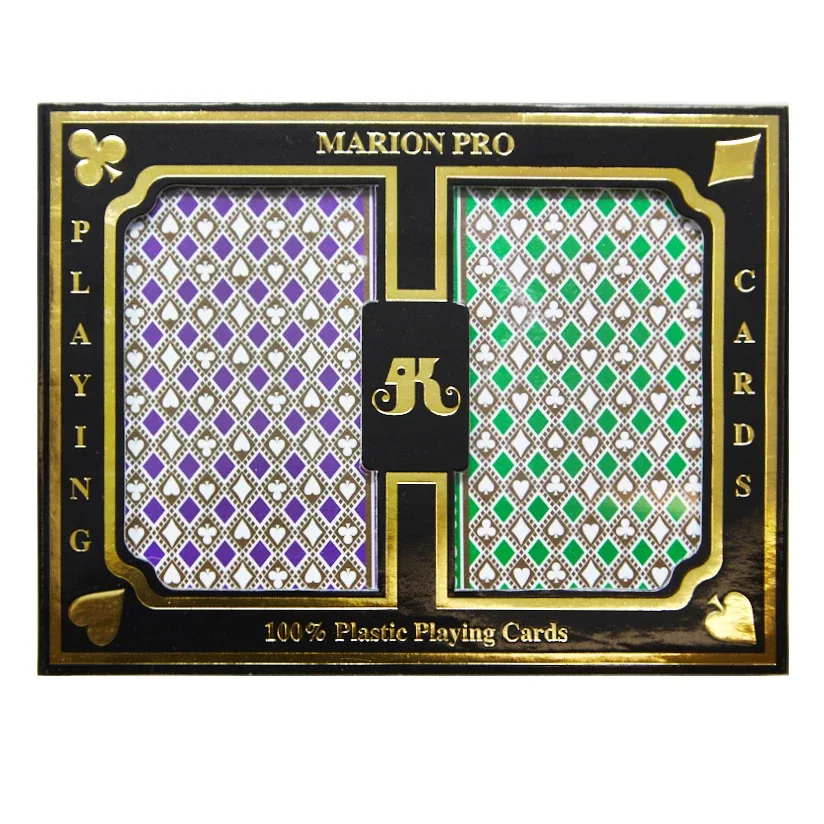
Marion Green / Purple Diamond Bridge Jumbo Index
Who Should Choose a 100% Plastic Set?
Best for
- Frequent players who want durability and easy cleaning
- Players who prefer a modern, flexible card feel
- Those who want a set that resists moisture and bending
Not for
- Players who strongly prefer the traditional paper card feel
- Those on a very tight budget, as plastic sets cost more upfront
- Players who only play occasionally and do not need extra durability