Quick answer
Choose a backgammon set by first deciding where it will live and how often it will move. For a dedicated table at home, an 18- to 21-inch board with wood or leather construction gives the best playing feel. For frequent travel, prioritize a folding or roll-up set under 15 inches. If you are new to the game, a mid-size set with clear points and a felt or fabric playing surface is the easiest to learn on.
Start with board size, not looks
Board size determines how comfortable the game is to play and how easily it stores. Standard home boards measure 18 to 21 inches across the playing field; tournament boards are often larger, while travel boards are typically 10 to 15 inches. A larger board means larger checkers and points, which reduces crowding and makes moves easier to read. A smaller board saves space but can feel cramped when you are bearing off.
- Measure your table or shelf before buying; a 21-inch board needs about 24 inches of clearance.
- If two people play regularly, an 18-inch board is the smallest size that still feels spacious.
- For solo practice or kids, a 15-inch board is a good compromise between playability and storage.
Materials: wood, leather, and everything else
Wood boards, especially solid beech or walnut, offer a classic feel and hold up well to frequent play. They are heavier, which keeps them stable but makes them less portable. Leather boards are lighter and often fold or roll, making them a strong choice for travel and clubs. Leatherette and fabric boards are budget-friendly and easy to clean, but they may not last as long under heavy use. The playing surface matters too: felt and suede slow the checkers slightly for more control, while smooth surfaces allow faster, louder rolls.
- Solid wood: best for a permanent home board; expect some weight.
- Leather or leatherette: best for portability and a quieter roll.
- Felt or fabric: best for beginners and casual play; check for a smooth, flat surface.
Portability: folding, rolling, or staying put
If you play at home, portability is less important than stability and size. If you travel or play at a club, look for a set that folds in half or rolls into a tube. Folding sets often include a storage area for checkers and dice, which keeps everything together. Roll-up sets are the lightest but offer less structure, so they need a flat surface to play on. Consider how you will carry it: a handle or strap makes a difference if you walk or take public transit.
- Folding set: best balance of protection and portability for most players.
- Roll-up set: lightest option, but requires a table or flat surface.
- Non-folding set: best for a dedicated game room or table.
Checkers, dice, and small details that matter
Checkers should feel substantial and fit the points without overlapping. Standard sets use 1.25- to 1.75-inch checkers; larger boards use larger checkers. Dice cups and precision dice are often included, but you can upgrade later. Look for a set with a doubling cube and at least four dice. If the set does not list checker size or material, treat that as a missing detail and ask the seller before buying.
- Checkers: look for a weight and size that match the board; too small feels fiddly, too large crowds the points.
- Dice: precision dice are nice but not essential for casual play.
- Storage: a built-in tray or bag keeps pieces from getting lost.
Decision rules for buying a backgammon set
- Rule 1: Match size to your space: Measure your table and storage area. If you have a dedicated table, go 18-21 inches. If you pack it away after each game, stay under 15 inches. A board that does not fit your space will not get played.
- Rule 2: Choose material by how you play: Wood for a permanent home board, leather or leatherette for travel and clubs, felt or fabric for casual and beginner play. Material affects weight, durability, and roll feel.
- Rule 3: Prioritize portability only if you move it: Folding and roll-up sets trade stability for convenience. If the set never leaves home, a solid non-folding board is more enjoyable. Do not pay for portability you will not use.
- Rule 4: Check the small parts: Confirm checker size, dice count, and whether a doubling cube is included. If these are not listed, ask before buying. Missing details often mean missing pieces.
Examples from our catalog
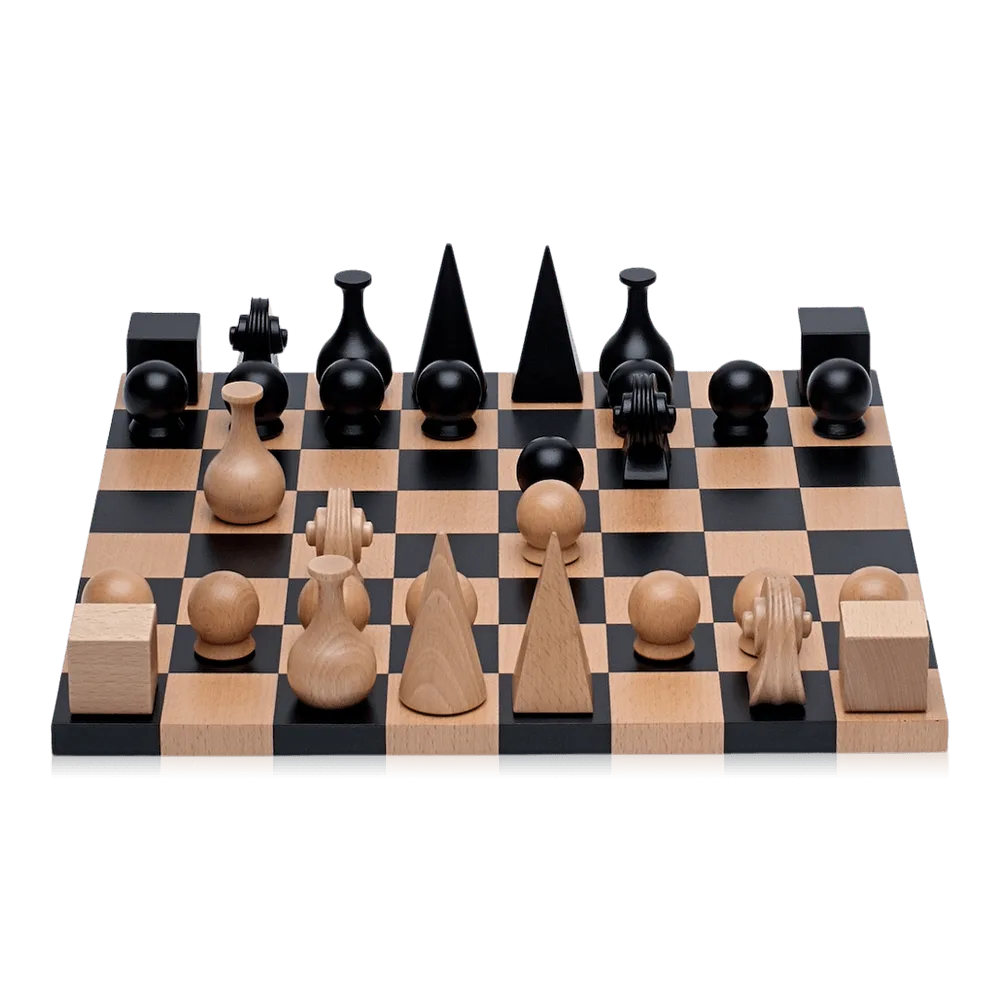
- Man Ray Chess Set: This design was inspired by Man Ray's lifelong friendship with avid chess player and fellow artist Marcel Duchamp. In this re-edition of the 1920s Wooden Chess Set, a metal version of which is in the MoMA collection, Man Ray translates traditional chess pieces in geometric forms. Chess set and board sold separately. Made in Germany from solid beechwood with clear lacquered and black painted finishes; wool felt pads. This is a chess set, not a backgammon set, but it illustrates how solid beechwood and felt pads affect weight and feel. If you want a wood board for display, this shows the kind of craftsmanship to look for; just note it is sold as a set and board separately.
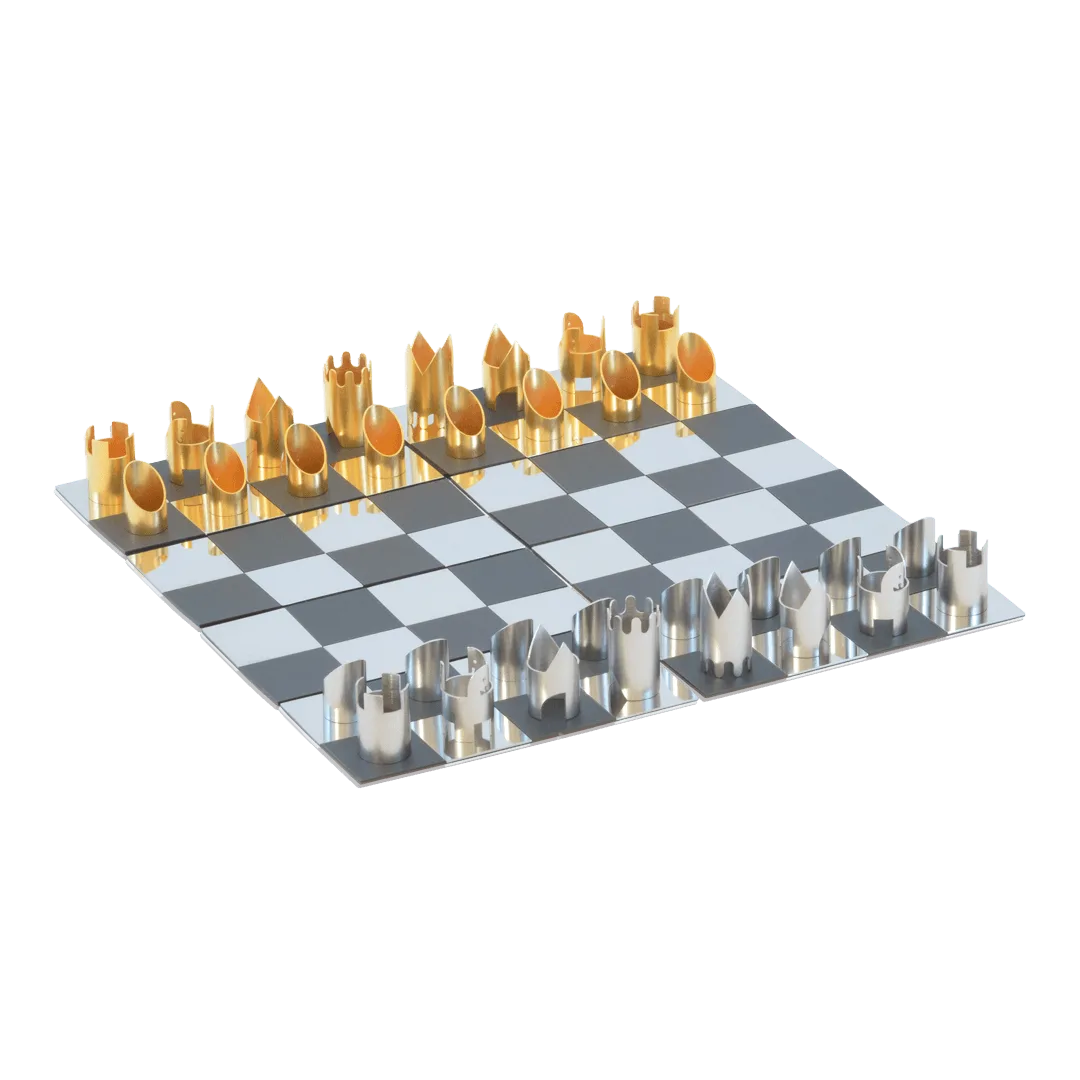
- Interlocking Chess Set: The sixty-four individual pieces of this ingenious chess set stack and lock into thin metal tubes reminiscent of magic wands. Both satisfying to handle and lovely to behold, the nickel silver and gold plated pieces have an angular, modernist aesthetic that was likely influenced by the designer's friendship with Man Ray. Cyril Endfield majored in Drama at Yale while also studying mathematics, mechanical drawing and... This is a chess set, but its interlocking, portable design is a good reminder that how a set stores and travels can matter as much as how it looks. For backgammon, look for similar thoughtful storage if portability is a priority.
Who should buy which type
Best for
- Home players who want a stable, classic wood board for a dedicated table
- Frequent travelers who need a folding or roll-up set that fits in a bag
- Beginners who want a mid-size set with clear points and a felt surface
Not for
- Collectors seeking a tournament-grade board larger than 21 inches
- Players who need a set that doubles as a chess set
- Anyone who wants a board that can be left outdoors or in a damp basement