Quick answer
For car trips, choose a carrier that is crash-tested or sturdy enough to stay put, has good ventilation, and offers your cat a familiar, comfortable space. Soft-sided carriers with mesh windows work well for most cars, but hard-sided options add extra protection.
Safety first: securing the carrier in the car
A loose carrier can slide or tip during sudden stops. Look for carriers with seatbelt loops or straps that let you buckle them in. Some carriers are designed to be tethered to the car's seatbelt system. If your carrier doesn't have built-in loops, you can use a separate carrier anchor strap. Never place a carrier in the front seat where an airbag could deploy.
Ventilation and visibility matter
Cats can get anxious in confined spaces. A carrier with mesh windows on multiple sides gives your cat a view of the outside and allows fresh air to circulate. This can reduce motion sickness and stress. However, too much visibility might overstimulate some cats. If your cat is easily spooked, look for a carrier with a partial cover or one that allows you to zip down the mesh when needed.
Comfort for longer drives
For trips longer than an hour, your cat will appreciate a soft, padded interior. Some carriers have removable fleece liners that are easy to wash. A carrier that can be unzipped flat makes it easier to place your cat inside without forcing them. The tuft + paw Porto Cat Carrier, for example, is designed with a home-like feel and water-resistant canvas, plus breathable mesh windows for ventilation. Its soft-sided build can be more comfortable for cats during car rides, though it may not offer the same rigid protection as a hard-shell carrier.
Decision rules for choosing a cat carrier for car trips
- Size: your cat must stand, turn, and lie down: Measure your cat from nose to tail and from floor to shoulder. Add a few inches for comfort. A carrier that is too small will cause stress; one that is too large may slide around. Most carriers list dimensions, so compare them to your cat's measurements.
- Security: crash-tested or seatbelt-compatible: If you drive frequently, invest in a carrier that has passed crash testing or at least includes seatbelt loops. This prevents the carrier from becoming a projectile. Hard-sided carriers often have more secure latching, but soft-sided ones with straps can be buckled in too. Check if the carrier has a seatbelt pass-through or anchor points.
- Ventilation: mesh on at least two sides: Look for mesh panels that allow airflow without being flimsy. Some carriers have zippered mesh that can be partially closed if your cat gets overstimulated. Avoid carriers with only a small window—cats need air circulation even on short drives.
- Ease of loading: top-loading or wide opening: A carrier that opens from the top or has a large front door makes it easier to place a nervous cat inside without forcing them. Some carriers unzip completely flat, which is helpful for cleaning or for letting the cat explore it at home first. Introduce the carrier at home a few days before the trip so your cat gets used to it.
- Cleanability: removable and washable lining: Cats can drool, vomit, or have accidents during car rides. A carrier with a removable, machine-washable pad or liner saves you from scrubbing the whole carrier. Some soft-sided carriers have a waterproof bottom layer that protects the interior. Keep a spare liner or towel in the car for quick swaps.
Product spotlight
-
tuft + paw Porto Cat Carrier: Fulfilled by our friends at tuft + paw. Home-like comfort for cats on the move. This airline-approved carrier provides a stress-free travel experience for you and your feline companion. Crafted from water-resistant canvas, this carrier ensures durability and protection. The breathable mesh windows deliver proper ventilation and visibility. The water-resistant canvas and mesh windows make it a practical choice for car trips where spills or weather are a concern, and the home-like design helps keep your cat calm.
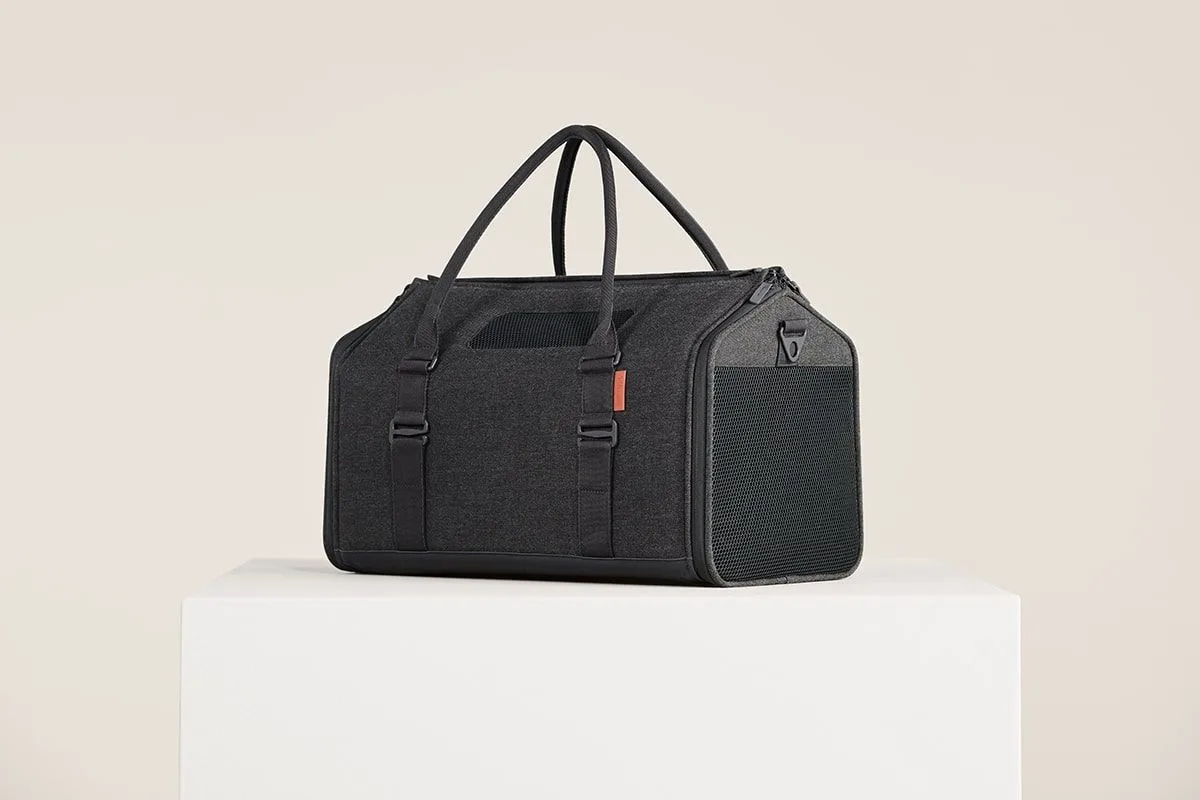
tuft + paw Porto Cat Carrier
Which carrier is right for you?
Best for
- Cat owners who take frequent or long car trips
- Owners who prioritize comfort and ventilation over rigid protection
Not ideal for
- Multi-cat households needing a single carrier for two cats (choose a larger, divided carrier)
- Owners who require a carrier that doubles as a crash-tested car seat (look for specific crash-tested models)