Quick answer
A chifferobe is a smart space-saving choice for a nursery because it combines hanging storage with drawers in one footprint. Focus on drawer count, hanging space, and construction material to match your storage needs.
Why a chifferobe works for a nursery
A chifferobe (or chifforobe) gives you a wardrobe and a dresser in a single piece of furniture. That means fewer pieces to buy and arrange, which is especially helpful in a smaller nursery. You get a place for hanging onesies and tiny jackets plus drawers for socks, blankets, and diapers.
Unlike a standalone armoire, a chifferobe typically includes built-in drawers, so you don't need a separate dresser. And unlike a dresser alone, you also have a rod for hanging clothes. It's a two-in-one solution that grows with your child.
Key trade-offs to consider
Drawer count and depth vary by model. More drawers mean more organized storage, but they also add to the overall depth, which may crowd a tight room. Hanging space is useful for dresses and jackets, but if you plan to use the chifferobe mostly for folded clothes, a model with more drawers and fewer shelves might suit you better.
Construction material affects durability and weight. Solid hardwood pieces are heavier and more stable but harder to move. Engineered wood is lighter and often cheaper but may not last as long. Check the product specs for select hardwood or composite materials.
Your chifferobe decision rules
- Measure your nursery floor plan: Chifferobes are taller and deeper than standard dressers. Measure the width, depth, and height of your chosen spot, including clearance for the door to open fully. The Olivia and Leland chifferobes both have a similar footprint, but check the exact dimensions on the product page. Write down your space dimensions before browsing.
- Count your storage needs: If you need more hanging space for dresses and jackets, choose a model with a full clothing rod and adjustable shelves (like the Leland). If you prefer drawers for folded clothes, the Olivia's five deep drawers give you more organized storage. Think about what you'll store most: hanging clothes or folded items.
- Check assembly and weight: Some chifferobes arrive fully assembled (like the Bondi Cane Armoire), while others require assembly. Solid hardwood models are heavier and may need two people to move. If you plan to rearrange the nursery often, a lighter model might be easier to handle. Decide whether you prefer a pre-assembled piece or are comfortable with DIY assembly.
Chifferobe options to compare
-
Olivia Chifferobe: The Olivia Chifferobe by Westwood Design features five commodious drawers and additional storage behind the door. That means plenty of drawer space for folded clothes plus a hidden area for hanging garments or bulky items like blankets.
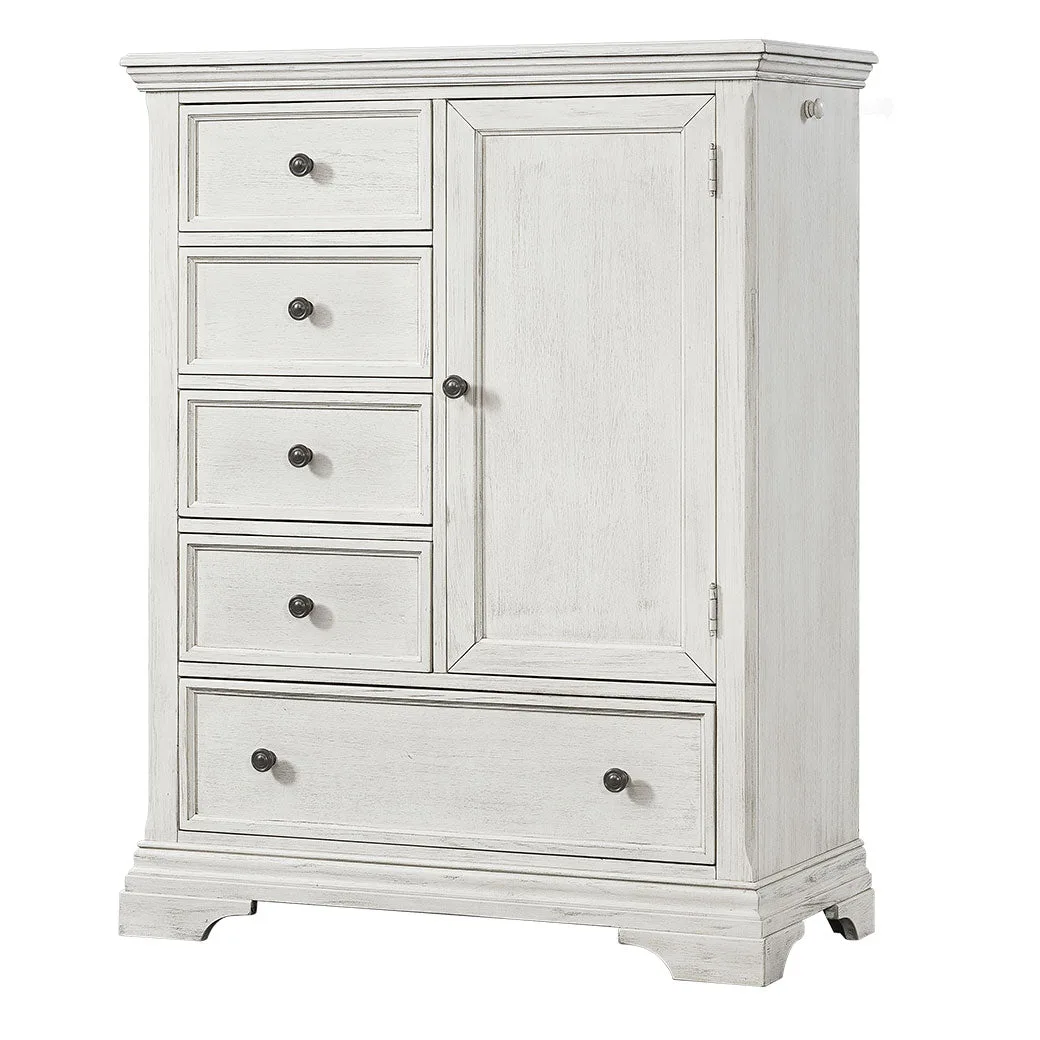
Olivia Chifferobe
-
Leland Chifferobe: The Leland Chifferobe by Westwood Design has five spacious drawers, a built-in clothing rod, and two adjustable shelves behind the door. Adjustable shelves let you customize the hanging and shelf space as your child's wardrobe changes from baby onesies to toddler outfits.
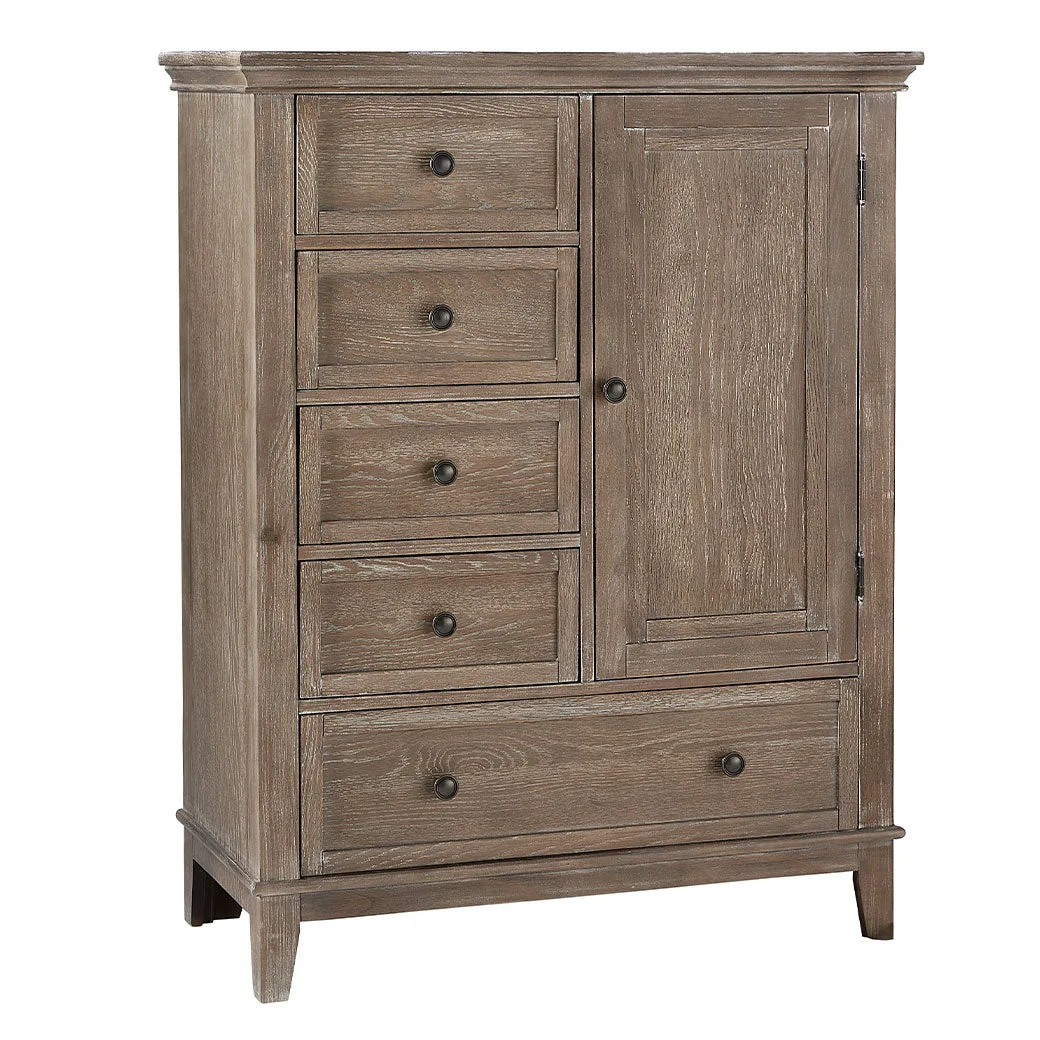
Leland Chifferobe
Which chifferobe is right for you?
Best for
- Parents who want a two-in-one storage solution to save floor space in a small nursery
- Families who need both hanging and folded storage without buying separate furniture
Not for
- Nurseries with very low ceilings where a tall chifferobe might feel overwhelming
- Parents who prefer a dresser plus a separate wardrobe for more layout flexibility