Quick answer
A corner pergola is an excellent choice if you want to define a cozy seating or dining area without taking up the center of your patio. Focus on material durability, size relative to your available corner, and whether you need added privacy features.
Why choose a corner pergola over a standard one
A corner pergola fits neatly into a 90-degree patio corner, making use of space that often goes empty. It creates a defined retreat without blocking sightlines or foot traffic across the rest of the patio.
Because it attaches or sits against two walls, a corner pergola can feel more enclosed and private than a freestanding model. This makes it ideal for conversation nooks, outdoor dining, or a quiet reading spot.
Material and construction trade-offs
Cedar is a popular choice for pergolas because it resists rot and insects naturally, and it ages to a attractive silver-gray if left unfinished. However, cedar requires periodic sealing or staining to maintain its original color and prevent weathering.
If you prefer a low-maintenance option, look for powder-coated aluminum or steel pergolas. They won't warp, crack, or need staining, but they can feel less warm and natural than wood. They also tend to conduct heat more in direct sun.
Size and placement considerations
Measure your patio corner carefully. You need enough clearance for the pergola's footprint plus a comfortable walkway around furniture. A corner pergola that is too large will overwhelm the space; one that is too small will feel cramped.
Consider the sun's path. If your corner gets intense afternoon sun, a solid or louvered roof option can provide more shade than open rafters. If you want dappled light, an open-roof design works well.
Decision rules for choosing a corner pergola
- Measure your corner space first: Measure the available corner area, including clearance for doors, windows, and walkways. A corner pergola should fit without blocking access or making the patio feel cramped. Write down the exact dimensions of your corner before shopping.
- Choose material based on maintenance preference: Cedar offers a classic look and natural durability but needs periodic sealing. Metal is low-maintenance but can get hot and lacks the organic feel of wood.
- Decide on roof style for your sun needs: Open rafters provide dappled light and airflow. Solid or louvered roofs offer more shade and rain protection but can trap heat underneath. If you plan to use the space during midday sun, prioritize a roof with at least 70% coverage.
- Consider privacy and wind protection: Corner pergolas with built-in panels or lattice offer seclusion and block breezes. Open designs feel airier but offer less privacy. If your patio is visible from neighbors, look for models with integrated privacy panels.
Product spotlight
-
Verona Corner Pergola: The Verona Corner Pergola is built from heavy-duty 100% cedar and includes robust composite panels for seclusion and shade. This combination gives you the natural beauty of real wood plus built-in privacy, so you don't need to add separate curtains or screens.
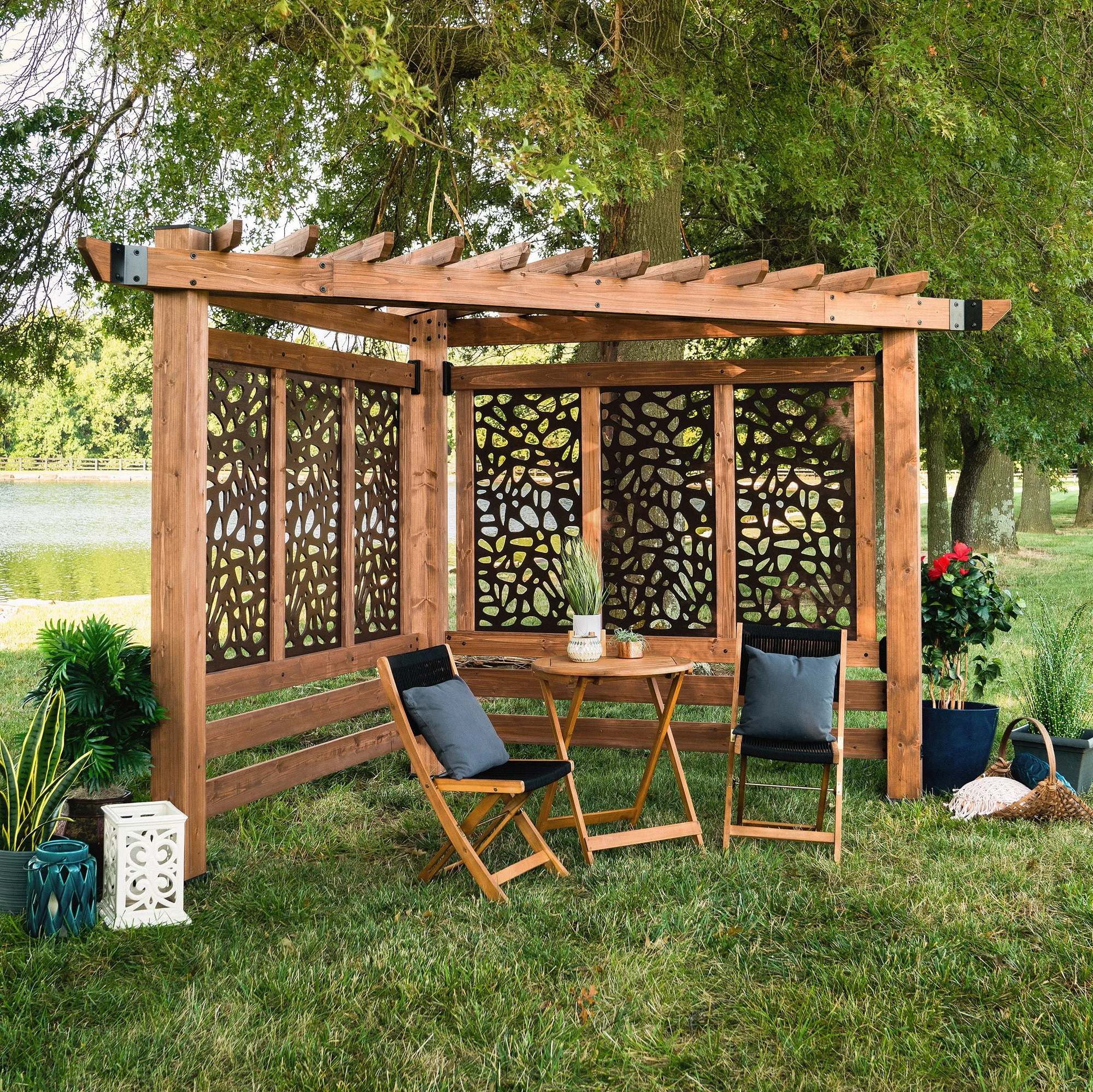
Verona Corner Pergola
Is a corner pergola right for you?
Best for
- Homeowners with an unused patio corner who want to create a defined seating or dining area
- Anyone who wants a more private, enclosed feel without building a full structure
Not for
- Those who need a large central structure to anchor a big patio or host large gatherings
- Patios with irregular angles or very small corners where a standard rectangular pergola fits better