Quick answer
Start by measuring your wall and noting the dominant colors and mood of the room, then pick a landscape print whose subject, palette, and scale create a natural focal point.
Match the mood of the room
A landscape print sets the emotional tone of a space. A serene winter scene with snow-covered birch trees brings calm to a bedroom or reading nook, while a dramatic rail line along Lake Superior adds a sense of adventure to a living room or office.
Look at the existing decor: cool tones pair well with misty wetlands or snowy forests; warm wood or earthy accents complement golden-hour or autumn landscapes.
Consider the print size and your wall dimensions
Limited edition prints come in multiple size options, but you need to choose one that fits your wall without overwhelming or getting lost. A good rule: the print should take up about two-thirds to three-quarters of the available wall space.
If you have a large blank wall, a single oversized print can be a statement piece. For smaller walls or gallery arrangements, a medium or small print works better. Always measure your wall and the print dimensions before ordering.
Think about the subject and composition
Landscape prints vary widely in composition. Some have strong leading lines like a pier or rail track that draw the eye, while others are more open and meditative. Choose a composition that complements the room's layout and the furniture arrangement.
For example, a print with a wooden pier stretching into the water can visually extend a narrow hallway, while a dense forest scene works well above a sofa or bed.
Your 3-step decision guide
- 1. Measure and map your wall: Measure the width and height of the wall area you want to fill. Subtract 6–12 inches on each side for breathing room. The result is your maximum print width. Write down your maximum print dimensions before browsing.
- 2. Choose a mood and color direction: Decide whether the room needs calm, energy, or drama. Pick a landscape whose dominant colors (white, green, blue, or earth tones) complement your existing palette. If your room has warm wood tones, lean toward landscapes with golden or earthy hues.
- 3. Select the composition that fits the space: For a wide wall, choose a horizontal composition like a wetland or shoreline. For a tall narrow wall, pick a vertical composition like a stand of birch trees. A print with a strong leading line (pier, rail track, path) can make a small room feel larger.
Real print examples
-
Canadian birch trees Haliburton Forest | Limited Edition of 10: The photograph captures serene Canadian birch trees in Haliburton Forest, with tall slender white-barked trees creating a sense of tranquility. This print suits a calm, nature-inspired space and its vertical composition works well on a narrow wall or beside a doorway.
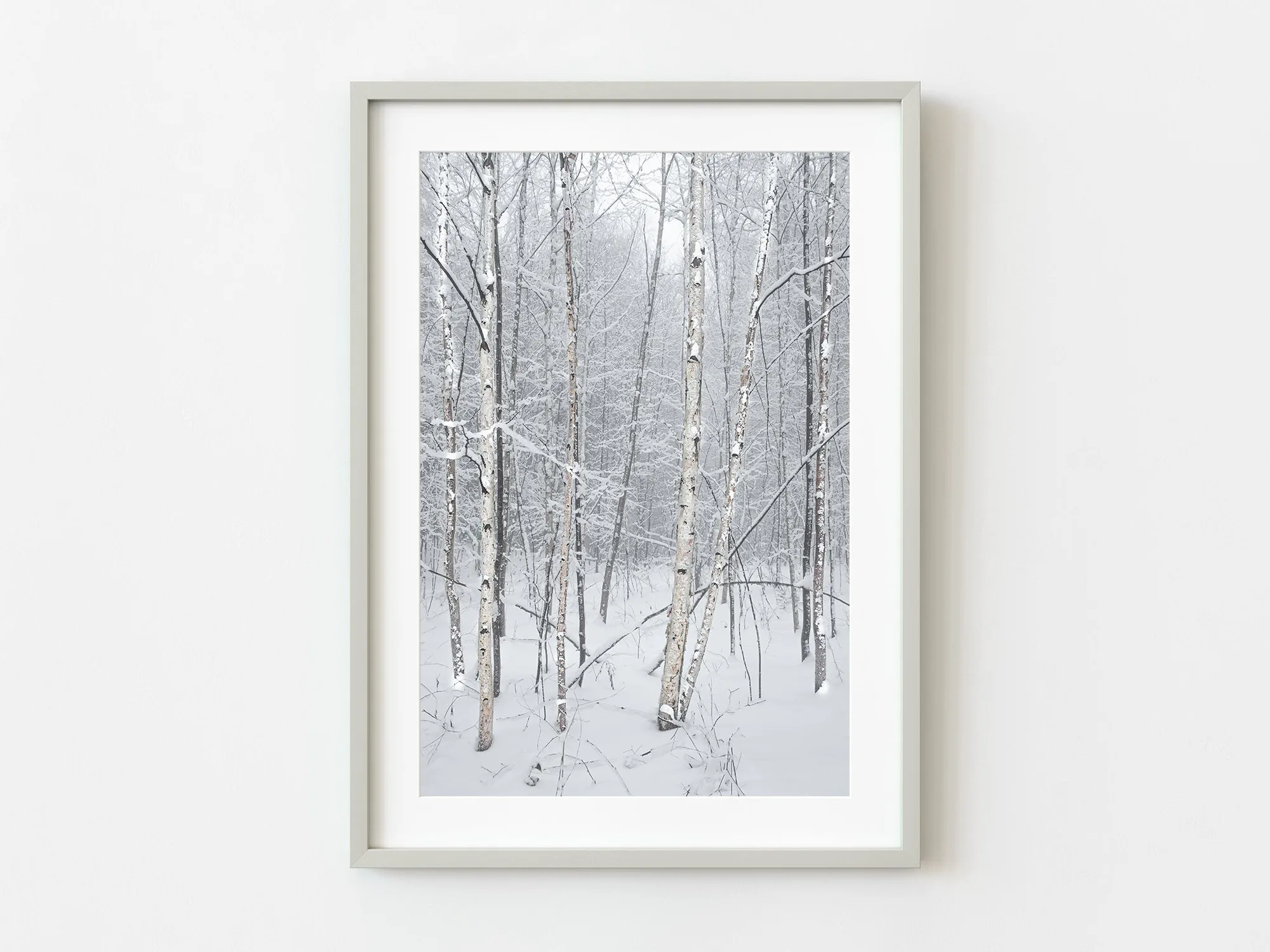
Canadian birch trees Haliburton Forest | Limited Edition of 10
-
Scenic Mexican Wetlands and Wooden Pier | Limited Edition of 10: A black-and-white image of a weathered wooden pier stretching into calm Mexican wetlands, with vast grasslands merging into still water. The strong horizontal line and monochrome palette make it versatile for modern interiors and rooms with cool or neutral color schemes.
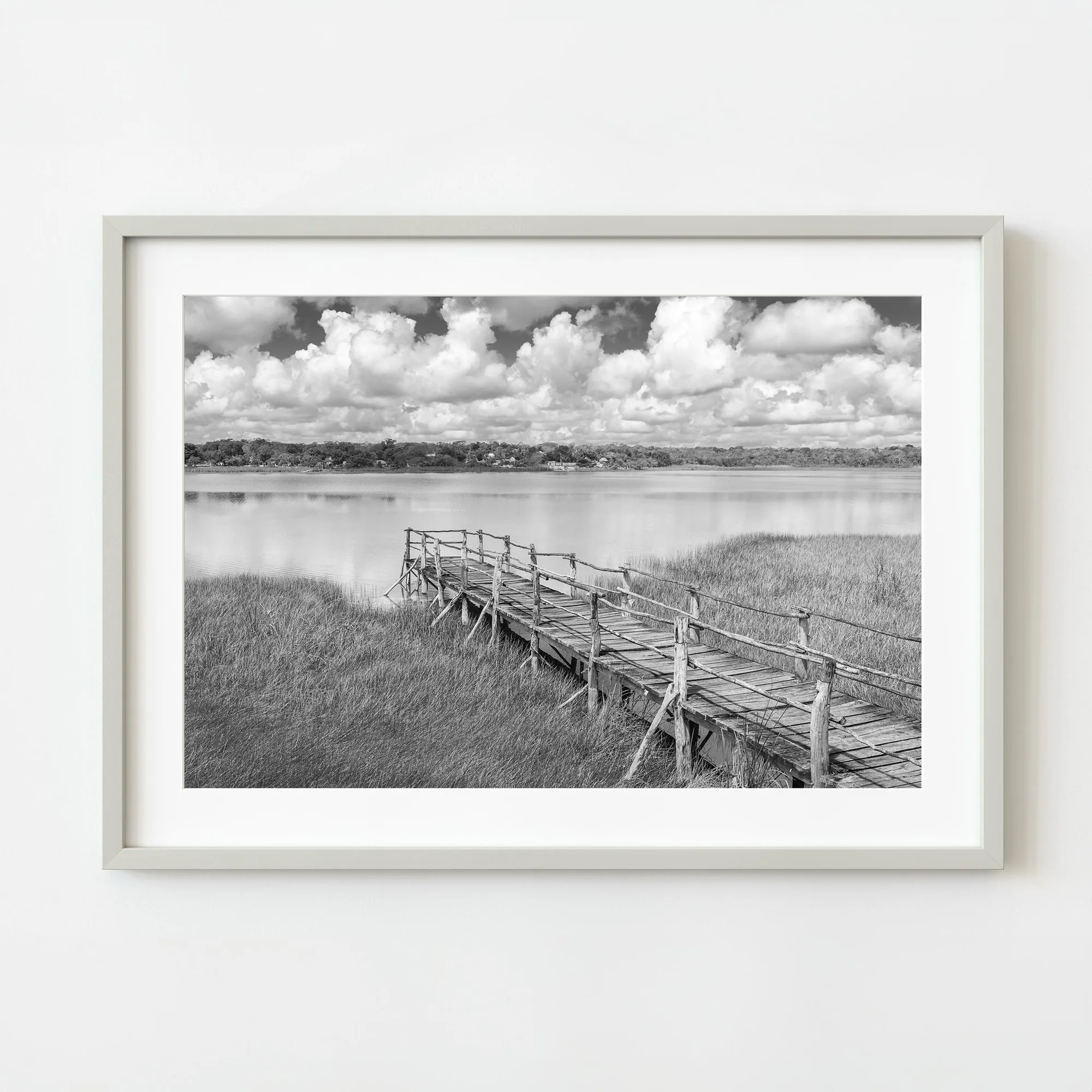
Scenic Mexican Wetlands and Wooden Pier | Limited Edition of 10
Who is this guide for?
Best for
- First-time buyers of limited edition landscape prints
- Anyone redecorating a living room, bedroom, or office with nature wall art
Not for
- Buyers looking for abstract or cityscape art (see our urban vs nature guide)
- Those needing custom framing advice (see our framing guide)