Quick answer
For most recoveries, choose a wireless front-close bra with light compression and adjustable straps. If you need easy access for dressing changes, a zip-front style is the most practical choice.
Why front closure matters for recovery
After surgery, raising your arms or twisting to reach a traditional back clasp can be painful or impossible. A front-close bra lets you dress without those movements, which is why it's a staple in recovery lingerie.
Front closures come in two main styles: hook-and-eye and zip. Hook-and-eye closures are simple and familiar, while zip fronts offer a more secure, adjustable fit that can accommodate swelling changes.
Compression: light vs. firm
Light compression is usually recommended for comfort and gentle support after procedures like lumpectomy, mastectomy, or reconstruction. It helps reduce swelling without putting pressure on sensitive incisions.
Firm compression is sometimes needed for specific surgical protocols, but it's not something you should choose without your surgeon's guidance. Always follow your medical team's advice on compression level.
Fabric and breathability
Recovery bras should be made from soft, breathable materials that wick moisture and minimize irritation. Seamless linings reduce friction against healing skin, and natural fibers like sustainable jersey can be cooling and antimicrobial.
Avoid bras with rough seams, scratchy lace, or synthetic fabrics that trap heat. Your skin is more sensitive during recovery, so choose fabrics that feel gentle against the chest.
Decision rules for choosing your recovery bra
- If you have limited arm mobility: Choose a front-close bra, like the Maia Front Close Bra, to avoid raising your arms or reaching behind your back. Hook-and-eye closures are simple and effective. Test the closure with one hand to ensure it's easy to operate.
- If you need frequent dressing changes or wound checks: A zip-front bra, like the Felice Post-Surgical Bra, offers quick and easy access. The zip also allows you to adjust compression as swelling changes. Check that the zipper doesn't irritate your skin when closed.
- If you prioritize breathability and softness: Look for bras made from natural, breathable fabrics like sustainable jersey. The Maia Bra's cooling and antimicrobial properties help prevent irritation and overheating. Consider having two bras so you can alternate while one is being washed.
- If you need adjustable support: Bras with adjustable straps, like the Felice, let you customize the fit as your body changes during recovery. This helps maintain comfort and support over time. Adjust straps gradually to avoid putting pressure on your shoulders.
Post-surgical bra options to consider
-
Felice Post-Surgical Bra: Co-designed with a leading breast surgeon, the Felice Post-Surgical Bra offers light compression, a seamless eco-friendly lining, adjustable straps, and a zip front closure. The zip front makes dressing easier when arm mobility is limited, and the seamless lining reduces irritation during healing.
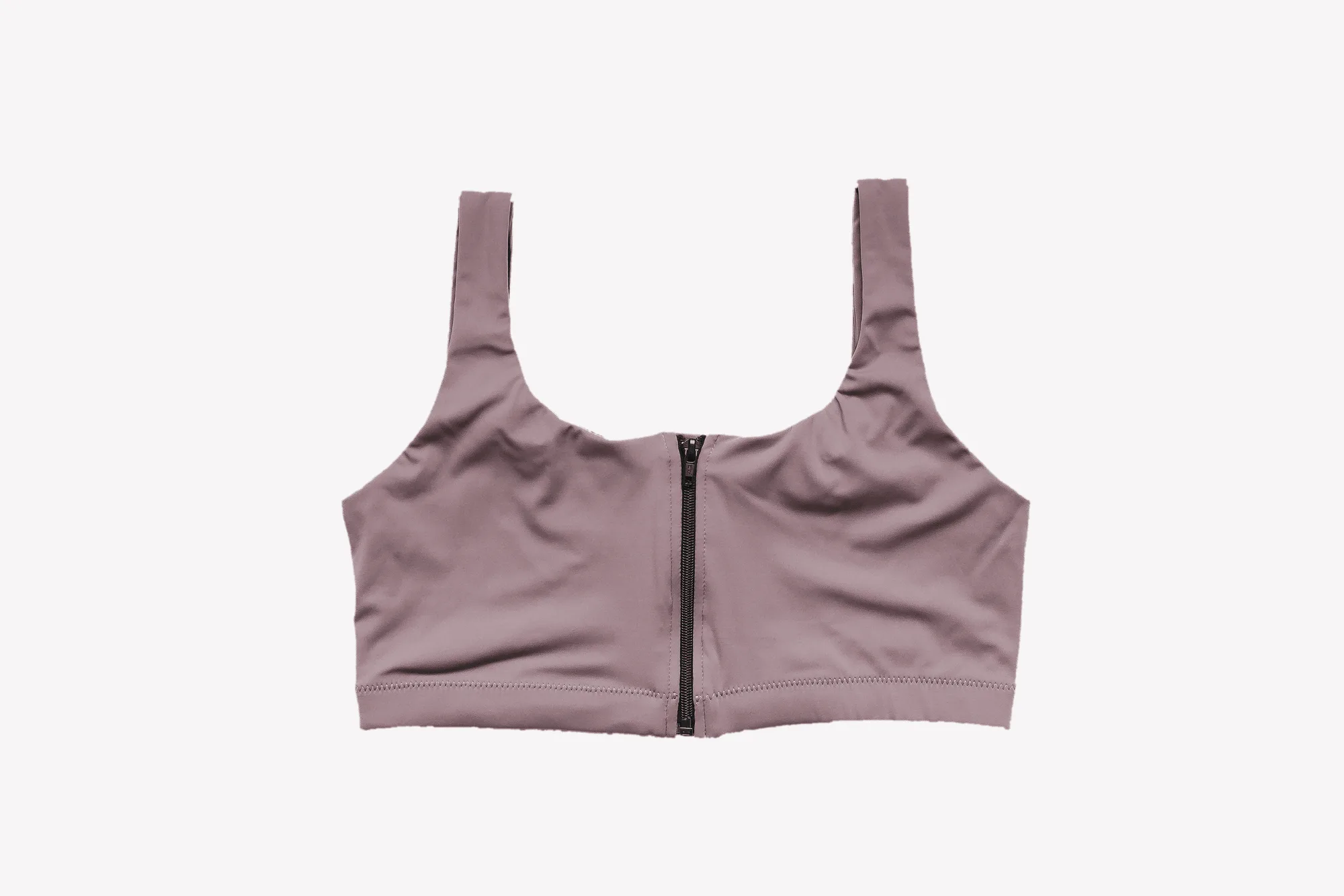
Felice Post-Surgical Bra
-
Maia Front Close Bra, Blush: The Maia Front Close Bra features a hook-and-eye front closure, ultra-soft breathable sustainable jersey that is naturally cooling and antimicrobial, and light compression. It's an easy-on/off option for those with limited arm mobility, and the breathable fabric helps keep you comfortable during long recovery days.
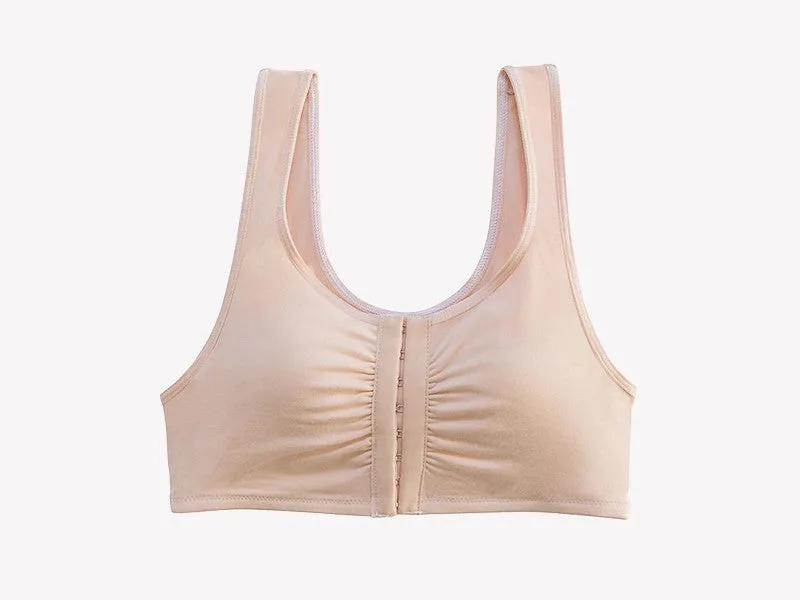
Maia Front Close Bra, Blush
Who is this guide for?
Best for
- People recovering from lumpectomy, mastectomy, explant, heart surgery, or reconstruction who need easy on/off and gentle support.
- Anyone who values breathable, sustainable fabrics and light compression for daily comfort post-surgery.
Not for
- Those who require firm compression as prescribed by their surgeon; always follow medical advice.
- People who prefer traditional back-closure bras and have full arm mobility without discomfort.