Quick answer
For most healthy children, choose a probiotic with well-researched strains such as Lactobacillus and Bifidobacterium, a CFU count between 5 and 10 billion, and a format your child will actually take daily, like a chewable tablet.
Why strain matters more than CFU
When choosing a probiotic for kids, the specific strains matter more than the total count. Different strains have different effects: some support digestion, others support immune function. Look for strains that have been studied in children, such as Lactobacillus rhamnosus GG, Bifidobacterium lactis, and Lactobacillus reuteri.
A high CFU number doesn't guarantee better results. What matters is whether the strains are clinically studied at the dose provided and whether they survive stomach acid to reach the gut.
Consider the delivery format
Kids are more likely to take a probiotic consistently if it tastes good and is easy to swallow. Chewable tablets are a popular choice for school-age children, while powders can be mixed into drinks or food. Gummies are another option, but check the sugar content and ensure they don't contain allergens.
Shelf stability is also a practical factor. Some probiotics require refrigeration, which can be inconvenient for lunches and travel. Shelf-stable options offer more flexibility.
Check for allergens and additives
Many kids have food sensitivities. If your child is allergic to dairy, look for a non-dairy formula. Also check the ingredient list for artificial colors, flavors, or sweeteners that you may want to avoid.
Some probiotics contain prebiotics (fiber that feeds good bacteria). While this can be beneficial, it may cause gas or bloating in sensitive kids. Start with a lower dose and increase gradually.
Decision rules for choosing a kids probiotic
- Check the strains: Look for Lactobacillus or Bifidobacterium strains that have been studied in children. Avoid products that list only 'proprietary blend' without naming specific strains. If the label doesn't name the strains, it's a red flag.
- Aim for 5–10 billion CFU: For general gut health in children, a daily dose of 5 to 10 billion CFU is typical. Higher counts aren't necessarily better and may increase the risk of mild digestive upset. Start at the lower end and increase if needed.
- Consider the format and taste: Choose a chewable, powder, or gummy that your child will take willingly. Check for non-dairy options if your child has a dairy allergy. Consistency beats a perfect formula your child refuses to take.
- Check shelf stability: If you need to pack lunches or travel, choose a shelf-stable probiotic that doesn't require refrigeration. Shelf-stable options are more convenient for on-the-go families.
Product spotlight
-
Probiotica Kids Daily: Probiotica Kids Daily contains a proprietary blend of scientifically researched strains of non-dairy, good bacteria in a yummy vanilla flavoured chewable tablet. It is shelf stable and requires no refrigeration. This makes it a convenient, dairy-free option for kids who need a daily probiotic without the hassle of refrigerated storage.
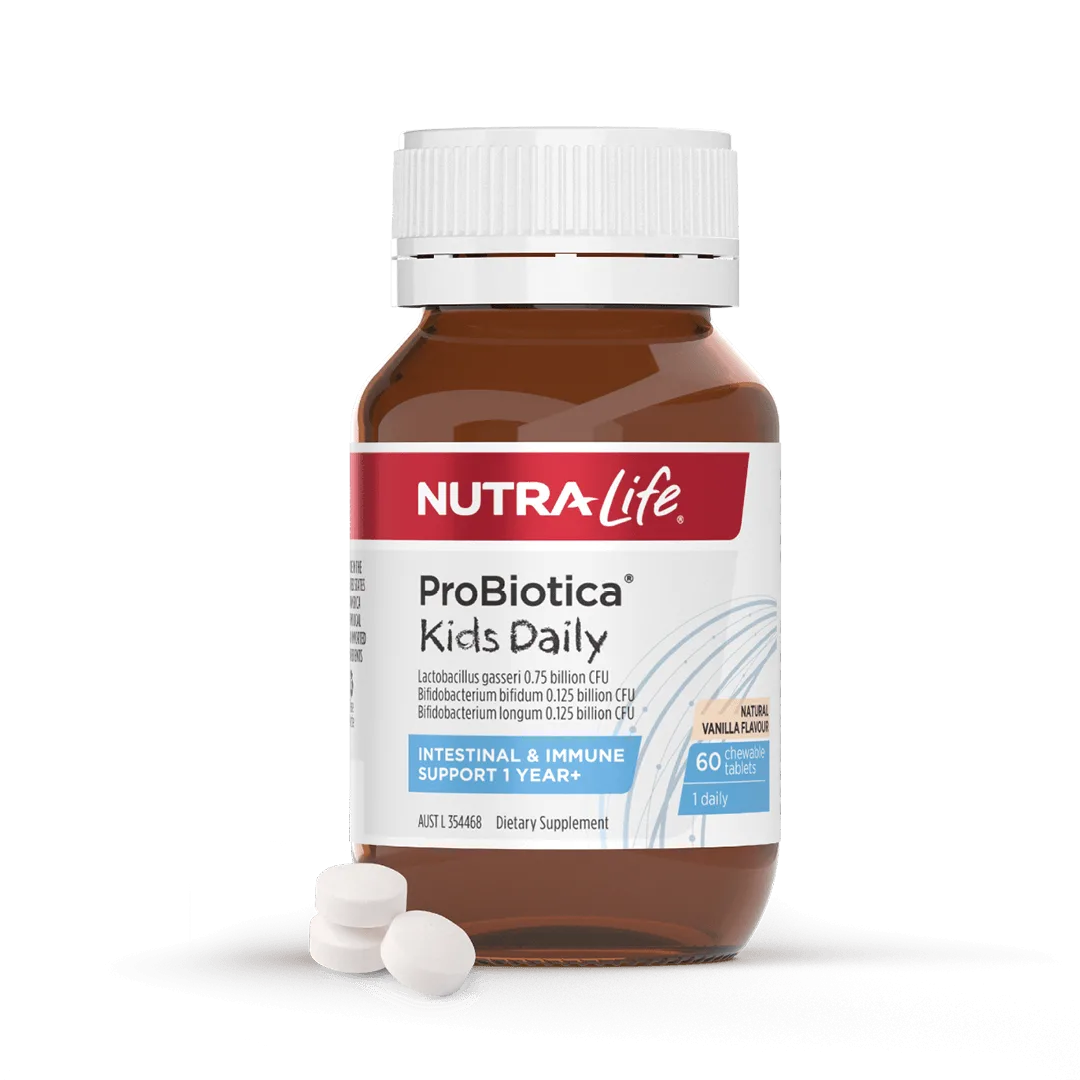
Probiotica Kids Daily
Who should consider this approach
Best for
- Parents of healthy children looking for a daily probiotic to support gut and immune health
- Families who prefer a simple, chewable, and non-dairy supplement
Not for
- Children with severe immune deficiencies or chronic health conditions (consult a pediatrician first)
- Parents seeking a probiotic with a very high CFU count for specific therapeutic use