Quick Answer
Choose a role play costume that matches your child's current interests, fits their age range, and includes accessories that encourage open-ended pretend play rather than a single script.
Why Age and Fit Matter More Than You Think
A costume that is too small will frustrate your child, while one that is too large can be a tripping hazard. Most dress-up sets list an age range on the package, but actual fit depends on your child's height and build. For example, the Astronaut Role Play Costume Set is designed for ages 3–6, while the Scientist Role Play Set fits ages 5–8. If your child is on the edge of these ranges, consider their comfort with loose or snug clothing.
Accessories: The Real Play Value
A costume is only as good as the props that come with it. Look for sets that include multiple accessories—like helmets, gloves, goggles, or lab tools—that can be used in different pretend scenarios. The more versatile the accessories, the longer the costume will hold your child's interest. Avoid sets with only one or two flimsy pieces that break easily.
Durability for Repeat Play
Children are tough on costumes. Check for sturdy construction, reinforced seams, and materials that can withstand frequent wear and washing. Reusable name tags are a nice bonus because they let multiple kids use the same set without confusion. Both the astronaut and scientist sets include reusable name tags, which is a practical feature for siblings or playdates.
Decision Rules for Choosing a Role Play Costume
- Match the interest, not the trend: Choose a costume that aligns with what your child already loves—space, animals, cooking, science—rather than what is popular this season. A costume tied to a genuine interest will be played with far longer.
- Check the age range and size: Look for the manufacturer's age recommendation, but also consider your child's actual height and build. If they are between sizes, opt for the larger size if the costume can be cinched or adjusted. Measure your child's chest and waist before buying if the listing does not include specific measurements.
- Count the accessories: Aim for sets with at least three distinct pieces (e.g., jumpsuit, helmet, gloves). More accessories mean more ways to play, which extends the costume's lifespan in the toy box.
- Prioritize washable materials: Costumes will get dirty. Choose sets made from machine-washable fabrics or easy-to-wipe surfaces. Avoid elaborate decorations that can't be cleaned. Check the care label or product description for washing instructions before you buy.
Product Facts
-
Astronaut Role Play Costume Set: Includes jumpsuit, stretchy silver gloves, shiny helmet, and reusable nametag. Suitable for ages 3–6. The helmet and gloves add immersive sensory play, and the nametag lets siblings or friends trade roles easily.
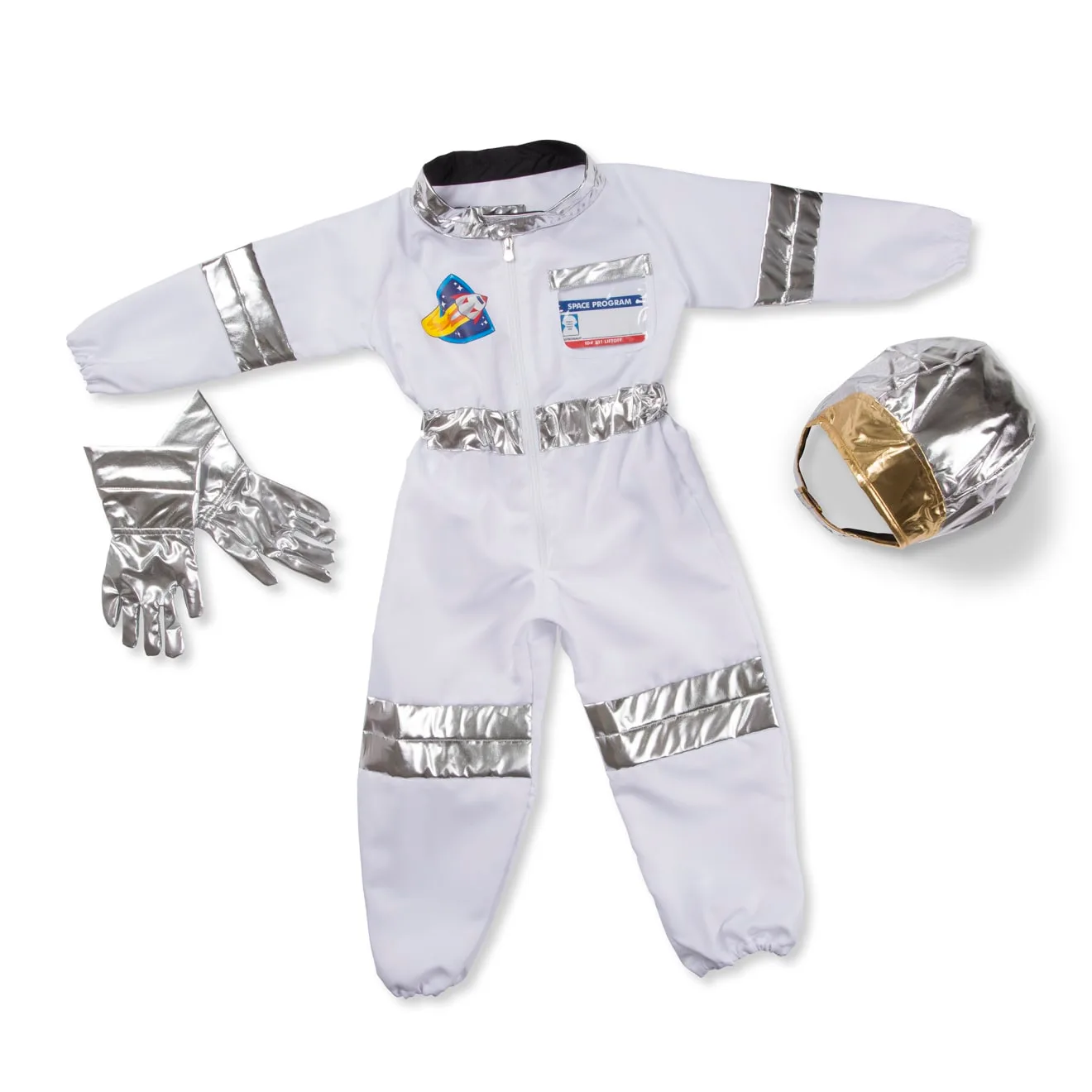
Astronaut Role Play Costume Set
-
Scientist Role Play Set: Includes white lab coat, reusable name tag, goggles, non-breakable beaker, and six illustrated experiments. Fits ages 5–8. The included experiments turn dress-up into a STEM activity, making it ideal for kids who enjoy hands-on discovery.
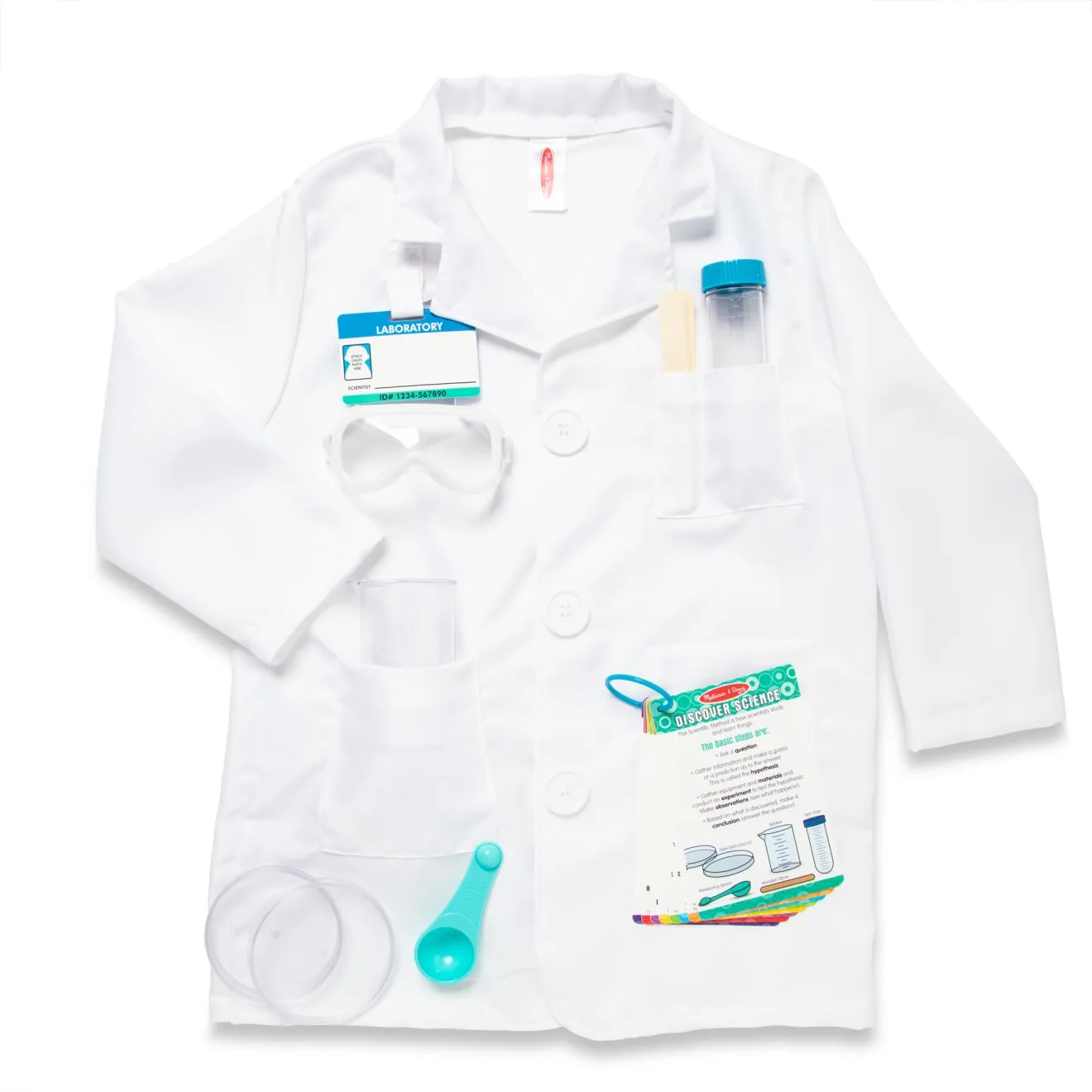
Scientist Role Play Set
Who Should Choose What
Best For
- Kids ages 3–6 who love space exploration and active pretend play (Astronaut Role Play Costume Set)
- Kids ages 5–8 who enjoy science experiments and structured activities (Scientist Role Play Set)
Not Ideal For
- Children who prefer loose, open-ended costumes without a specific theme (consider a generic dress-up trunk instead)
- Kids who are very tall or very short for their age without trying on first (fit may be off)