Quick answer
Choose an infant changing cabinet that combines a sturdy, safe changing surface with accessible storage and a design that fits your space and cleaning routine. Prioritize models with safety straps, raised edges, and durable, easy-to-wipe materials.
Safety features that matter most
A changing cabinet is one of the most-used pieces of furniture in an infant room, so safety should drive your decision. Look for a raised edge or recessed changing surface to help prevent rolls, and a safety strap to secure the baby during changes. The cabinet should be stable and resistant to tipping, especially if children are nearby.
Also consider the materials: non-toxic finishes and smooth, rounded edges reduce hazards. A wipeable surface is a practical must because diaper changes can get messy, and you'll want to sanitize the area quickly between babies.
Storage and workflow
Think about what you need within arm's reach: diapers, wipes, creams, and a change of clothes. A cabinet with open shelves, drawers, or a combination lets you organize supplies so you don't have to leave the baby unattended. A paper roll holder can also streamline cleanup and keep the changing surface hygienic.
Consider the height of the cabinet as well. It should be comfortable for the adults who will use it most, reducing strain during frequent changes. If multiple caregivers use the space, a height that works for the average adult is usually best.
Size, durability, and aesthetics
Measure your room and doorways before you buy. A changing cabinet that's too large can crowd a small nursery, while one that's too small may not offer enough storage. Also check the weight capacity and build quality—solid construction will last through years of daily use and is a better long-term investment.
Aesthetics matter in early childhood spaces. A cabinet that looks clean and professional can make the room feel more welcoming for both children and staff. Look for a style that matches your existing furniture and is easy to keep looking good.
Decision rules for choosing an infant changing cabinet
- Safety first: Choose a model with a raised edge or recessed surface and a safety strap. Verify the cabinet is stable and won't tip easily. Test the strap and edge height before purchase if possible.
- Storage that fits your workflow: List your daily supplies and choose a cabinet with enough shelves or drawers to keep them within reach. A paper roll holder is a plus for hygiene. Check that the storage layout matches your changing routine.
- Size and placement: Measure your room, doorways, and the intended spot. Ensure the cabinet leaves enough space for movement and doesn't block exits. Use painter's tape to outline the cabinet's footprint on the floor before ordering.
- Durability and materials: Look for solid construction, non-toxic finishes, and wipeable surfaces. These features ensure the cabinet withstands daily use and is easy to sanitize. Ask about the weight capacity and warranty to gauge long-term reliability.
- Comfortable height: Choose a changing surface height that is comfortable for the primary caregivers. This reduces back strain and makes changes quicker and safer. If multiple adults will use it, pick a height that works for the tallest regular user.
Product spotlight
-
elevatED™ Infant Changing Cabinet | Modern Nursery Changing Station with Storage, Pad, Safety Strap & Paper Roll: The elevatED™ Infant Changing Cabinet measures 42.50" W x 20.75" D x 38.75" H and features a modern design with contrasting white and textured white oak panels. This size and style suit a range of nursery or classroom layouts, and the durable finish helps maintain a clean, professional look.
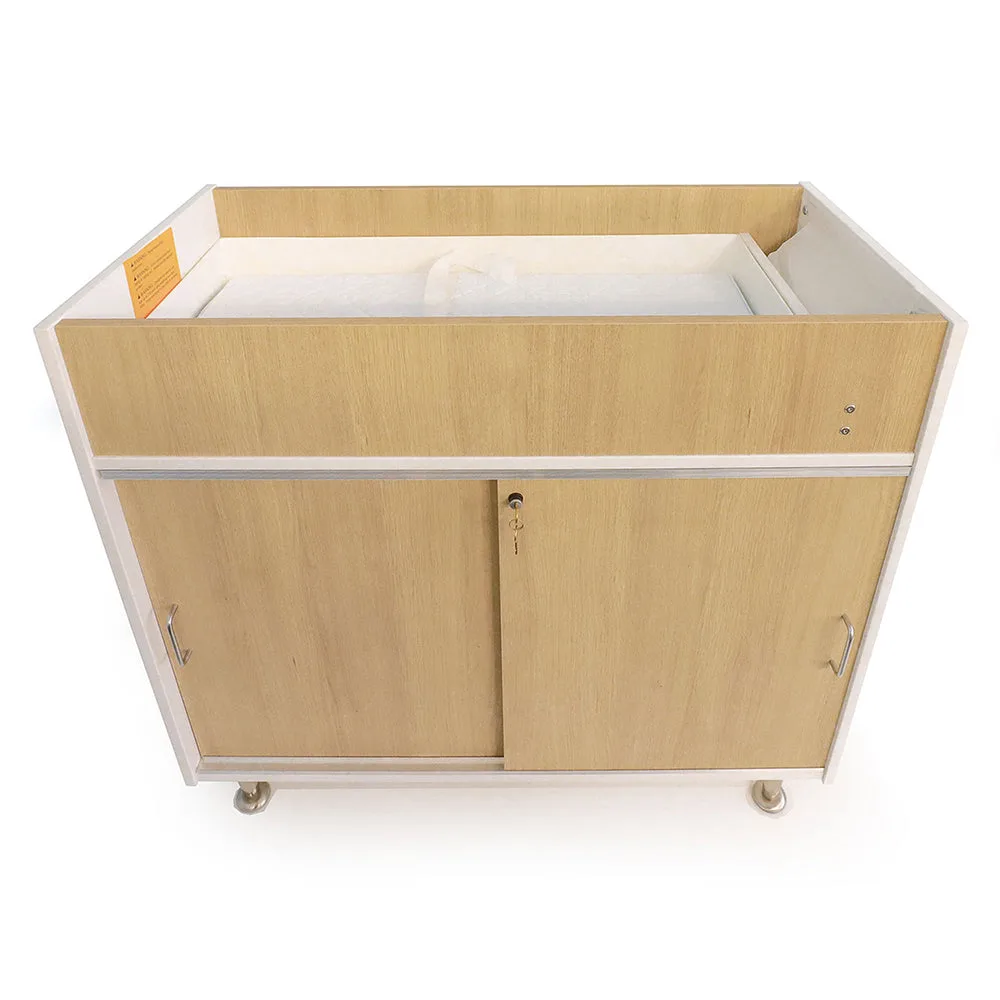
elevatED™ Infant Changing Cabinet | Modern Nursery Changing Station with Storage, Pad, Safety Strap & Paper Roll
Who this is best for
Best for
- Early childhood classrooms and infant rooms that need a durable, professional-looking changing solution
- Nurseries that prioritize storage and a hygienic, wipeable changing surface
Not for
- Families with very limited space who might prefer a compact, wall-mounted changing station
- Budget-conscious buyers who need a basic, no-frills changing table without extra storage