Quick answer
Choose a baby activity blanket that is soft, safe, and offers sensory variety. Prioritize organic cotton shells and a size that fits your floor space. Look for attached toys, textures, and a mirror to engage your baby during tummy time.
Why material and safety matter most
During tummy time, your baby's face is in direct contact with the blanket. A shell made from 100% organic cotton is soft, breathable, and free from harsh chemicals. The filling should be non-toxic and preferably recycled polyester for a lightweight, washable base.
Avoid blankets with small parts that can detach. Look for securely attached toys, mirrors, and teethers. The blanket should lie flat without bunching to prevent tripping hazards for older siblings or pets.
Sensory features that support development
The best tummy time blankets combine multiple textures, contrasting colors, and interactive elements. A mirror encourages self-awareness, crinkly fabrics or soft animals stimulate curiosity, and a silicone teether soothes sore gums. These features keep your baby engaged longer, strengthening neck and shoulder muscles.
Not every blanket needs all these extras. If your baby is very young, a simpler design with high-contrast patterns may be enough. As they grow, more complex toys and textures provide ongoing challenge.
Size and portability trade-offs
Larger blankets (e.g., 120 cm) give your baby room to roll and explore, but they take up more floor space and are harder to fold for travel. Smaller blankets (e.g., 90 cm) are easier to pack for visits or outdoor use but may limit movement as your baby grows.
Consider where you will use the blanket most. If you plan to move it between rooms or take it to daycare, a compact foldable design wins. For a dedicated play area at home, a larger size is more versatile.
Your tummy time blanket decision rules
- Safety first: Check that the blanket is made from organic cotton and has securely attached toys. Avoid any loose parts that could be a choking hazard.
- Sensory variety: Choose a blanket with at least two different textures, a mirror, and a teether if your baby is teething. This supports sensory development and keeps your baby interested. If your baby is under 3 months, high-contrast patterns may be more stimulating than complex toys.
- Size and portability: Measure your floor space. For home use, a larger blanket (100–120 cm) offers room to roll. For travel, pick a smaller foldable version (around 90 cm). A medium size (e.g., 100 cm) balances play space and portability for most families.
- Washability: Ensure the blanket is machine washable. Tummy time blankets get dirty fast. A removable cover or a blanket that holds up to frequent washing is a must.
Activity blankets we recommend
-
BERNET Activity Blanket - Sandy multi mix: Shell made from soft 100% organic cotton with 100% recycled polyester filling. You get a safe, breathable surface for your baby's skin and an eco-friendly choice that is gentle on the planet.
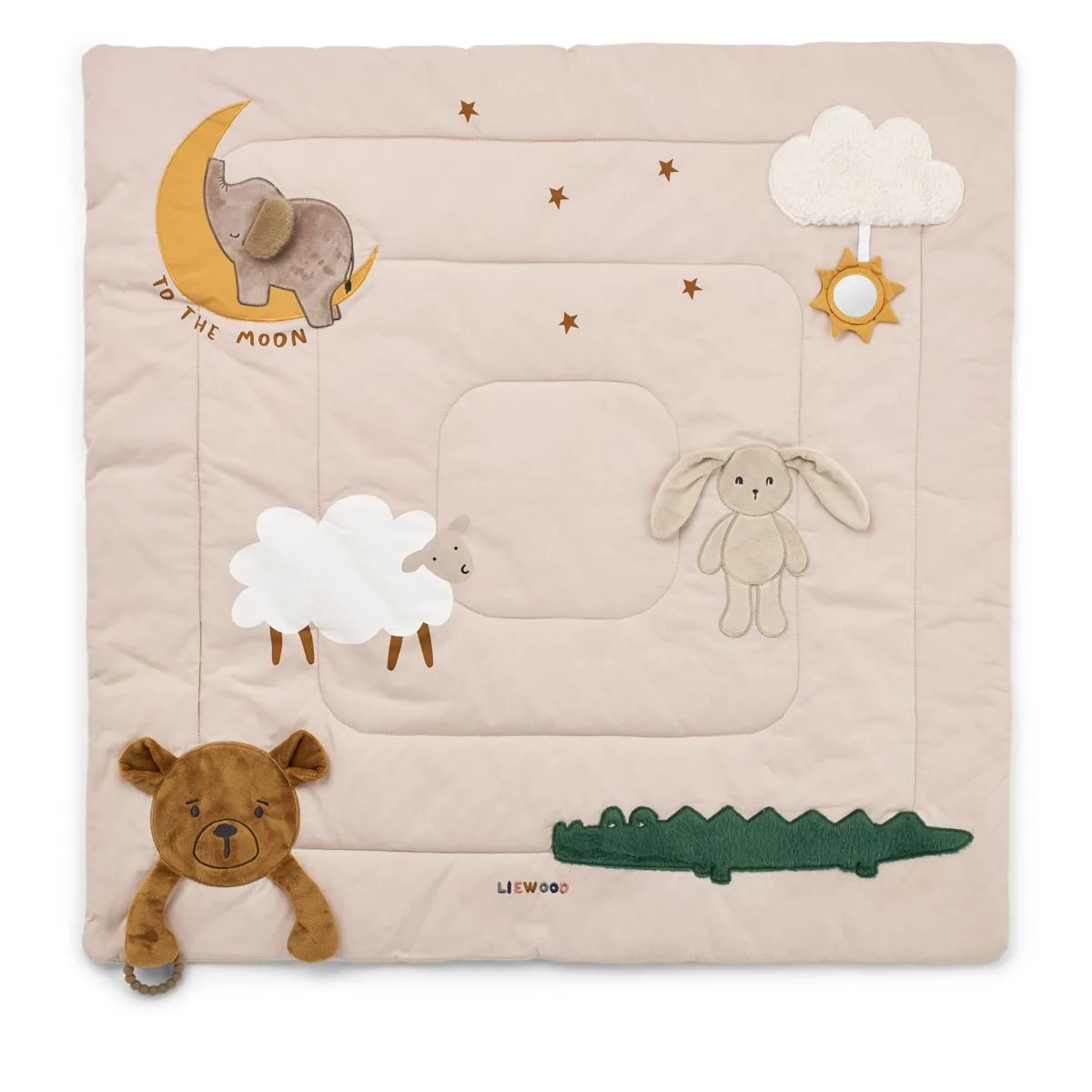
BERNET Activity Blanket - Sandy multi mix
-
Glenn Activity Blanket - Safari sandy mix: Adorned with playful animals, bright colours, and different textures to encourage motoric senses and curiosity. The variety keeps your baby engaged during tummy time, helping to build strength and coordination through play.
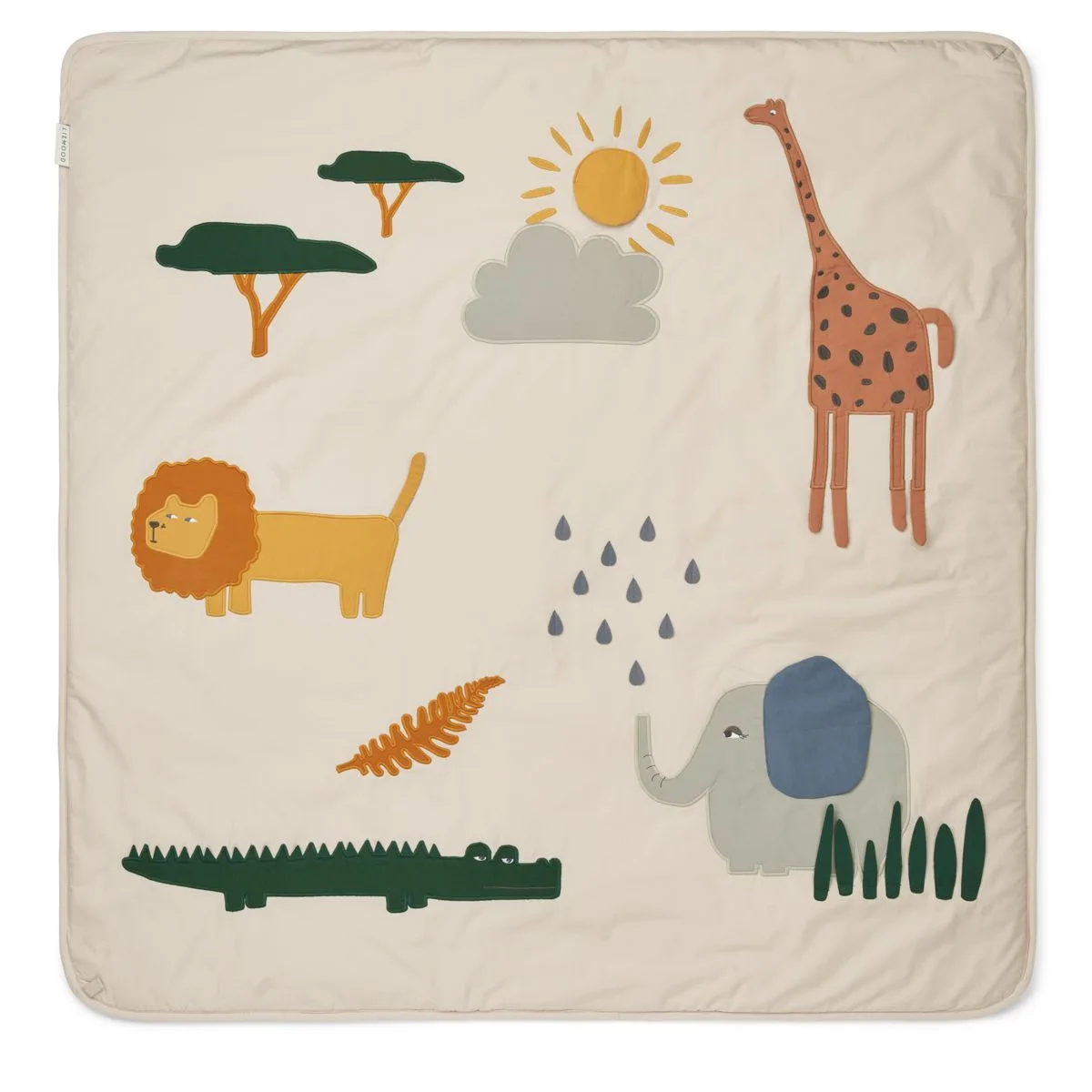
Glenn Activity Blanket - Safari sandy mix
Which blanket fits your baby?
Best for
- Parents who want a soft, organic, and sensory-rich blanket for daily tummy time at home
- Families who value eco-friendly materials and a variety of attached toys
Not ideal for
- Parents who need a very lightweight, ultra-portable mat for frequent travel or outdoor use
- Babies who are extremely sensitive to multiple textures and prefer a plain, quiet surface