Quick answer
Choose a push walker your child stands behind and pushes, not a sit-in seat with wheels. Match the handle height to your child's shoulders, confirm the base resists tipping when they pull up, and weigh the walker so it won't slide out from under them. If you want one toy that also grows with them, a wooden push walker with activity features covers more stages than a seat-style walker.
Why the walker style matters more than the brand
The single biggest decision is whether you buy a push walker or a sit-in walker. A push walker puts your child upright on their own feet, holding a handle and moving the toy forward. A sit-in walker seats them in a wheeled ring, which lets them move before their legs and balance are ready. Many pediatric and safety organizations discourage sit-in walkers because they can move faster than a parent can react and don't build the same balance and muscle control.
That doesn't mean every wheeled toy is a bad idea. It means the walker's job is to support practice, not replace it. You're looking for a tool that lets your child take the steps they're already attempting, with a stable frame in front of them.
What to check before you buy
Walkers vary in weight, handle height, wheel type, and whether they include activity features. Those details decide whether the walker helps or frustrates your child. Work through the points below in order, because a walker that fails an early step isn't worth comparing on price.
If you're deciding between a walker and a stationary activity toy, think about your child's current stage. A walker is for a child who can pull to standing and is starting to cruise. An activity cube or table is for a child who is still mostly sitting and reaching. Buying the walker too early usually means it sits unused, and buying the cube too late misses the window when it's most engaging.
Step-by-step: choosing and using a baby walker safely
- 1. Confirm your child is ready: Your child should be pulling to standing and cruising along furniture before a push walker makes sense. Watch for them shifting weight from one foot to the other while holding on. If they aren't doing that yet, wait a few weeks and revisit. Checkpoint: if they can't stand while holding a handle, the walker will mostly be a climbing hazard right now.
- 2. Rule out sit-in walkers: Skip the wheeled seat that holds your child in the middle. It lets them move faster than their balance can handle and doesn't train the same muscles as pushing. Choose a walker they stand behind and control. Common mistake: assuming a seat walker is a shortcut to walking. It isn't.
- 3. Match the handle height to your child: Have your child stand and hold the handle. Their elbows should be slightly bent, not locked straight and not lifted above shoulder height. A handle that's too high makes them hang; too low makes them hunch. Checkpoint: if you can't adjust the height, measure before buying.
- 4. Test the tipping resistance: With the walker empty, press down on the front edge and then the back. A good walker resists lifting or flipping. A wide base and a low center of gravity are what keep it stable when your child pulls up on it. Common mistake: buying a lightweight walker that skids across smooth floors.
- 5. Check the wheels against your floors: Hard wheels on hardwood or tile can slide too fast. Look for wheels that grip or add a rug to slow the walker down. On carpet, wheels need to be large enough to roll without catching. Checkpoint: push the empty walker across your actual floor before your child uses it.
- 6. Set up a safe practice zone: Clear the area of stairs, sharp corners, cords, and pets. Block stairs with a gate even if the walker is stable. Stay within arm's reach the entire time your child is using it. Common mistake: treating the walker as a babysitter. It isn't one.
- 7. Limit sessions and watch for fatigue: Ten to fifteen minutes at a time is plenty for most toddlers. Stop when they start slumping, dragging their feet, or getting frustrated. Short, frequent practice beats long sessions. Checkpoint: if they're crying or leaning on the handle instead of stepping, end the session.
Product facts that affect the decision
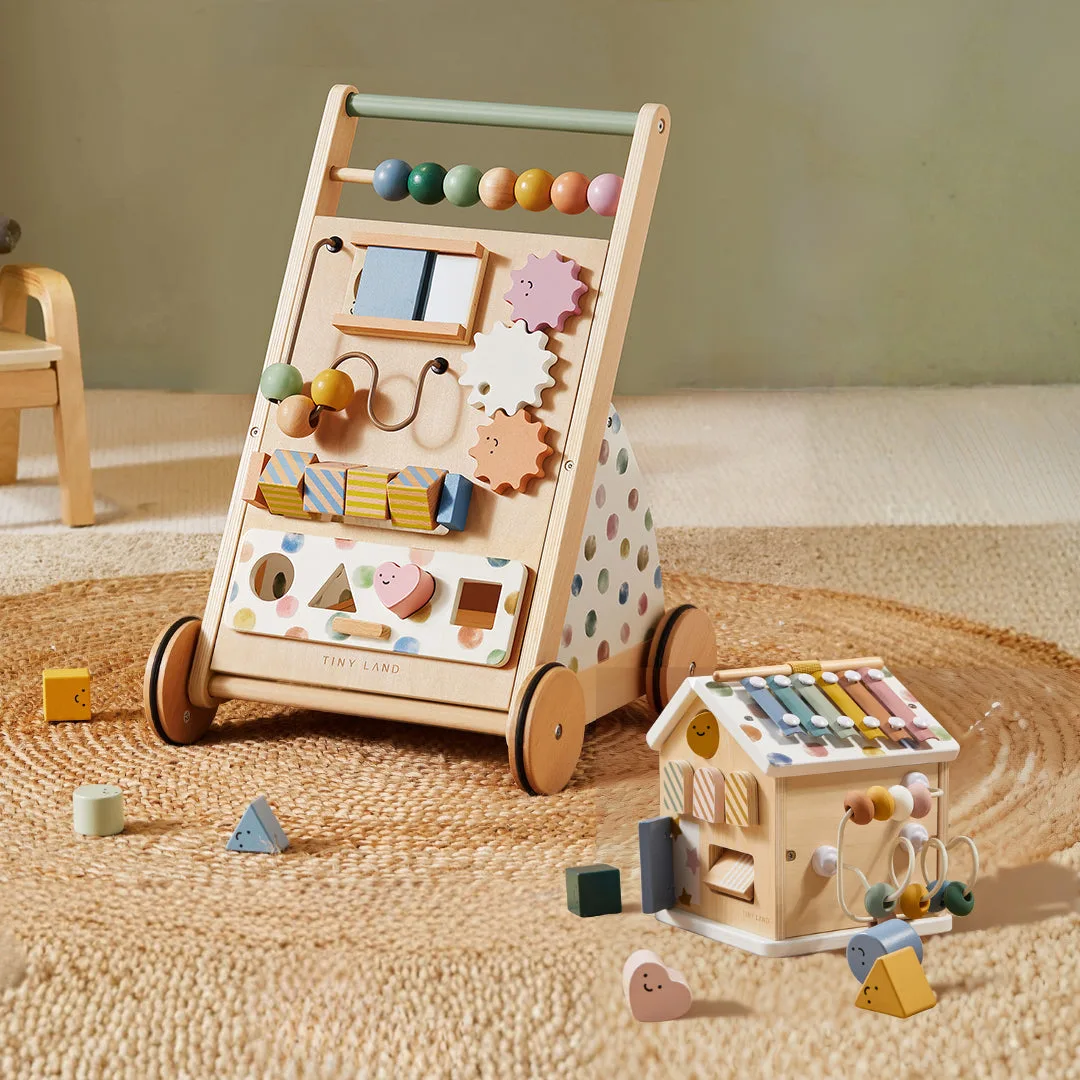
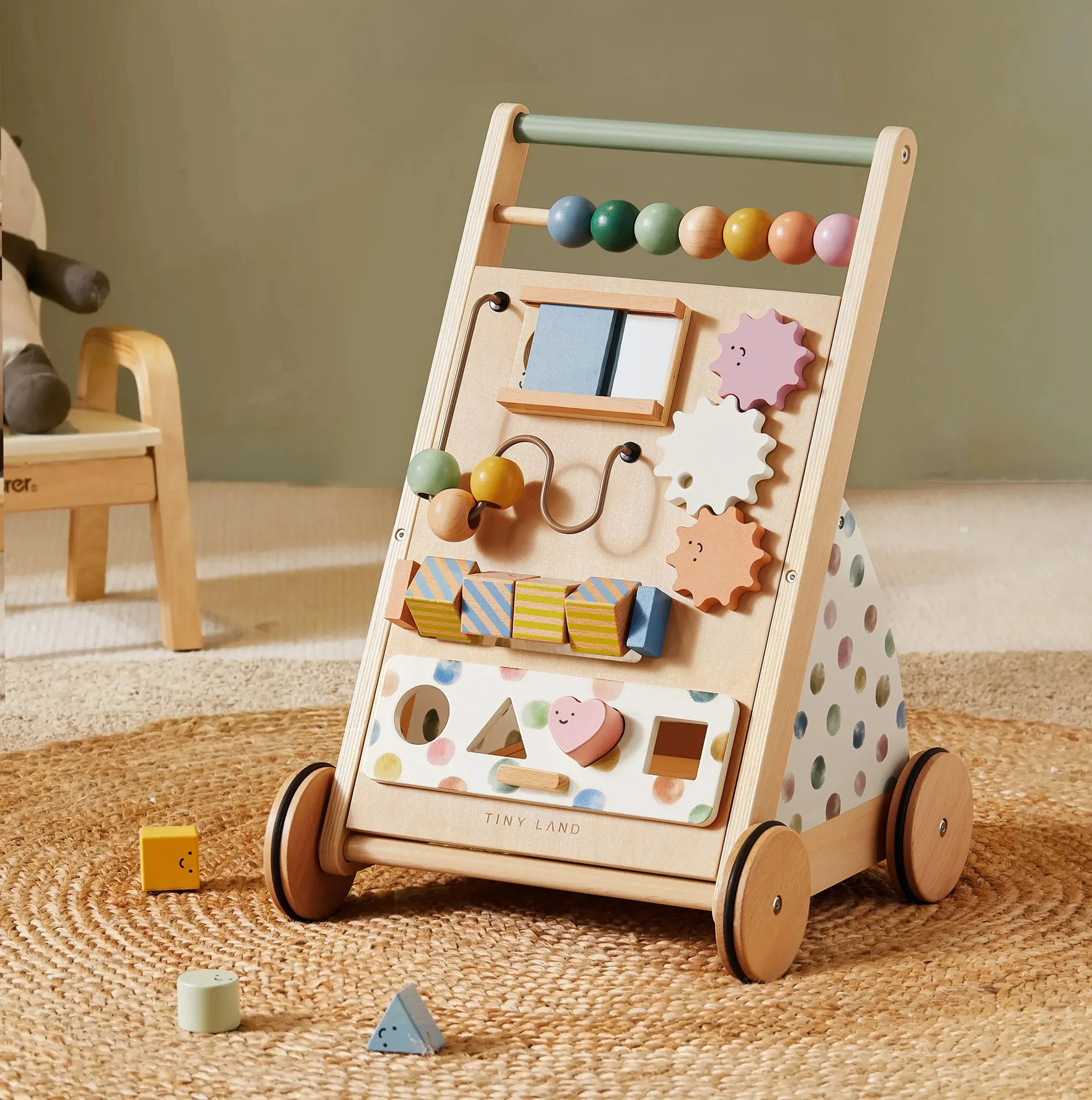
- Tiny Land® Versatile Natural Wooden Baby Walker: Tiny Land® Versatile Natural Wooden Baby Walker is made with durable, child-safe solid wood and includes knobs and gears as activity features. Solid wood gives the walker enough mass to stay planted when a toddler leans on it, and the knobs and gears add sit-down play so the toy stays useful after the walking phase.