Quick answer
For most baby quilts, choose a soft, breathable 100% cotton backing in a single wide piece so you avoid a bulky center seam. If the quilt is larger than 40 inches wide, a 108-inch wide backing cut in 3-yard increments gives you plenty of overhang with no piecing. If you want a specific print or a lighter drape, a half-yard bundle or 1-yard cuts can work, but you will need to seam them and allow extra yardage.
A baby quilt backing does two jobs: it touches delicate skin and it holds the quilt sandwich together through washing and daily use. That means softness and durability matter more than matching the front. The good news is you do not need a complicated formula. You need to know your quilt size, your preferred drape, and whether you are willing to piece the back.
This guide walks through the decision rules that actually change your purchase: fiber content, width, yardage, and how the backing interacts with quilting. It also covers when a wide backing is worth it and when a smaller cut is the smarter buy.
Start with size and overhang
Baby quilts are usually between 30 and 40 inches square, but they can run larger if you add borders. Measure your finished quilt top before buying anything. You want the backing to extend at least 4 inches beyond the quilt top on all sides. That extra margin gives your longarmer or your home machine room to clamp and quilt without running out of fabric at the edges.
If your quilt top is 36 inches square, you need a backing at least 44 inches square. A single 108-inch wide cut solves that instantly. If you are piecing from 44-inch wide fabric, you will need two lengths seamed together, which adds bulk and a visible seam line down the center. For a baby quilt, that seam is not a dealbreaker, but it is a place where stitching can pucker if you do not press it open carefully.
- Measure the quilt top after quilting, not before, because quilting can draw it in slightly.
- Add 4 inches to each side for overhang; add 6 inches if you are sending it to a longarmer.
- Write the final backing dimensions on a sticky note before you shop.
Choose a fiber that feels good and washes well
Cotton is the default for baby quilt backing because it is breathable, softens with each wash, and holds up to frequent laundering. A 100% cotton backing like the Nordic Solstice Runed Solstice Winter Slate wide backing gives you a smooth surface that grips the quilt sandwich without slipping. It is also easy to quilt on a domestic machine because it does not stretch much.
If you want a lighter, drapier feel, a chambray cotton like the Tilda Chambray Half Yard Bundle offers a soft, textured hand. Chambray is woven with a colored weft and white warp, so it has a subtle depth that looks less flat than a solid. The trade-off is that you will need to piece it, and chambray can fray a bit more at the cut edge, so handle it gently before seaming.
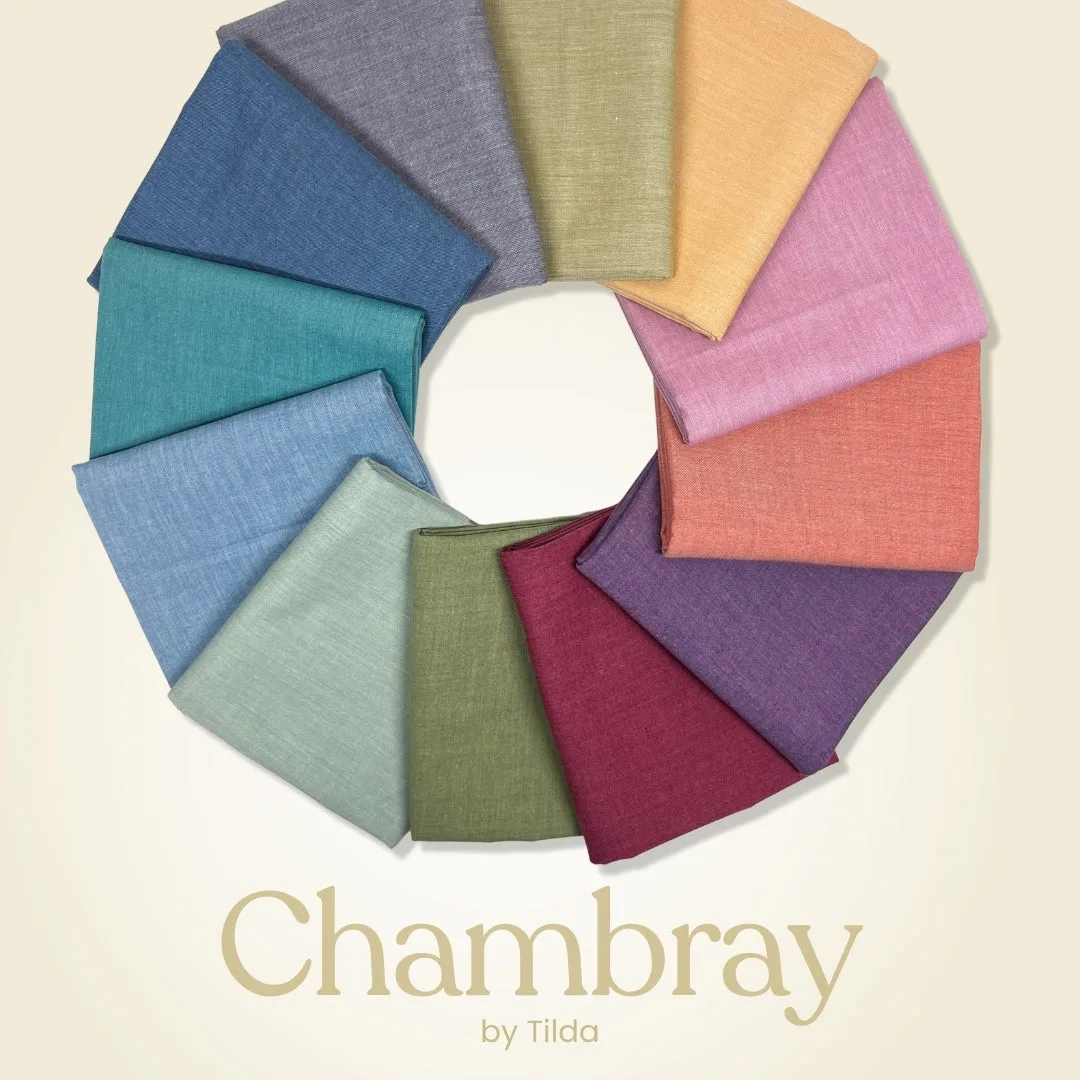
Tilda Chambray Half Yard Bundle
- Pre-wash your backing if you pre-washed the quilt top; otherwise, wash both after quilting.
- Avoid heavy flannels or minky for a first baby quilt unless you have quilted with them before.
- If the baby has sensitive skin, stick to 100% cotton and skip fabric softener.
Decide between wide backing and pieced backing
A 108-inch wide backing is the simplest path for a baby quilt because you can cut one piece with no seams. The Nordic Solstice Runed Solstice Winter Slate backing comes as a 3-yard cut measuring 108 inches by 108 inches. That is enough for a 36-inch quilt with generous overhang, and you will have leftover for a matching pillow or a second small quilt. The Colorblock Multi wide backing is another single-piece option with a bold print that hides quilting texture.
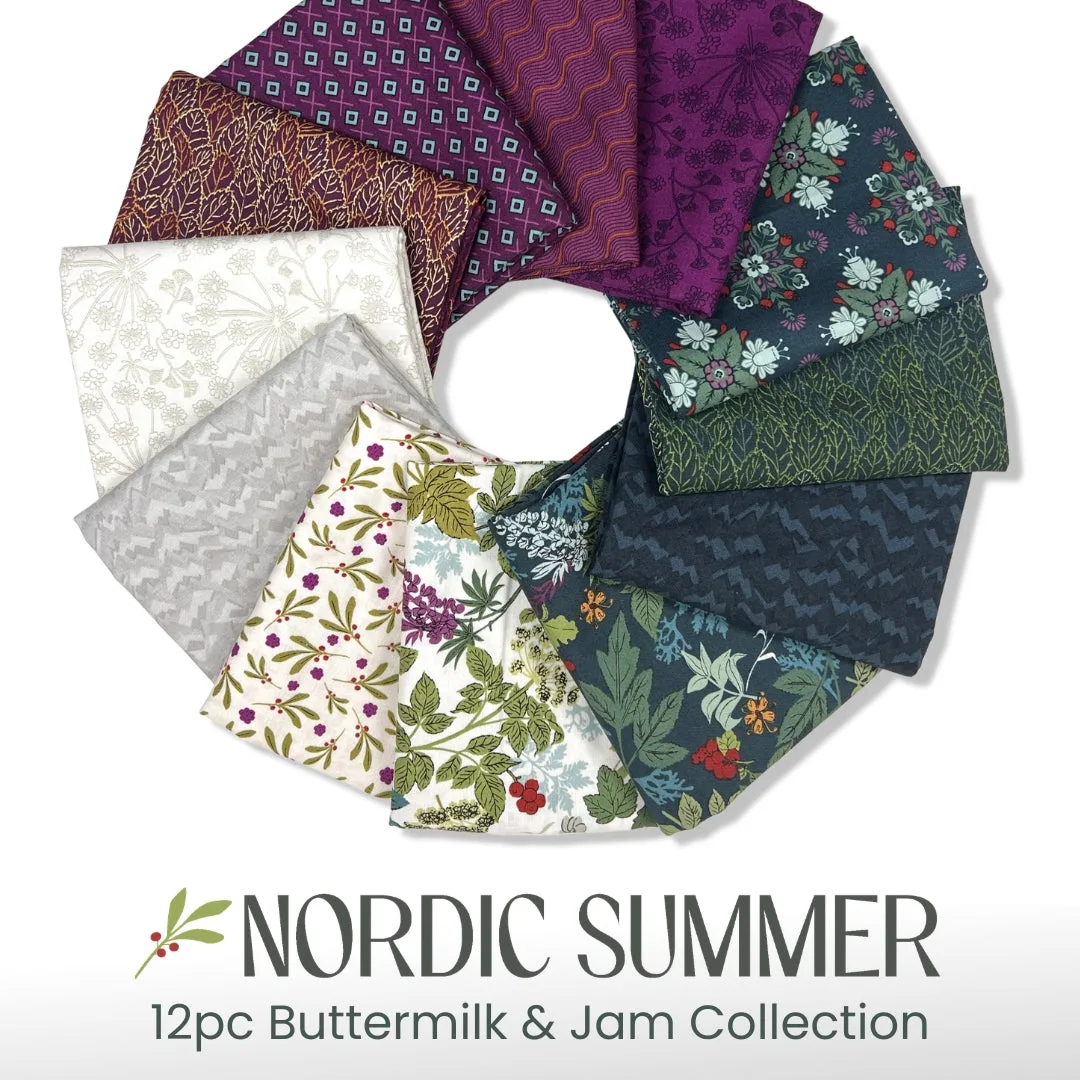
Pieced backing is more flexible if you want a specific print or a scrappy look. A half-yard bundle like the Nordic Summer Buttermilk and Jam Half Yard Bundle gives you 12 different prints to arrange into a back that coordinates with the front. The trade-off is time: you will sew at least one long seam, press it open, and square the edges before basting. That extra step is worth it if the back is part of the design, but it is unnecessary work if you just want a soft, neutral finish.
- Wide backing: fewer seams, faster basting, less chance of a pucker at the seam line.
- Pieced backing: more print variety, uses smaller cuts, and can be a design feature.
- If you piece, press the seam open and trim the selvages before basting.
Match the backing to how you will quilt it
The backing fabric affects how easily your needle moves and how the finished quilt drapes. A smooth, tightly woven cotton like the Decostitch Reflection 702 is a reliable choice for free-motion quilting because it does not have a lot of texture to catch the foot. It is cut in 1-yard increments, so you can buy exactly what you need for a pieced back without extra waste.
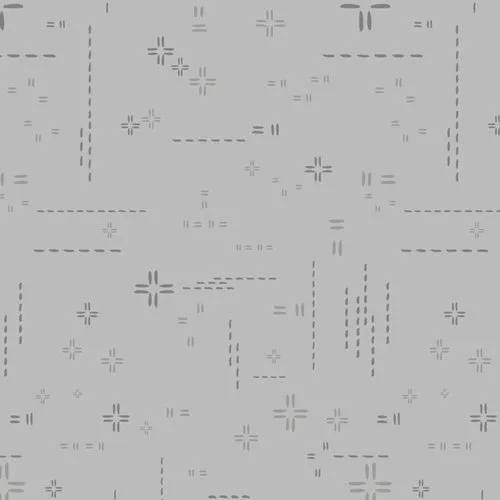
Decostitch Reflection 702
If you plan to tie the quilt instead of machine quilt, almost any soft cotton works. If you plan to send it to a longarmer, ask about their preferred backing width and whether they want extra overhang. Some longarmers charge extra if the backing is pieced because they have to load it carefully. A wide backing avoids that conversation entirely.
- For free-motion quilting, choose a smooth cotton with little texture.
- For walking-foot quilting, a slightly textured chambray can add visual interest.
- Always test your thread and needle on a small backing sample before quilting the whole quilt.
Decision rules for baby quilt backing
- If your quilt top is wider than 40 inches: Choose a 108-inch wide backing cut in 3-yard increments so you can use one continuous piece without a center seam. No piecing, less bulk, faster basting.
- If you want a specific print or a scrappy back: Buy a half-yard bundle or 1-yard cuts and plan to seam them. Add 1/2 yard extra for seam allowances and trimming. More design control, but allow time for pressing and squaring.
- If the baby has sensitive skin: Stick to 100% cotton, pre-wash with a fragrance-free detergent, and avoid fabric softener or dryer sheets. Softer with each wash and less likely to irritate.
- If you are sending the quilt to a longarmer: Ask their preferred overhang and whether they accept pieced backings. Wide backing is usually the safest choice. Confirm before you cut to avoid extra fees or delays.
- If you are quilting on a domestic machine: Choose a smooth, tightly woven cotton with little texture, and test your needle and thread on a sample first. Fewer skipped stitches and smoother free-motion movement.
Backing fabrics worth considering
- Nordic Solstice Runed Solstice Winter Slate - 108" Wide Backing Fabric - 10642-C - 3 YARD CUT - Andover Fabrics- Pre-Order: A three yard cut of 108" wide 100% cotton backing fabric from the Nordic Solstice collection by Gudrun Erla for Andover Fabrics, measuring 108" x 108" and shipping in November 2026. One continuous piece covers a baby quilt with no center seam, and the 108-inch width gives you generous overhang for a longarmer.
- Tilda Chambray Half Yard Bundle: A 12-piece half yard bundle of 100% cotton chambray fabrics with a colored weft and white warp, in muted blues, greens, blush, gold, and berry tones. The soft, textured hand makes a comfortable baby quilt back, but you will need to piece it and allow extra yardage for seams.
- Colorblock Multi - 108" Wide Backing Fabric - 54573DW-1DES - 3 YARD - Windham Fabrics: A continuous three yard cut of 108" wide 100% cotton backing fabric by Windham Fabrics, measuring 108" x 108". A bold, single-piece backing that hides quilting lines and eliminates piecing, which is ideal if you want a fast finish.
- Nordic Summer Buttermilk and Jam Half Yard Bundle 12 pc: A 12-piece half yard bundle of 100% cotton fabrics from the Nordic Summer: Buttermilk & Jam collection by Gudrun Erla for Andover Fabrics, inspired by Icelandic summers. Gives you coordinating prints to build a pieced back that matches a Nordic-themed quilt front, with enough variety for a scrappy layout.
Is this backing right for your baby quilt?
Best for
- Quilters making a 30–40 inch baby quilt who want a soft, washable 100% cotton back
- Anyone who wants to avoid piecing and prefers a single wide backing cut
- Shoppers looking for baby quilt supplies that coordinate with a specific collection
Not for
- Quilters who want a minky or plush backing, which requires different handling and quilting techniques
- Projects where you need a waterproof or wipeable backing, such as a picnic quilt
- Anyone who has not pre-washed the quilt top and wants to avoid shrinkage differences
Choosing baby quilt backing comes down to three decisions: width, fiber, and whether you want to piece. Measure your quilt top, add your overhang, and pick a 100% cotton that feels good against skin. If you want the fastest finish, a 108-inch wide backing in a single cut is hard to beat. If you want a custom look, a half-yard bundle gives you the prints to make the back as special as the front.