Quick answer
For exactly 5 players, start by checking the box's maximum player count and age floor, then match the play time to your group's attention span. If your group is mixed ages 8 and up and you want a quick 15-minute filler, Stripes works at 5 players and doubles as a pattern-recognition challenge. If your group is all adults and wants a creative, conversation-heavy game, MIXTAPE supports 3 or more players and rewards storytelling over speed.
Start with player count, not theme
The most common game-night mistake is buying for the theme and discovering the box caps at 4 players. Before you read a single review, look at the player range printed on the box. A game listed as 2-5 players is built and balanced for 5, while a game listed as 2-4 players will feel cramped or break down entirely if you squeeze in a fifth person. If your regular group is 5, treat that number as a hard filter, not a nice-to-have.
Also check whether the player count is a true maximum or a stretch goal. Some games list a wide range but only play well at the low end. When a product page gives you the exact range, trust that range over vague marketing language about party sizes.
Match the age floor to your youngest player
Age ratings on card games are not arbitrary. They reflect reading level, hand management complexity, and whether the humor or theme will land with younger players. A game rated 6+ can be taught in a minute and played by a first-grader, while a game rated 12+ may rely on cultural references or strategic layering that frustrates a younger child.
If your 5-player group spans generations, pick the game with the lowest age floor that still interests the adults. A game rated 8+ or 6+ keeps everyone at the table. A game rated 12+ is better saved for an adults-only round after the kids are in bed.
Budget your play time honestly
Play time on the box usually assumes experienced players who already know the rules. Your first game will run longer, sometimes by 50 percent. If you have 30 minutes before someone has to leave, a 30-45 minute game is a risky choice, while a 15-minute game gives you room to learn, play, and maybe run it twice.
Short games also work better for 5 players because downtime between turns grows with every added person. In a 15-minute game, waiting for four other players is barely noticeable. In a 45-minute game, the same wait feels like a stall.
Decide between competition and conversation
Card games for 5 players generally fall into two moods: competitive puzzle-solving or social storytelling. Competitive games ask players to optimize, block, or outscore each other. Social games ask players to perform, pitch, or react. Neither is better, but mixing them up is the fastest way to a table of bored players.
Ask your group one question before buying: do you want to win, or do you want to talk? If winning matters, look for clear scoring and direct interaction. If talking matters, look for prompts and open-ended choices. You can also keep one of each on the shelf and let the group vote on the night.
Decision rules for a 5-player card game
- If your group includes kids under 10: Choose a game with an age floor of 8 or lower and a play time of 15 minutes. Stripes (ages 8+, 2-6 players) and POOP: Public Restroom Edition (ages 6+, 2-15 players) both clear that bar. Rule: age floor first, theme second.
- If your group is all adults and wants to talk: Pick an open-ended social game rather than a scoring race. MIXTAPE (ages 12+, 3+ players) turns the table into a conversation about songs and memories instead of a points chase. Rule: conversation games need a 12+ floor to land.
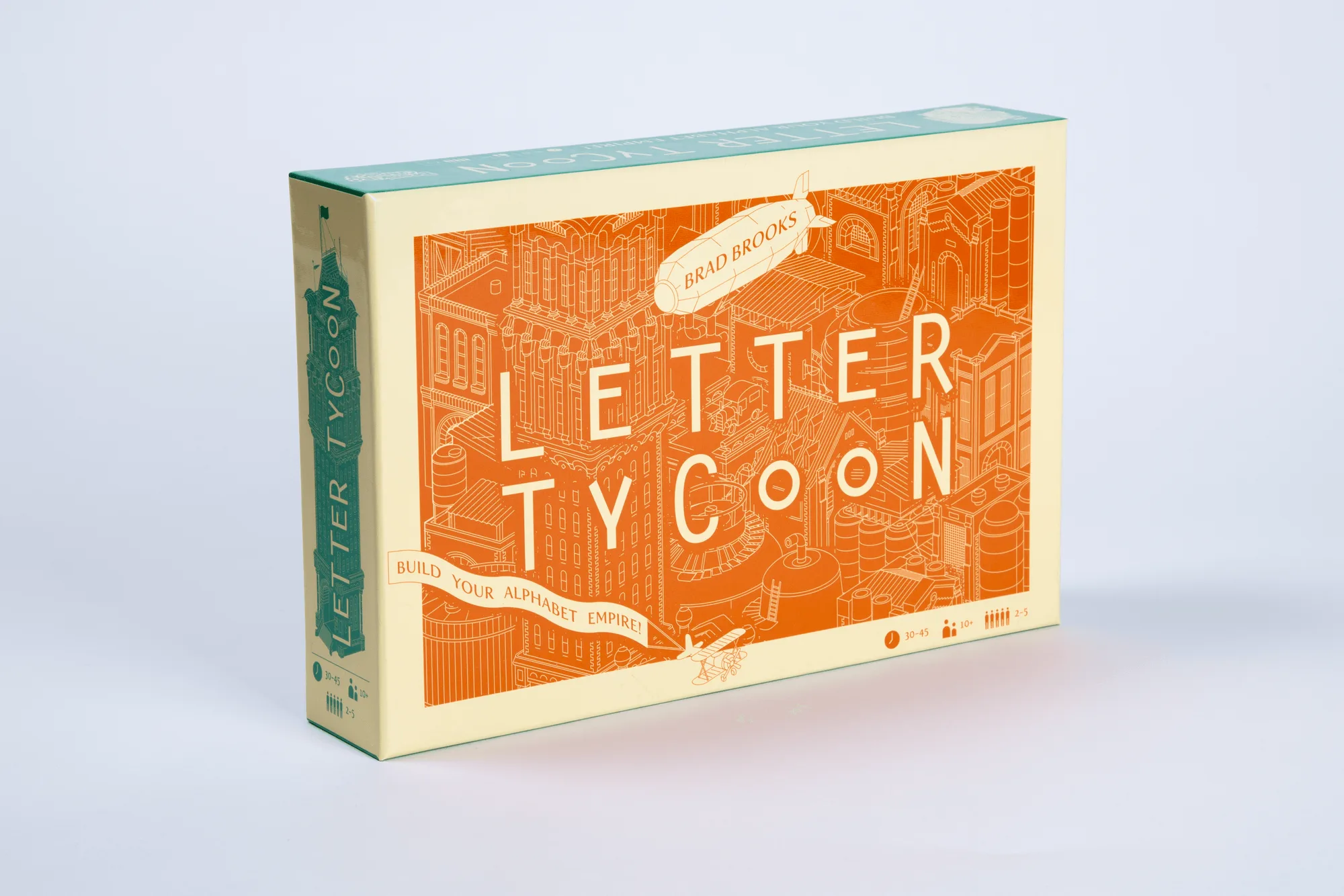
- If you have a hard 30-minute window: Avoid games listed at 30-45 minutes. Letter Tycoon sits in that band and is best saved for a longer session, while 15-minute games give you room to teach and still finish. Rule: double the box time for a first play.
- If your group size often changes: Buy a game with headroom above 5 players. POOP: Public Restroom Edition reaches 15 players when paired with two other editions, so it survives an expanding guest list. Rule: buy for your largest regular group, not tonight's.
Four Breaking Games titles at a glance
- Stripes | Family-Friendly Pattern Recognition Card Games | 2-6 Players: Supports 2-6 players, ages 8 and up, with a 15-minute play time; a 2021 Mensa Select Winner. The 2-6 range means 5 players fit comfortably without stretching the design, and the 15-minute time keeps a five-person table moving.
- POOP: Public Restroom Edition | Family Friendly Card Game | 2-5 Players: Supports 2-15 players, ages 6 and up, with a 15-minute play time; pairs with any two other POOP editions to reach 15 players. The low age floor and wide player range make it the safest pick for mixed-age groups, and expansion pairing future-proofs it for larger parties.
- Letter Tycoon: Mensa Select Word-Building Strategy Game for Families and Friends, Ages 10+, 2-5 Players: Supports 2-5 players, ages 10 and up, with a 30-45 minute play time; a 2015 Mensa Mind Games Winner. Exactly 5 players is the top of its range, so the game is fully in its element, but the longer runtime and age 10+ floor rule out impatient or very young players.
- MIXTAPE: Supports 3 or more players, ages 12 and up, with a 15+ minute play time; a song and scenario card game about telling your life through a soundtrack. The open-ended player count handles 5 easily, and the 12+ age floor signals a game built for teen and adult conversation rather than fast competition.
Is this the right fit for your table?
Best for
- Groups of exactly 5 who want a game that plays at its full player count without house rules
- Mixed-age family tables that need an age floor of 8 or lower and a 15-minute runtime
- Hosts whose guest count fluctuates and want one game that scales up to 15 players
- Adult or teen groups that prefer conversation and storytelling over scoring
Not for
- Groups that want a single heavy strategy session lasting 45 minutes or more
- Players who dislike direct interaction or take-that mechanics in card games
- Tables with children under 6, since the lowest age floor across these titles is 6+
- Buyers who need a game that plays well at exactly 4 and nothing else