Quick answer
Choose a crossbody strap by working backward from how you carry: set the length so the bag rests at your hip or waist, match strap width to the weight you usually carry, then confirm the attachment points fit your bag. An adjustable crossbody strap gives you the most flexibility because you can shorten it for crowded transit and lengthen it over a coat. If you want a strap that pairs with several bags, start with a neutral colorway and a width that suits your heaviest everyday load.
Start with the bag, not the strap
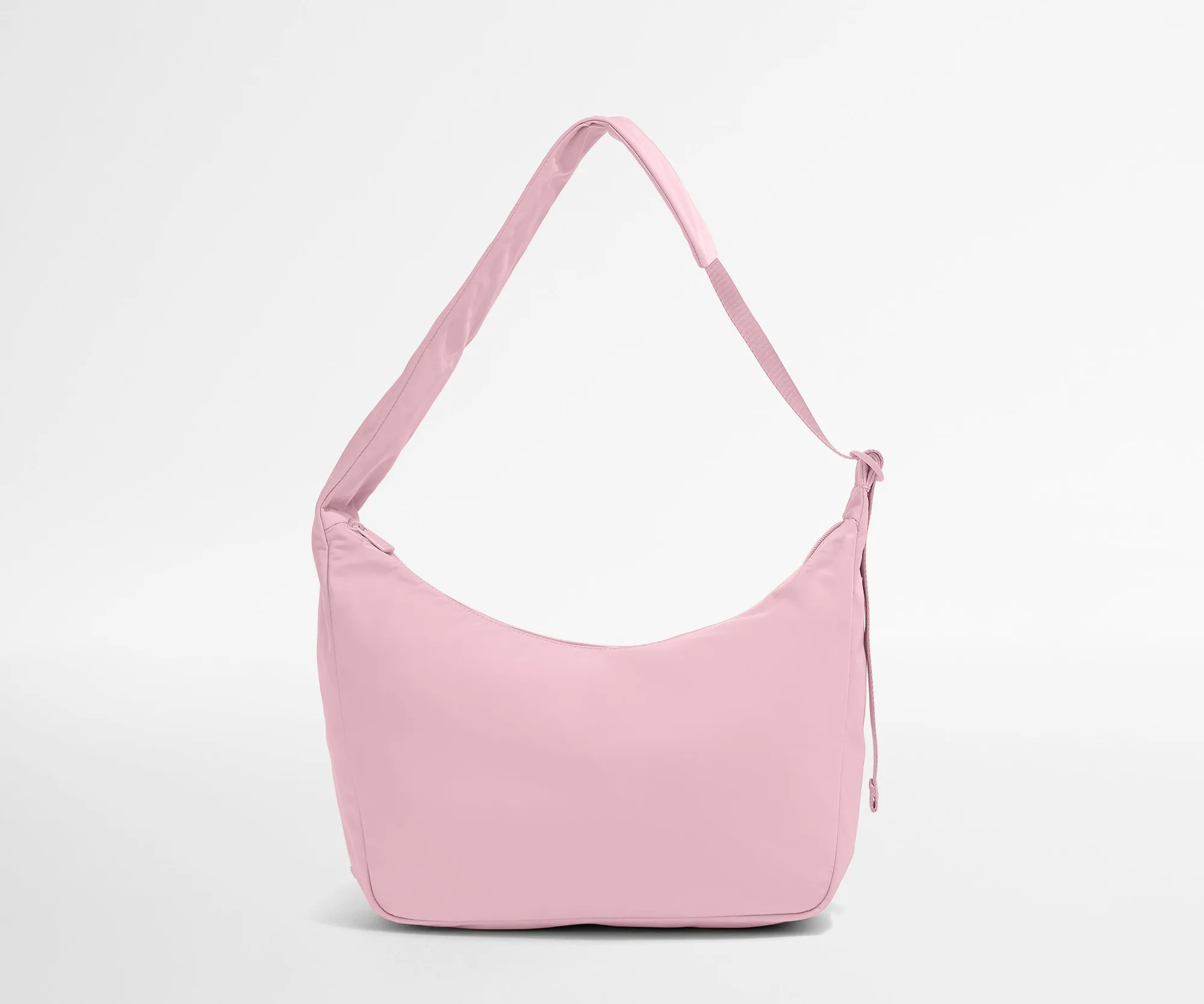
Before you shop, look at the bag you plan to carry. Check the attachment points: some bags use D-rings, others use loops or clips, and a strap that doesn't match will either not fit or will twist and bunch. If your bag has fixed attachment points, measure the distance between them and compare that to the strap's total length range. If your bag has no attachment points at all, a strap alone won't convert it into a crossbody — you'll need a bag designed for one, like the Featherlight Crossbody, which comes with its own adjustable strap and a hidden pocket on the strap for small essentials.
Set the length for real carrying, not just standing still
Crossbody strap length is the measurement most people get wrong because they test it while standing straight in front of a mirror. Put on the jacket or coat you wear most in the season you're shopping for, then adjust the strap so the top of the bag sits at your hip bone or just above your waist. If the bag hangs at your thigh, it will swing and bounce when you walk; if it sits too high, it crowds your arm. For a crossbody strap that works across seasons, choose an adjustable crossbody strap with enough range to shorten over a t-shirt and lengthen over a coat.
Match strap width to what you carry
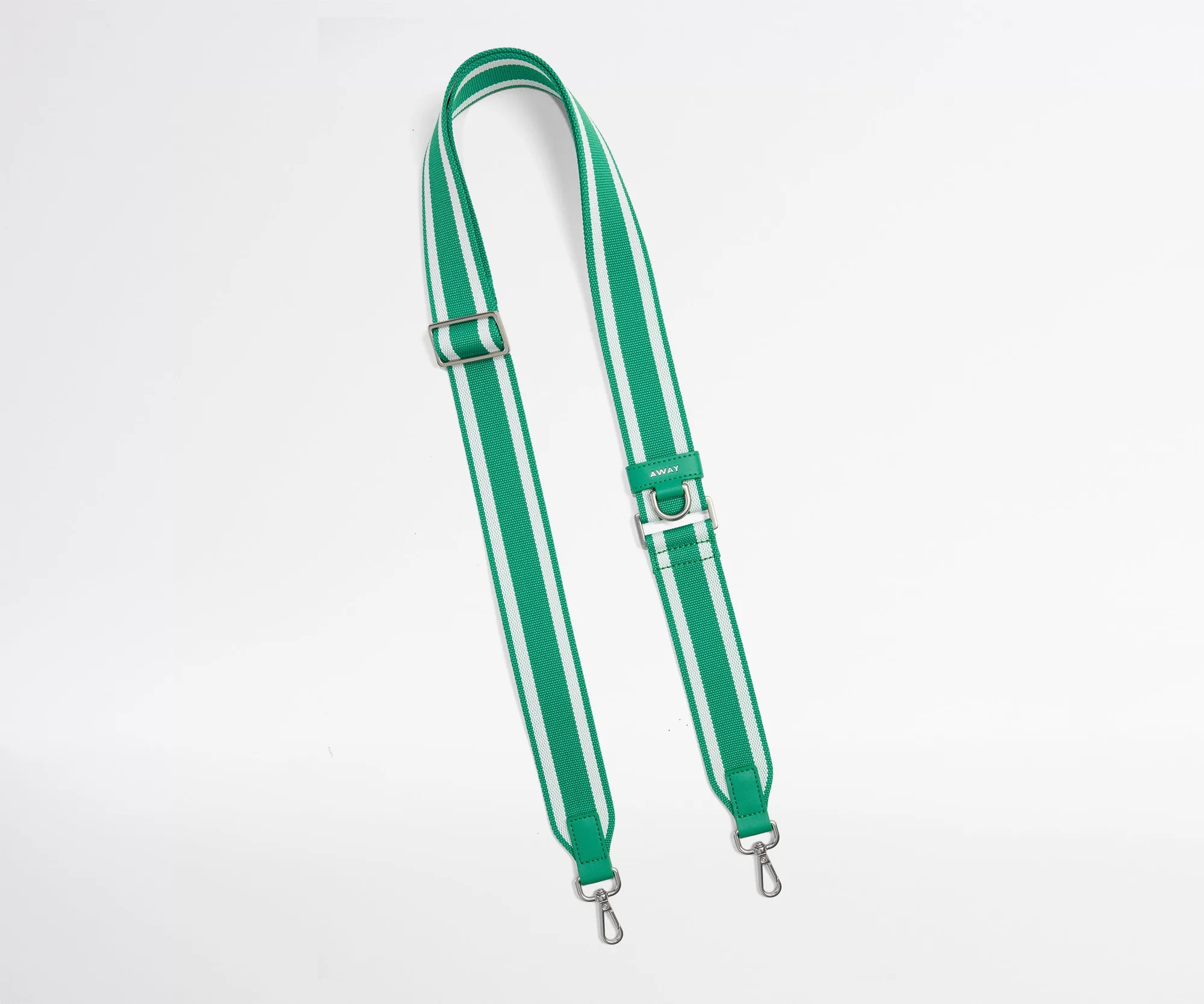
A bag strap width guide usually comes down to weight distribution. A narrow strap digs in when the bag is heavy; a wide strap spreads the load but can look bulky on a small bag. As a practical checkpoint, if you carry a phone, wallet, keys, and a passport, a medium-width strap is usually enough. If you carry a water bottle, a tablet, or a laptop, a wider strap will be noticeably more comfortable over a long day. The Crossbody Strap from Away is designed to pair with Away luggage and bags, so it's a straightforward match if you already own an Away bag and want a coordinated strap rather than a mismatched one.
Decide whether you need a strap for a backpack
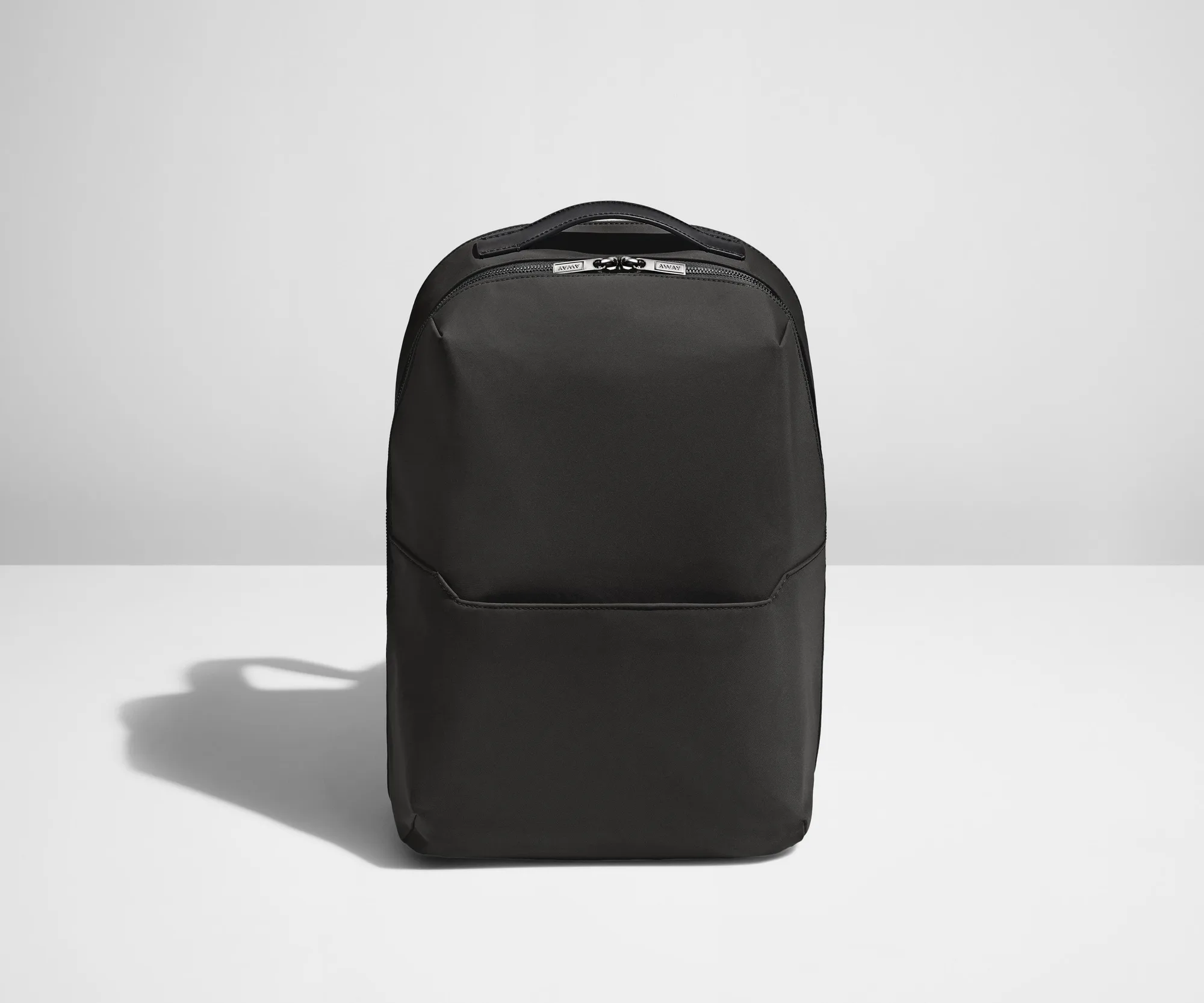
A crossbody strap for a backpack solves a different problem than a strap for a shoulder bag. Backpacks already distribute weight across both shoulders, so a crossbody strap is usually for quick-access carry: you clip a small pouch or crossbody bag to the backpack and keep your phone or transit card within reach without taking the backpack off. Check that the strap's clips open wide enough to attach to your backpack's loop or D-ring, and test the strap length with the backpack on, since the backpack's position changes where the crossbody bag rests.
Choose a colorway you'll actually keep using
Color is the easiest place to overthink a strap. A neutral strap works with more bags, but a stripe or bright colorway makes a small bag easier to spot and can act as a visual marker if you set your bag down. If you switch bags often, pick a colorway that appears in at least two of your bags. If you carry one bag daily, you have more freedom to match the strap to that bag's hardware or trim.
Seven steps to pick the right crossbody strap
- 1. Identify your bag's attachment points: Look for D-rings, loops, or clips on the bag you plan to use. Measure the gap between them if they're fixed, and note the clip style so you can match it. Common mistake: buying a strap with clips that are too wide or too narrow for your bag's rings.
- 2. Measure your ideal drop length while wearing your usual outer layer: Put on the jacket or coat you wear most, then hold a tape measure from your shoulder to where you want the top of the bag to sit — usually your hip bone or just above your waist. Checkpoint: if the bag would hang at your thigh, you need a shorter setting or a shorter strap.
- 3. Check the strap's adjustable range against that measurement: Compare your ideal drop length to the strap's shortest and longest settings. You want your ideal length to fall in the middle of the range, not at the very end. Common mistake: choosing a strap that only fits at its longest setting, which leaves no room to tighten it for crowded transit.
- 4. Weigh your typical load and pick a width: Phone, wallet, keys, and passport usually suit a medium-width strap. Add a water bottle, tablet, or laptop and a wider strap will distribute the weight better. Checkpoint: if a narrow strap leaves a red mark after a 20-minute walk, go wider.
- 5. Decide between a strap-only purchase and a complete crossbody: If your current bag lacks attachment points, a strap alone won't work. A bag like the Featherlight Crossbody includes its own adjustable strap and organized pockets, so you're not retrofitting. Common mistake: buying a strap for a bag that has no place to attach it.
- 6. If it's for a backpack, test the clip-on position with the backpack on: Clip the strap to your backpack's loop or D-ring, put the backpack on, then check where the crossbody bag lands. Backpack straps change your shoulder height, so the length you set while standing without the backpack may be wrong. Checkpoint: the crossbody bag should sit at your hip, not swing behind you.
- 7. Pick a colorway you'll use with more than one bag: Choose a neutral if you rotate bags often. Choose a stripe or bright color if you carry one bag daily and want it easy to spot. Common mistake: matching a strap to one bag's hardware when you actually switch bags weekly.
Straps and bags that fit this process
- Crossbody Strap: Available in three distinct stripe colorways — Green Stripe, Red Stripe, and Yellow Stripe — and designed to pair with Away luggage and bags. If you already own an Away bag, this removes the guesswork about attachment compatibility and gives you a colorway choice rather than a single default.
- Featherlight Crossbody: At just over half a pound, with an adjustable strap, plus a passport-sized interior pocket, an extra interior zip pocket, and a hidden pocket on the strap. A good reference point if you're comparing a strap-only purchase against a complete crossbody setup: the adjustable strap and hidden strap pocket cover the length and quick-access needs in one piece.
- The Everywhere Zip Backpack: Made with water-resistant nylon, with a breathable mesh back panel, a padded 16" laptop pocket with a magnetic locking zipper, and a detachable key clip. Relevant if you're considering a crossbody strap for a backpack: this is the kind of bag you'd pair a small crossbody with for quick-access items rather than converting the backpack itself.