Quick answer
For a crossbody bag you carry daily, start with a durable fabric that holds its shape without being stiff. A 12oz waxed canvas works well for a structured, water-resistant exterior, while a 420D polyester ripstop is lighter and better for linings or packable bags. Choose your fabric based on how heavy the bag will be, how much structure you want, and whether the print needs to stay crisp.
A crossbody bag lives close to your body, swings as you walk, and rubs against your hip or coat all day. That constant movement means the fabric has to handle abrasion, keep its shape, and still feel comfortable. The wrong choice shows up fast: a floppy bag that sags, a stiff bag that digs in, or a print that fades or cracks.
This guide gives you a practical way to choose the best fabric for a crossbody bag by thinking about three things: weight, durability, and print. You will see how waxed canvas, ripstop, and vinyl behave in real use, plus simple decision rules so you can pick a fabric and start cutting with confidence.
Start with weight: match fabric to how you carry the bag
Weight affects comfort and structure more than any other factor. A crossbody bag that sits on your hip all day should not feel like a brick. Heavy fabrics like 12oz waxed canvas give you a sturdy exterior that resists sagging, but they add ounces before you even load your wallet and phone. Lighter fabrics like 420D polyester ripstop keep the bag packable and easy to wear, though they need interfacing or a lining to hold a crisp shape.
As a rule, choose a mid-to-heavy exterior for a bag that will carry keys, a water bottle, or a tablet. Choose a lighter exterior for a minimal bag that holds only essentials. The strap matters too: a 1.5" (38mm) woven dart webbing spreads weight across your shoulder better than a narrow strap, especially when the bag is loaded.
- Heavy exterior (12oz waxed canvas): structured, durable, best for daily carry with heavier contents.
- Light exterior (420D ripstop): packable, quick-drying, best for travel or minimal carry.
- If you want light fabric with structure, add a stable lining or interfacing rather than choosing a heavier shell.
Durability: what actually wears out on a crossbody bag
The first places to fail are the bottom corners, the strap attachment points, and the flap edge. A durable fabric for bags needs to resist abrasion at those spots. Waxed canvas is a strong choice because its 12oz weight is rated heavy and it repels water and moisture, which helps in rain or against a damp coat. Its paraffin-based wax also resists mold, a real concern if the bag gets stored damp.
Ripstop adds durability in a different way. The grid of reinforcing threads stops small tears from spreading, so a 420D polyester ripstop can take scuffs without unraveling. It is water-resistant and slick, which makes it a smart lining or a lightweight exterior for a ripstop crossbody. Vinyl, like a canvas-backed smooth vinyl, wipes clean and holds color well, but it does not breathe, so it can feel clammy against your side in summer.
- Reinforce bottom corners and strap anchors with the same fabric or webbing, no matter which shell you choose.
- Waxed canvas repels water but can mark; ripstop wipes clean but may show creases.
- Vinyl is easy to clean but less breathable, so consider it for the flap or accents rather than the whole bag body.
Print and color: how to keep a crossbody bag looking good
A crossbody bag is visible, so print and color matter. Large-scale prints, like a bow or character motif, can look busy on a small bag because the pattern gets cut up by seams and pockets. If you love a print, use it on a front panel or flap and keep the rest solid. That way the motif stays readable and the bag still looks intentional.
Colorfastness is another practical concern. Dark vinyls and coated fabrics tend to hold color well and wipe clean, while natural canvas can fade with sun exposure. If you choose a light solid, plan to clean it gently and store it out of direct sun. For a print that needs to stay sharp, a smooth canvas-backed vinyl protects the design better than an uncoated woven.
- Scale check: a print motif larger than 3–4 inches can overwhelm a small crossbody panel.
- Balance a bold print with a solid lining or strap so the bag does not look chaotic.
- Smooth vinyl protects prints from abrasion; uncoated canvas will soften and fade over time.
Lining and padding: the hidden choices that change comfort
The lining does more than hide seams. A slick ripstop lining lets you slide items in and out without snagging, and it adds a layer of water resistance. For a bag that carries a phone or glasses, a padded lining protects contents from bumps. A 2mm thick 3D air mesh, like SewSquish Cloud, adds cushioning and airflow without much bulk, which is useful for a back panel or a strap pad on a bag that rests against your body.
If you skip padding, the bag will feel every corner of your keys and phone. If you over-pad, the bag becomes bulky and heavy. Aim for a thin foam or mesh layer on the back panel and leave the rest of the lining simple. That keeps the crossbody close to your body without adding unnecessary weight.
- Use a slick ripstop lining for easy access and light water resistance.
- Add 2mm air mesh where the bag touches your body for breathability and cushioning.
- Avoid heavy foam in the whole bag; pad only the back panel and strap if needed.
Decision rules for choosing your crossbody fabric
- If the bag will carry more than a phone and wallet: Choose a heavy exterior like 12oz waxed canvas and a 1.5" webbing strap. The extra weight is offset by better structure and comfort. Prioritize durability and support over minimal weight.
- If the bag needs to pack flat or travel light: Use a 420D polyester ripstop exterior with a ripstop lining. It resists tears, dries quickly, and keeps the bag packable. Choose ripstop when low weight and easy packing matter most.
- If the bag will be worn against bare skin or in heat: Add a 2mm 3D air mesh back panel or strap pad. Avoid a full vinyl body, which does not breathe. Cushion and airflow beat a wipe-clean surface for all-day comfort.
- If the print is the main design feature: Use the print on a front panel or flap and keep the rest solid. Back it with a smooth canvas-backed vinyl if you need abrasion resistance. Protect the print and keep the layout balanced.
Fabric options that fit crossbody bags
- Sarah's Metallic Pink Gold Outdoor Utility Fabric (Yard): 12oz weight waxed canvas, rated heavy weight for durability and sturdiness, repels water and moisture, and is made with anti-bacterial mold-proof paraffin-based wax. A strong exterior choice for a structured crossbody that needs to handle daily wear and light rain, with mold resistance for humid climates.
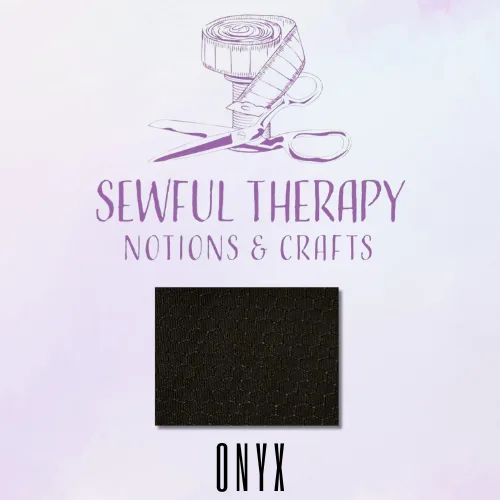
- Hex Polyester Ripstop 420D Onyx (Yard): Durable and ultrathin polyester ripstop with a sleek, slick finish, water-resistant, and suitable as a lining or exterior fabric for outdoor projects. Ideal for a lightweight ripstop crossbody or as a smooth lining that lets you slide items in and out easily.
- 1.5" (38mm) Wide - Woven Dart Webbing (3 Yards): Approximately 1.0mm thick, sold in 3-yard cuts (pre cut), available in multiple colors. A 1.5-inch strap spreads weight across the shoulder, making a loaded crossbody more comfortable than a narrow strap.
- SewSquish Cloud (HY) - CERULEAN #72: 2mm thick sandwich 3D air mesh, sold in half-yard cuts (approximately 18"x56"–57"), cushioned and breathable, designed for straps, back panels, and padded accents. Adds cushioning and airflow to a crossbody back panel or strap pad without the bulk of foam.
Is this fabric right for your crossbody bag?
Best for
- Everyday crossbody bags that carry essentials plus a water bottle or small tablet
- Travel bags that need to pack flat and resist light rain
- Bags where a print or motif is the focal point and needs to stay sharp
Not for
- Ultralight minimalist bags where every ounce counts—choose a lighter ripstop instead
- Bags that will be machine washed frequently—waxed canvas and vinyl need gentle care
- Formal or dressy bags where a rugged waxed canvas or bold print would look out of place
Choosing fabric for a crossbody bag comes down to how you carry it. Match the exterior weight to your load, reinforce the wear points, and pick a print scale that suits a small panel. With the right fabric and a comfortable strap, your crossbody will carry well and look good for years.