Quick answer
Buy enough quilt backing fabric to exceed your quilt top by at least 4 inches on every side. Use wide back fabric for large quilts to avoid a seam, or piece the back from standard 43/44-inch fabric when you want to use up yardage or highlight a print. Always prewash and press the backing before basting.
Quilt backing is the layer most people see when the quilt is folded on a couch or draped over a bed, so it deserves the same thought you give to the front. The right choice comes down to three practical questions: how big is the quilt, do you want a seam, and what is your budget.
This guide walks through the decision rules for quilt backing fabric, from measuring and seam planning to color and print choices. It also covers when a pieced back is smarter than a single wide panel, and which fabrics from Crosscut Sewing Co. work well for common backing needs.
Measure first, then add a safety margin
Measure your finished quilt top, not the pattern's listed size. Quilt tops can grow or shrink during piecing, so use your actual top as the source of truth. Add at least 4 inches to each side for longarm quilting, and 3 inches per side if you are quilting on a domestic machine. That means a 60 x 80 inch top needs a backing at least 68 x 88 inches.
If you plan to piece the back from standard fabric, remember that 43/44-inch wide fabric requires a horizontal seam for most quilts wider than about 40 inches. Wide back fabric, typically sold in 108-inch widths, removes that seam for large quilts but limits your print choices. Decide which trade-off matters more before you shop.
- Write down your actual top measurements before buying any backing.
- Add 4 inches per side for longarm quilting, 3 inches per side for domestic machine quilting.
Decide between wide back fabric and a pieced back
Wide back fabric is the simplest route for quilts larger than a throw. It arrives as one continuous piece, so there is no seam to align and no extra bulk in the quilting frame. The trade-off is cost per yard and fewer print options. If you want a specific designer print or a color that matches a collection, you may not find it in a wide width.
A pieced back gives you flexibility. You can combine two or three 43/44-inch fabrics, use leftover blocks, or build a vertical strip that adds visual interest. The seam adds a little bulk, but if you press it open and avoid placing it directly under a quilting line, most quilters never notice. Pieced backs are also a practical way to use fabric bundles and stash pieces.
- Choose wide back fabric when the quilt is larger than 60 inches wide and you want no seam.
- Choose a pieced back when you want to use specific prints, bundles, or leftover blocks.
Match the backing to how the quilt will be used
A bed quilt that gets washed often benefits from a durable, tightly woven cotton backing that can handle repeated laundering. A wall hanging or art quilt can use a lighter backing because it will not be handled as much. For baby quilts, a soft cotton backing that feels gentle against skin is a better choice than a stiff or heavily sized fabric.
Color also matters for daily use. A busy print hides stains and wear better than a solid white or cream backing. If the quilt will live on a couch with pets or kids, consider a mid-tone or darker backing fabric instead of a pale solid. Save the light, delicate backings for quilts that will be displayed or gifted.
- Busy prints hide stains better than solids on everyday quilts.
- For baby quilts, prioritize softness and washability over print matching.
Use color and print to support the front
The backing does not have to match the front exactly. A backing that picks up one secondary color from the quilt top often looks more intentional than a perfect match. If the front is busy, a quieter backing gives the eye a rest. If the front is mostly solid, a backing with a subtle print adds interest without competing.
Consider the quilt's final setting. A backing that contrasts with the binding creates a clear frame, while a backing that matches the binding makes the quilt look more uniform. Neither is wrong. Lay a fabric swatch next to the quilt top and step back a few feet to see how the colors read together before you commit.
- Pull one secondary color from the front for the backing to create cohesion.
- Step back several feet when comparing swatches to judge the overall effect.
Pre-wash and press before you baste
Most cotton fabrics shrink 3-5%, and that shrinkage can pucker your quilting if the backing shrinks more than the top. Pre-washing the backing with the same method you used for the quilt top keeps shrinkage consistent. Use machine wash cold and tumble dry low for most cotton fabrics, and check the care instructions on the bolt or product page.
After washing, press the backing until it is smooth and square. Fold it in half and check that the cut edges line up; if they do not, trim them square before basting. A backing that is even slightly off-grain can cause tucks or pleats when you layer the quilt.
- Pre-wash backing with the same method used for the quilt top.
- Square up the backing after pressing to prevent tucks during basting.
Decision rules for quilt backing fabric
- If the quilt is wider than 60 inches: Use wide back fabric or plan a horizontal seam with standard 43/44-inch fabric. Wide back removes the seam; pieced back gives you more print options.
- If you want to use a specific designer print: Check whether the print is available in a wide width. If not, piece the back from standard yardage. Designer prints are more often available in 43/44-inch widths, so plan for a seam.
- If the quilt will be washed often: Choose a durable cotton backing and pre-wash it to manage shrinkage. Pre-washing prevents puckering and keeps the layers even.
- If you are working from a fabric bundle: Use the bundle pieces for a pieced back, especially for baby quilts or wall hangings. Bundles give coordinated color without buying a separate wide back.
Backing-friendly fabrics from Crosscut Sewing Co.
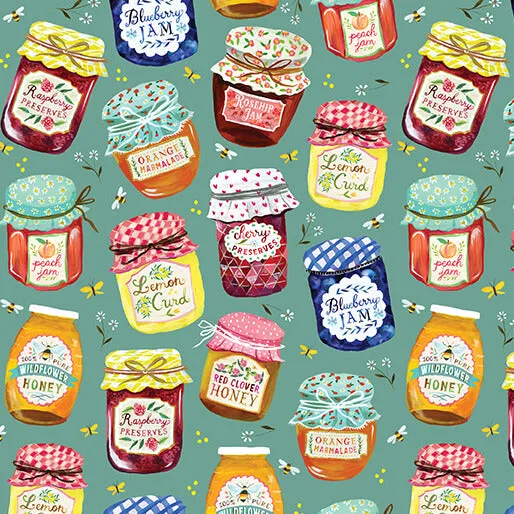
- Jam Jars Teal from A Prairie Heart by Katie Daisy for Benartex: 100% cotton fabric, 43/44 inches wide, with a scatter of illustrated jam, honey, and marmalade jars. A busy, charming print works well as a pieced backing for kitchen or farmhouse quilts because it hides stains and adds a second design moment.
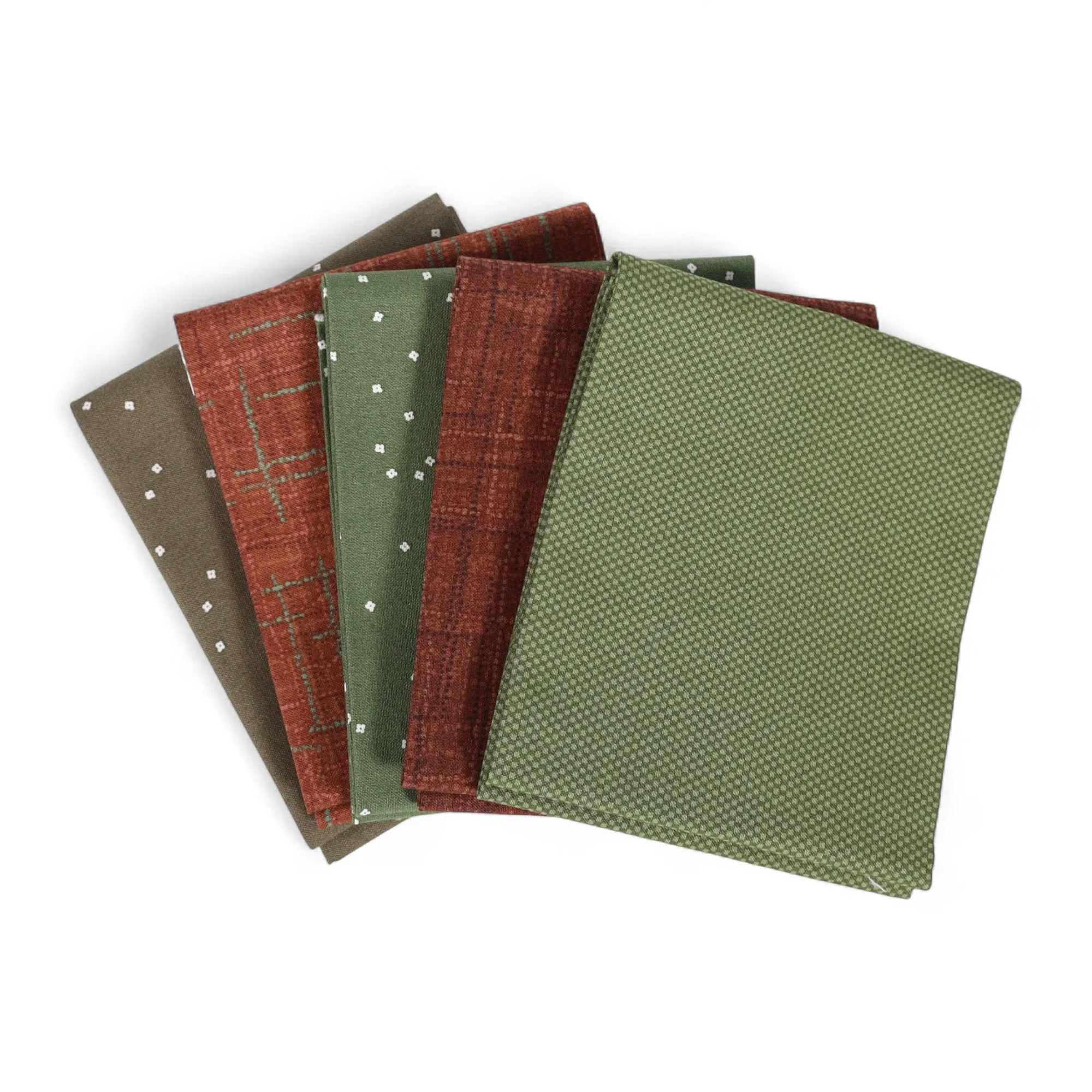
- Forest (5) Piece Fat Quarter Bundle: Five fat quarters from Riley Blake Designs, each approximately 18 x 22 inches, in different shades and tones of one colorway. A bundle like this is ideal for building a pieced backing with coordinated color variation, especially for small quilts or as part of a larger backing plan.
- Petunia Painter's Palette Solid from Paintbrush Studio Fabrics: 100% cotton, 44 inches wide, 150 GSM lightweight, with 3-5% shrinkage and machine wash cold instructions. A solid backing gives a clean, calm finish and the stated shrinkage range tells you to pre-wash so the backing and top shrink together.
Who this guide is for
Best for
- Quilters choosing backing for a bed quilt, throw, or baby quilt
- Sewists who want to use stash fabric or bundles for a pieced back
- Shoppers comparing wide back fabric with standard 43/44-inch fabric
Not for
- Quilters looking for longarm quilting machine advice
- Sewists who need backing for non-quilt projects like garments or bags
- Anyone seeking a specific wide back fabric recommendation that is not in the current catalog
Choose your backing by measuring the actual quilt top, adding a 4-inch margin per side, and deciding whether a seam fits your plan. Wide back fabric simplifies large quilts; pieced backs let you use prints and bundles you already love. Pre-wash, press, and square the backing before basting, and the quilting will go more smoothly.