Quick answer
Start with one focal print you love, then pull two to three supporting prints and one or two blenders that repeat its colors. Keep the palette to about five fabrics for a throw quilt, and choose a backing that matches the quilt's value range so the front and back feel like one project.
Autumn quilts are forgiving because the season already has a built-in palette: rust, gold, moss, plum, and deep brown. The hard part is choosing fabric that still feels like fall after you cut it into small pieces. A fabric that looks rich on the bolt can turn muddy in a block, and a print that seems busy on its own can become the best part of the quilt.
This guide gives you decision rules for autumn quilt fabric rather than a list of must-buy colors. You will learn how to build a palette, judge print scale, use a panel as a shortcut, and pick a backing that supports the front. The goal is a quilt you finish, not a shopping cart you second-guess.
Build the palette around one focal print
Choose one fabric that contains most of the colors you want in the quilt. That focal print does the color work for you: if it has rust, cream, and olive, those become your palette. Pull two or three supporting prints that each repeat one or two of those colors, then add a blender or solid to give the eye a place to rest. For a throw quilt, five to seven fabrics is usually enough; more than that and the blocks start to look random.
Fall quilt colors work best when you vary value, not just hue. A quilt made only of medium-dark rusts and browns can look flat, so include at least one light cream or tan and one deep value such as plum or charcoal. If you are shopping online, look at the fabric image from a distance and squint: the light, medium, and dark should still separate.
- Pick the focal print first, then match supporting fabrics to it rather than shopping color by color.
- Limit yourself to one true novelty print; let the others be quieter so the focal fabric stands out.
- If two fabrics fight, remove the one that does not repeat a color from the focal print.
Judge print scale for the block size you are sewing
Large-scale prints get chopped up in small blocks, so save them for borders, backgrounds, or big simple shapes. Medium prints are the workhorses of an autumn quilt because they read as texture without overwhelming a 6-inch or 9-inch block. Small prints and blenders are the ones that hold a quilt together when you use many fabrics.
A practical test is to cut a 2.5-inch square from a fabric and set it on a table. If you cannot tell what the print is from a few feet away, it will read as a solid in the quilt, which is fine for a blender but wasteful for a feature print. If you love a large print and want it in the blocks, use it in a pattern with large pieces or fussy-cut it so the motif stays visible.
- Match print scale to piece size: small prints for small pieces, large prints for large pieces.
- Use one large-scale print as the focal point and keep the rest medium or small.
- Buy a little extra of the focal print so you can fussy-cut if the pattern allows.
Use a panel or wide backing to simplify the project
A panel can carry the whole seasonal theme without requiring you to coordinate many prints. For example, the Aurora Winter Light Cabin Panel shows an aurora over a cabin in deep blues, purples, and pinks, and at 24 inches by 44/45 inches it can be the center of a wall hanging or the back of a small quilt. If you use a panel, pull your supporting fabrics from its colors and keep the rest of the quilt simple.

Aurora Winter Light Cabin Panel
Wide backing removes the need for a pieced back seam, which matters on larger quilts. The Blank Quilting Spin Flannel Green 108-inch wide backing comes as a three-yard cut measuring 108 by 108 inches, so it can back a large quilt in one piece. Flannel adds warmth, which suits an autumn quilt, but it also adds weight and a little more lint in the dryer. If you want a lighter drape, choose a quilting cotton backing instead.
- Measure your quilt top before buying backing; a 108-inch wide backing can cover a queen-size top without a seam.
- If you use flannel backing, prewash it if you want to reduce shrinkage, and expect a softer, heavier finish.
- A panel can be the focal point of the front or a feature on the back, but do not make it compete with a busy front.
Buy in cuts that match your plan, not just the price
How a fabric is cut affects how you can use it. Some fabrics are sold in continuous three-yard cuts, which is ideal for backing or for a pattern that needs long strips. Others are cut in one-yard increments and may not be continuous, so if you order three yards you might receive three separate pieces. That is fine for scrappy blocks but not for a border or backing that needs one length.
Read the cut description before you buy. If you need a continuous length for borders or backing, choose a product that states it is a continuous cut. If you are building a scrappy autumn quilt, one-yard increments are actually helpful because you can buy several colors without committing to three yards of each.
- For borders and backing, confirm the fabric is a continuous cut before ordering.
- For scrappy blocks, one-yard increments let you sample more colors for the same budget.
- Check the width as well as the length; 44/45-inch fabric and 108-inch backing solve different problems.
Decision rules for autumn quilt fabric
- If you want a fast, coordinated quilt: Choose a panel or a single focal print and pull three to four supporting fabrics from its colors. Keep the block pattern simple so the fabric does the work. Best when you have limited sewing time and want a clear seasonal look.
- If you want a scrappy autumn quilt: Buy one-yard increments of six to ten fabrics in rust, gold, moss, plum, and cream. Mix small prints and blenders so the blocks read as texture, not chaos. Best when you enjoy variety and do not need long continuous cuts.
- If you need backing for a large quilt: Choose a 108-inch wide backing in a continuous three-yard cut, or piece a backing from regular 44/45-inch fabric if you prefer a lighter weight. Measure the quilt top first; wide backing saves time but limits your color choices.
- If you are quilting for cool weather: Consider flannel backing for warmth and a softer hand, and prewash if you want to reduce shrinkage. Skip flannel if you want a crisp, lightweight quilt. Flannel changes the drape and care routine, so decide before you buy.
- If you are shopping online and cannot touch the fabric: Read the cut description and the fiber content. If a fabric is cut in one-yard increments and not continuous, do not plan a long border from it. The cut method is as important as the color when you order remotely.
Fabric facts that affect your autumn quilt
- Blank Quilting Spin Flannel Green 108" Wide Backing Fabric - 3995F-66 - 3 YARD: A three-yard cut of 108-inch wide Spin Flannel Green by Blank Quilting, 100% cotton, measuring 108 by 108 inches, cut in three-yard increments. The 108-inch width lets you back a large autumn quilt without a center seam, and the flannel adds warmth for cool-weather use.
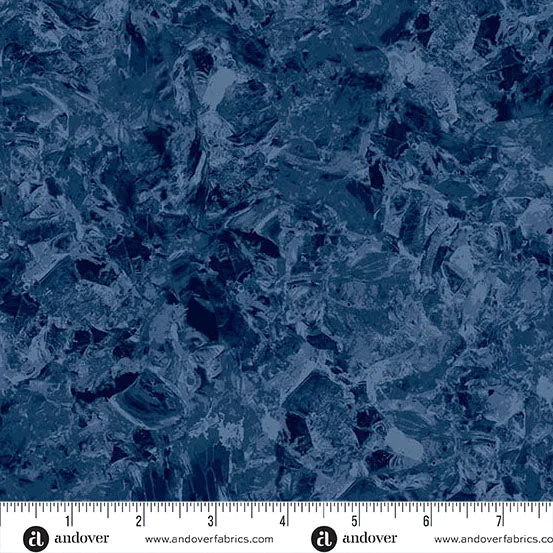
- Heima Glacier Waterfall - 3 YARD - A-1632-B: One continuous three-yard cut of Heima Glacier Waterfall by Gudrun Erla of GE Designs for Andover Fabrics, 100% cotton. A continuous three-yard cut is long enough for backing or borders, so you can plan a cohesive autumn quilt without piecing the back.
- Aurora Winter Light Cabin Panel: A 24-inch by 44/45-inch panel from the Aurora / Winter Light collection by Timeless Treasures, 100% cotton, depicting the aurora borealis over a cabin in deep blues, purples, and pinks. The panel gives you a dramatic seasonal focal point; pull supporting fabrics from its blues and purples for a coordinated quilt.
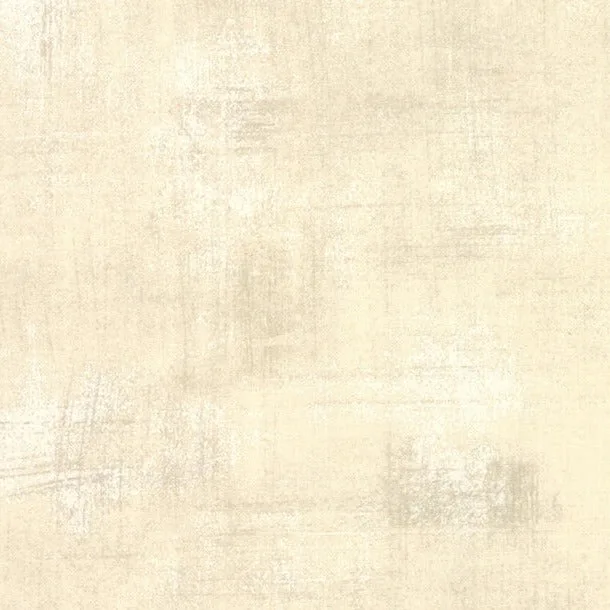
- Grunge Natural 30150-530: Grunge Natural by Basic Grey for Moda, 30150-530, 100% cotton, cut in one-yard increments and not continuous. A textured blender like this adds depth between prints, but because it is cut in one-yard increments, order the total yardage you need rather than assuming one long piece.
Who this approach fits
Best for
- Quilters making a throw or bed quilt with a warm autumn palette
- Shoppers who want a coordinated fabric pull without buying a pre-made bundle
- Anyone using a panel or wide backing to simplify a seasonal project
Not for
- Quilters who want an exact fabric kit with no substitutions
- Projects that require a specific print that is not in the current catalog
- Buyers who need a continuous cut but choose a fabric sold in one-yard increments
Autumn quilt fabric is easiest to choose when you let one print set the palette and then repeat its colors in simpler fabrics. Match print scale to your block size, confirm how each fabric is cut before you order, and pick a backing that supports the quilt's warmth and weight. With those rules, your fall quilt will look intentional from the front and the back.