Quick answer
Buy a case that is roughly 10–15 mm wider and 5–10 mm taller than your folded frames, with a rigid or semi-rigid shell and a soft lining. If you carry a small bag, choose a slim glasses case with a flat profile; if you want it to double as a pouch for a pen or cable, a structured leather glasses case with a little extra depth is the better trade.
Most glasses cases fail for one of two reasons: they are too small, so the frames press against the hinge, or they are so bulky that you leave them at home and your sunglasses ride loose in your bag. The fix is not a bigger case — it is matching the case to your actual frames and to the bag you carry every day.
This guide walks through the measurements that matter, the shell and lining choices that decide how much protection you really get, and the point where slim becomes too thin. You will also see how two BOSTANTEN leather pieces — a bucket bag and a zip wallet — change what size case makes sense, because the case has to live inside something.
Measure your frames before you shop
Fold your glasses and measure three things with a ruler: total width across the front, height from the top of the frame to the bottom of the lens, and depth from the front of the lenses to the back of the folded temples. Add 10–15 mm to the width and 5–10 mm to the height for breathing room. Depth is the number most people skip, and it is the one that makes a hard case feel cramped.
If you wear thick acetate frames or sunglasses with a wrapped shape, measure the widest point, not the lens width printed on the temple arm. That printed number describes one lens, not the folded frame, and it is a common reason a case that looked right online arrives too tight.
- Write your three measurements on your phone before browsing, so you can compare them against listed internal dimensions.
- If a listing shows only external dimensions, assume the usable interior is smaller by the shell thickness.
Shell, lining, and what protection actually means
Protection comes from three layers working together: a shell that resists bending, a lining that will not scratch lenses or coatings, and a closure that keeps the case shut in a bag. A hard shell wins against a dropped backpack or a crowded overhead bin. A soft pouch wins on weight and packability but does little against a direct crush.
For everyday commuting, a semi-rigid case is the usual sweet spot. It holds its shape in a tote, adds modest weight, and still flexes enough to slide into a tight pocket. Check that the lining is soft and seam-free where the lenses rest, and that the zipper or flap does not have exposed metal teeth that can contact the frame.
- Press the sides of the case with your thumbs — if it collapses easily, it will not protect against a crush.
- Prefer a lining that is smooth and light-colored, which makes it easier to see grit that can scratch lenses.
Where slim stops being useful
A slim glasses case is worth it when it removes bulk without removing clearance. The rule of thumb: keep at least 5 mm of space in front of the lenses and behind the folded temples. Below that, the frame rests on the case wall and every bump transfers straight to the hinge and lens coating.
The other slim-case trade-off is what you give up inside. Thin cases rarely fit a cleaning cloth plus a spare pair of nose pads, and they are usually too flat to hold a pen or charging cable. If you want one pouch to do two jobs, accept a slightly deeper case and a slightly larger bag footprint.
- If your frames have spring hinges, give them extra width — they flex outward and need room to sit relaxed.
- Test the fit with the glasses in the case and the case closed: nothing should feel under pressure.
Match the case to the bag you carry
The case has to fit the bag, not the other way around. A structured bucket bag with a wide opening swallows a standard hard case easily, while a compact crossbody often only accepts a flat sleeve. Before buying, measure the interior of your most-used bag at its narrowest point — usually the top opening or the base — and compare that to the case's external width.
If you rotate between bags, a flat sleeve plus a soft cloth is the most flexible setup. If you carry one bag daily, a rigid case that fits it exactly is the more protective choice, because it will not shift or get crushed by whatever else is inside.
- Keep the case upright in a tote so keys and cables do not press on it from above.
- In a full bag, place the case against a flat wall rather than in the middle where contents can compress it.
Decision rules for buying a glasses case
- If your frames are thick or wrapped: Add 15 mm to the widest measured point and choose a semi-rigid or hard shell. Thin sleeves will press on the hinges. Prioritize internal width over external slimness.
- If you carry a small crossbody or clutch: Choose a flat sleeve or slim glasses case under roughly 2 inches deep, and accept less crush protection. Measure the bag's narrowest interior opening before buying.
- If you commute with a backpack or tote: Choose a rigid case with a soft, seam-free lining and a secure zip or flap closure. Protection beats packability when the bag is crowded.
- If you want one pouch for glasses and small items: Choose a deeper leather glasses case with a little spare room, and keep hard objects in a separate pocket. Extra depth is the trade for multi-use.
BOSTANTEN pieces that change your case math
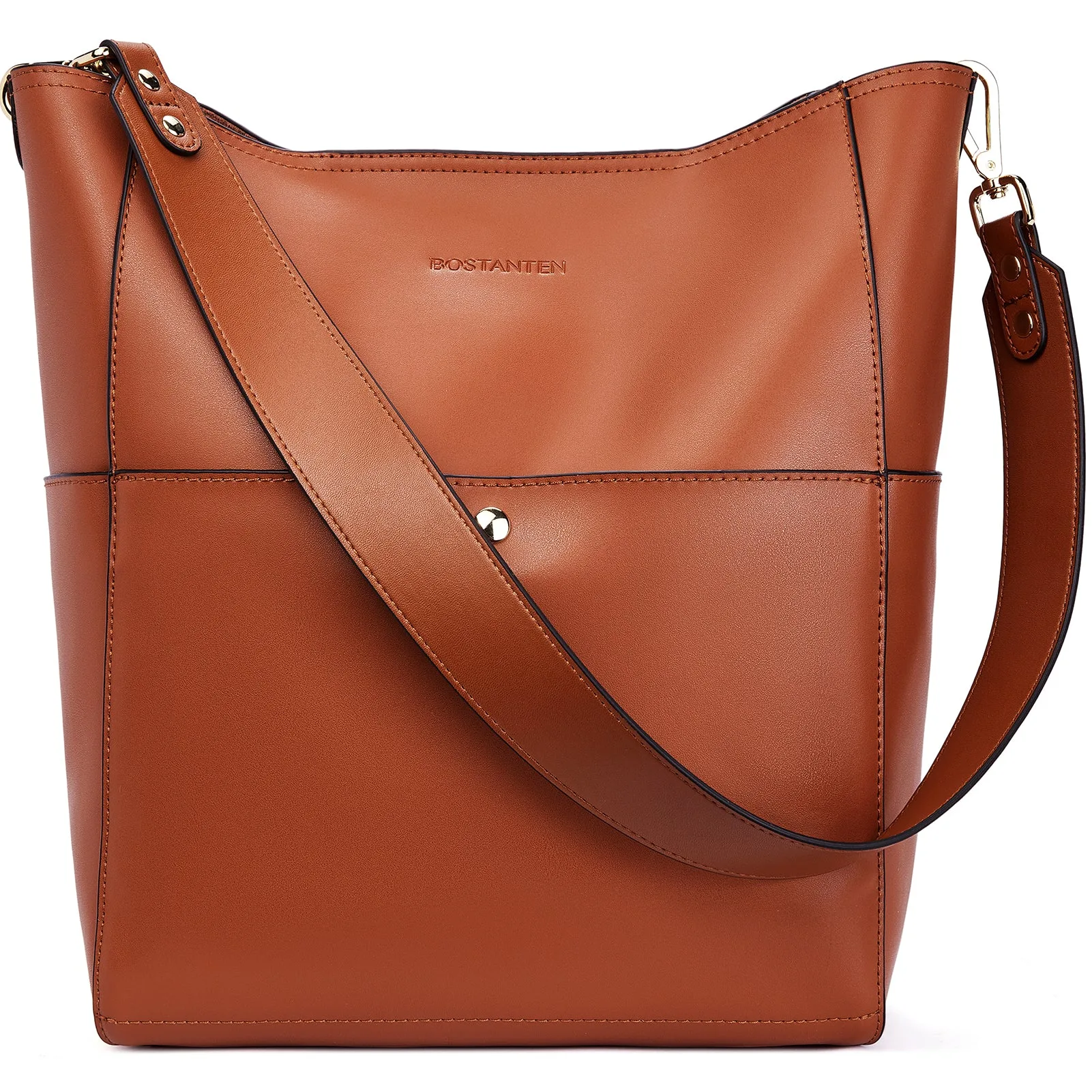
- Lotty Genuine Leather Bucket Bag With 2 Shoulder Straps: Made from top-layer cowhide leather with light-gold hardware and two interchangeable wide shoulder straps for comfort. A structured bucket bag with a wide opening holds a standard rigid glasses case upright, so you can choose protection over a flat sleeve without fighting the bag.
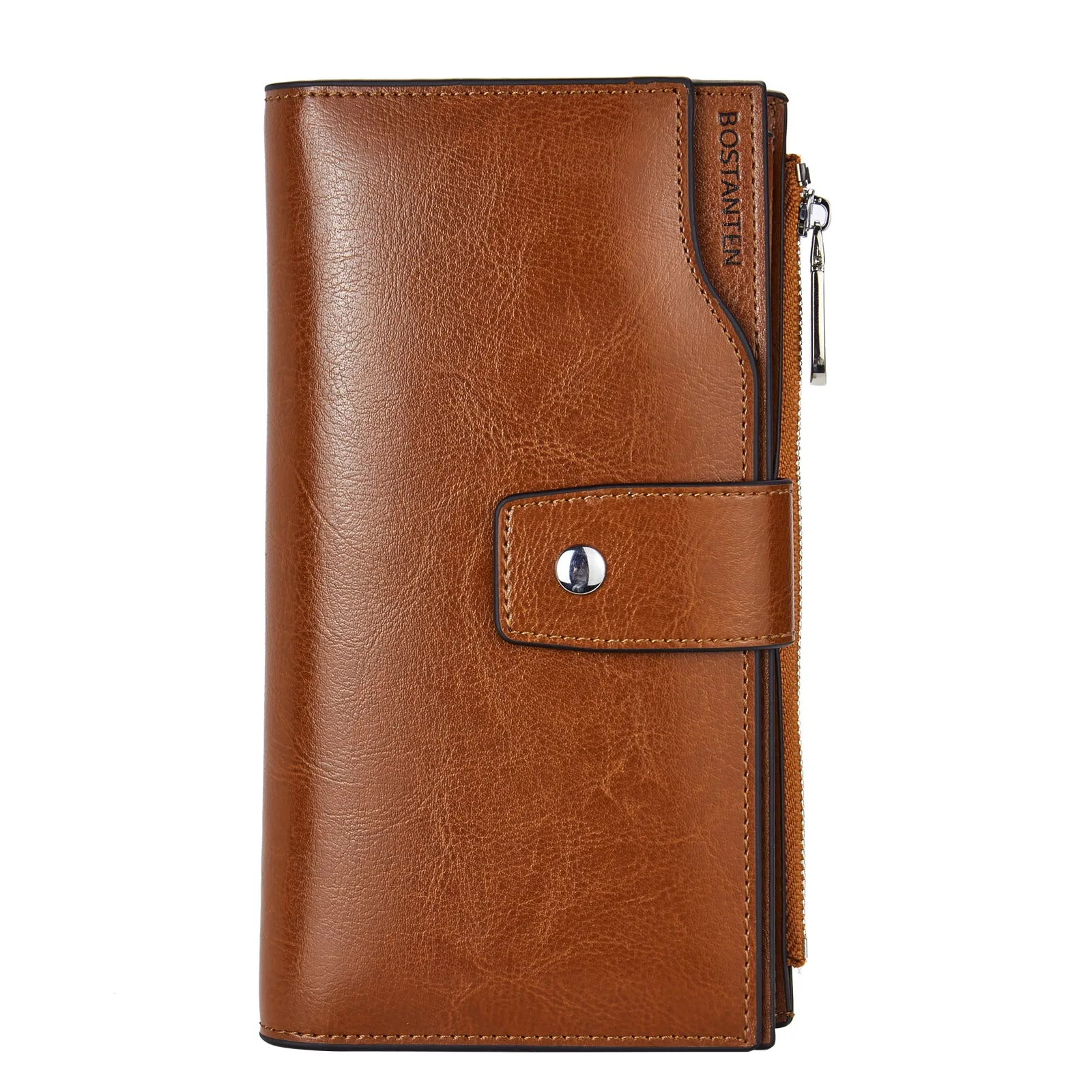
- Lnna Genuine Leather RFID Wallets With Checkbooks - Cash Clutch: Top grained leather with a waxing and oiling finish, zip and buckle closure, and dimensions of 7.6 x 1.1 x 4.1 inches. At 7.6 inches long, this clutch-style wallet shows the scale of a flat carry item — a slim glasses case should sit in the same footprint range if you want both to share a small bag.
Who should buy which case
Best for
- Everyday commuters who carry a tote or backpack and want crush protection
- Sunglasses wearers with thick acetate or wrapped frames
- Anyone who wants a leather glasses case that ages well and looks intentional
Not for
- Minimalist carry in a tiny crossbody where only a flat sleeve fits
- Travelers who need to pack multiple cases in almost no space
- People who want a case to double as a hard-shell electronics box
Measure your folded frames, add clearance, then let your bag decide the shell. A slim glasses case earns its place only when it still leaves room around the lenses; otherwise a slightly deeper leather glasses case is the one you will actually keep using.