Quick answer
For a small yard, choose the smallest outdoor trampoline that still fits your child's age and bouncing style, then leave at least 3 feet of clear space on every side. If your yard is tighter than that, a mini trampoline for kids or an indoor option is usually the better fit. Always check the manufacturer's age and weight limits before buying.
Measure your usable space before you shop
Start by measuring the actual clear rectangle or circle where the trampoline will live—not the whole yard. Subtract space for fences, trees, garden beds, and any slope. A trampoline needs a level surface; a slight incline can make bouncing feel unstable and may void safety guidance.
Then add clearance. A good rule of thumb is at least 3 feet of clear space around the frame and 8 feet of overhead clearance for outdoor models. If your measured area is smaller than the trampoline's footprint plus clearance, size down or choose a mini trampoline.
Match trampoline size to your child's age and stage
Trampoline sizes are usually given as the frame diameter in feet. For toddlers, smaller is safer: a 3- to 5-foot mini trampoline with a handle or enclosure is often enough. For older kids, a 6- to 8-foot model gives more bounce room, but it also needs more clearance.
Don't size up 'to grow into it' if your yard can't support the clearance. A too-large trampoline in a tight space increases the chance of hitting fences, plants, or hard surfaces. Instead, choose the size that fits now and plan to upgrade when your yard or your child's needs change.
Prioritize safety features that match your setup
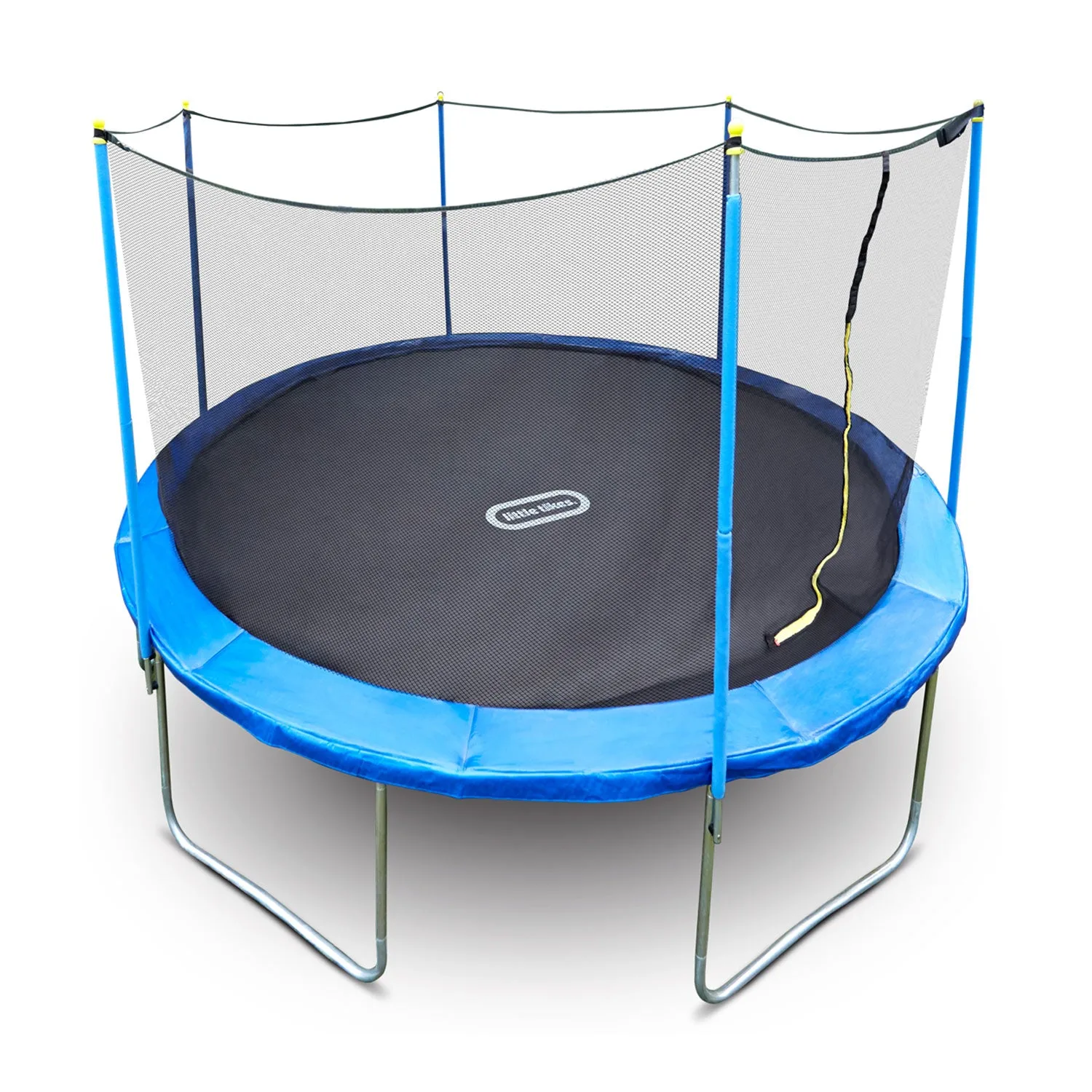
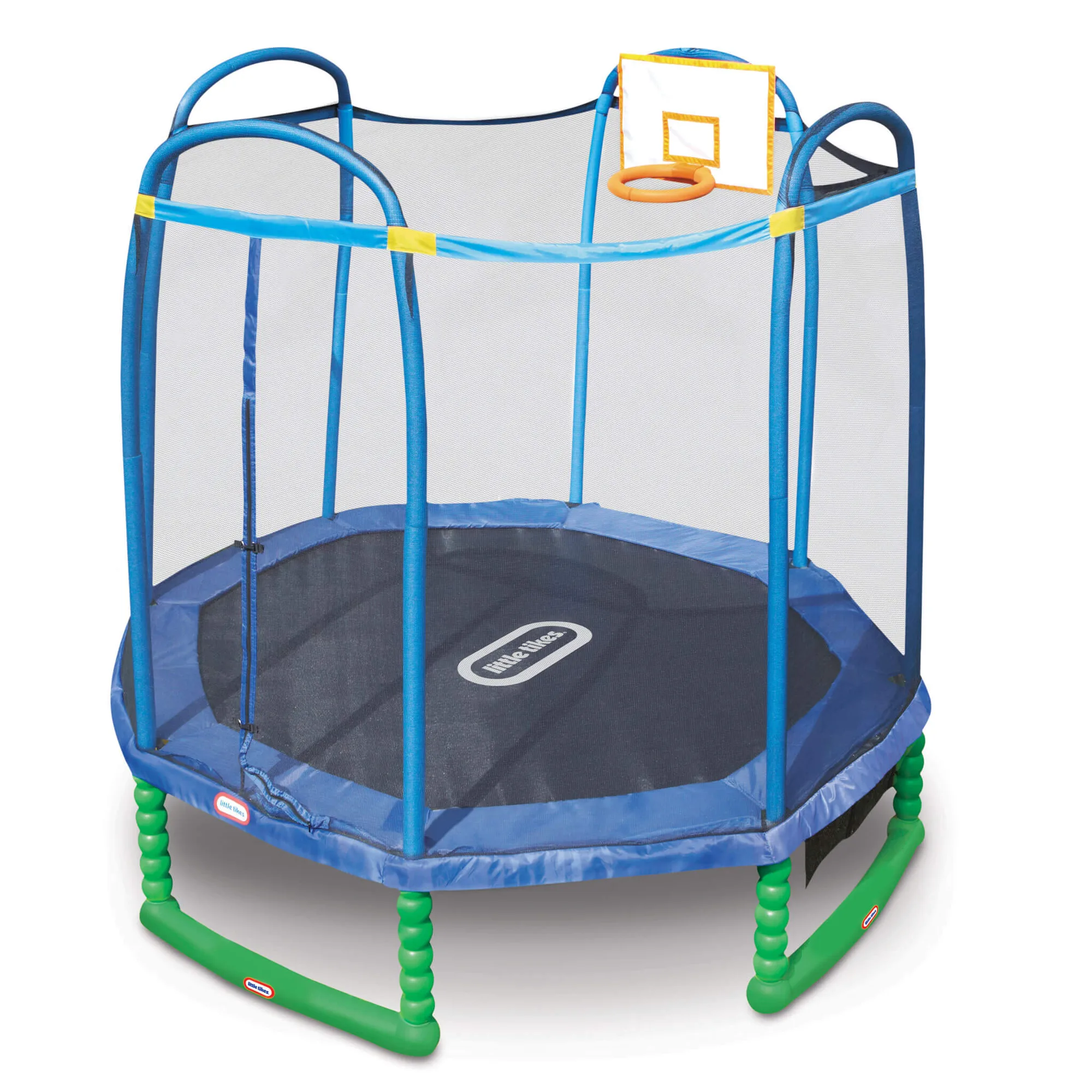
For outdoor trampolines, look for a padded frame, a securely attached enclosure net, and a mat that sits low to the ground. For toddler trampoline safety, a handle bar or enclosure is especially important because it gives younger kids something to hold while they build balance.
If you're considering an indoor trampoline buying guide approach, check ceiling height, floor protection, and whether the model is designed for indoor use. Never assume an outdoor trampoline is safe indoors—materials and stability can differ.
Decide between outdoor, mini, and indoor options
An outdoor trampoline gives the most bounce and is best for kids who will use it regularly. A mini trampoline for kids is easier to store, works in small patios or basements, and is often a better first trampoline. Indoor trampolines are usually smaller and lower to the ground, but they still need clear space and adult supervision.
Think about how often your child will bounce and whether you want a permanent backyard fixture or something you can move. If your yard is shady, damp, or shared with a garden, a smaller model may be easier to relocate and maintain.
Decision rules for small-yard trampolines
- Rule 1: Measure clearance first: Measure the clear area, then subtract 3 feet on all sides and 8 feet overhead. If the result is smaller than the trampoline's footprint, size down. No clearance, no trampoline—choose a mini or indoor model instead.
- Rule 2: Match size to age, not ambition: Toddlers do best with a 3- to 5-foot mini trampoline with a handle or enclosure. Older kids can use a 6- to 8-foot model if clearance allows. Buy for the child you have now, not the one you hope to have in three years.
- Rule 3: Safety features are non-negotiable: Look for a padded frame, secure enclosure, and low mat height. For toddlers, a handle bar or enclosure supports balance and reduces falls. If the model lacks basic padding or an enclosure, keep looking.
- Rule 4: Choose the right type for your space: Outdoor trampolines need level ground and clearance. Mini and indoor trampolines fit tighter spaces but still need supervision and clear surroundings. Match the trampoline type to your actual yard, not the other way around.
Product facts that help with fit and safety
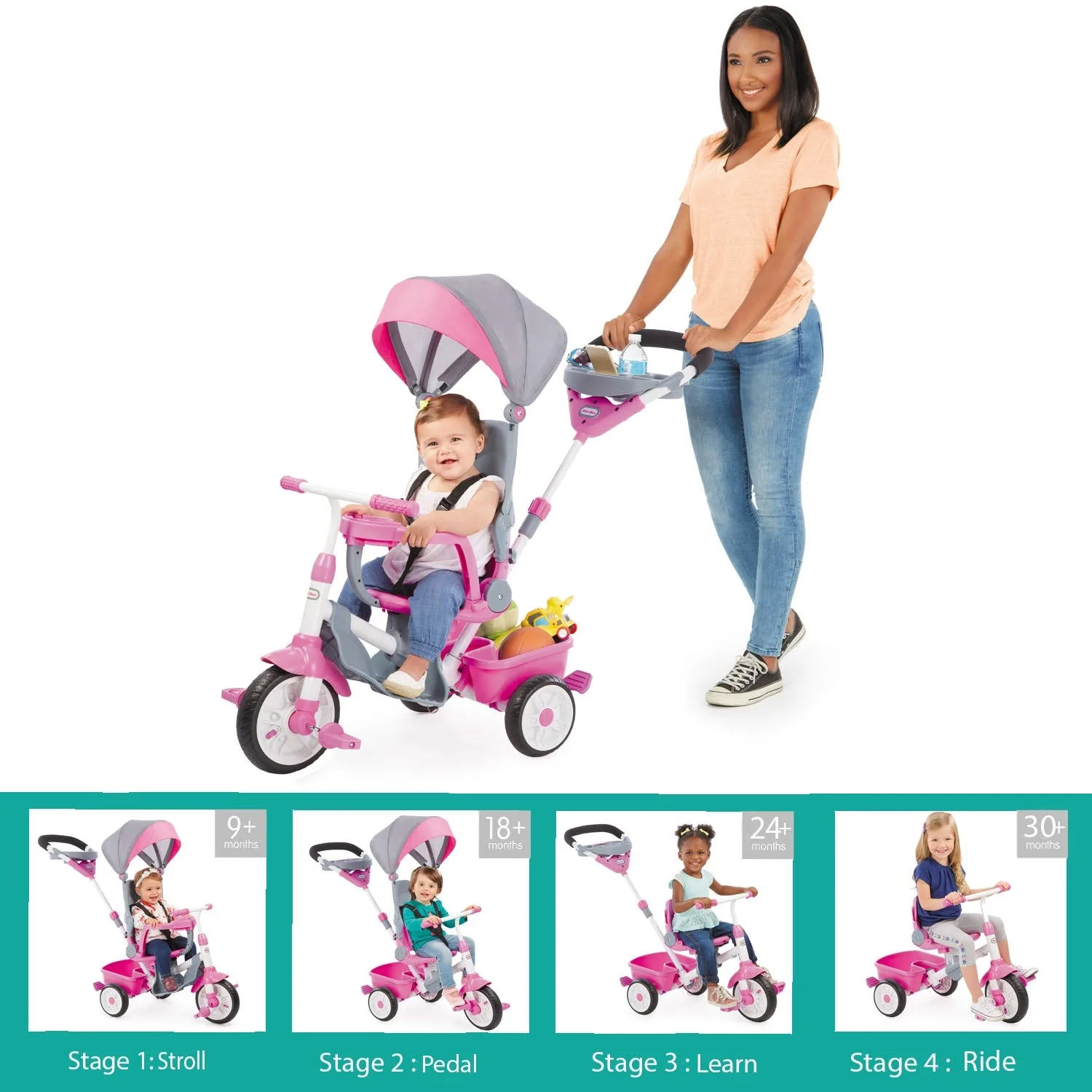
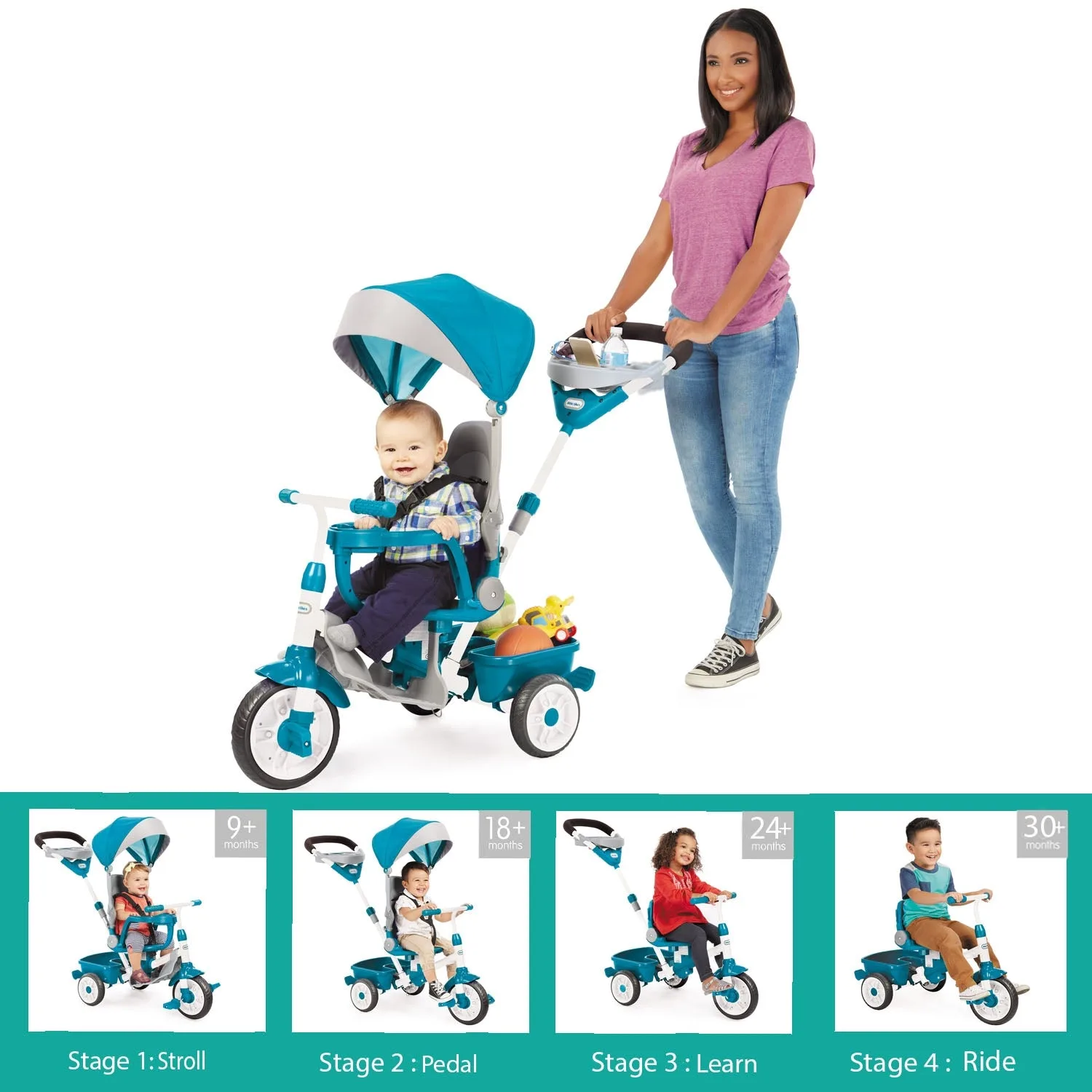
- Perfect Fit™ 4-in-1 Trike - Teal: Perfect Fit 4-in-1 Trike - Teal adapts through four stages from 9 months to 5 years, with parent-controlled steering in Stage 1 and progressive independence later. If your child is still in the toddler stage, a ride-on like this can build outdoor confidence before you commit to a trampoline—and it takes up less space than a full-size bouncer.
- Turtle Sandbox: Turtle Sandbox includes four built-in seats and a classic turtle design for backyard play. A sandbox is a low-clearance alternative when your yard can't meet trampoline safety spacing, and the built-in seats make it easy for playdates without extra furniture.
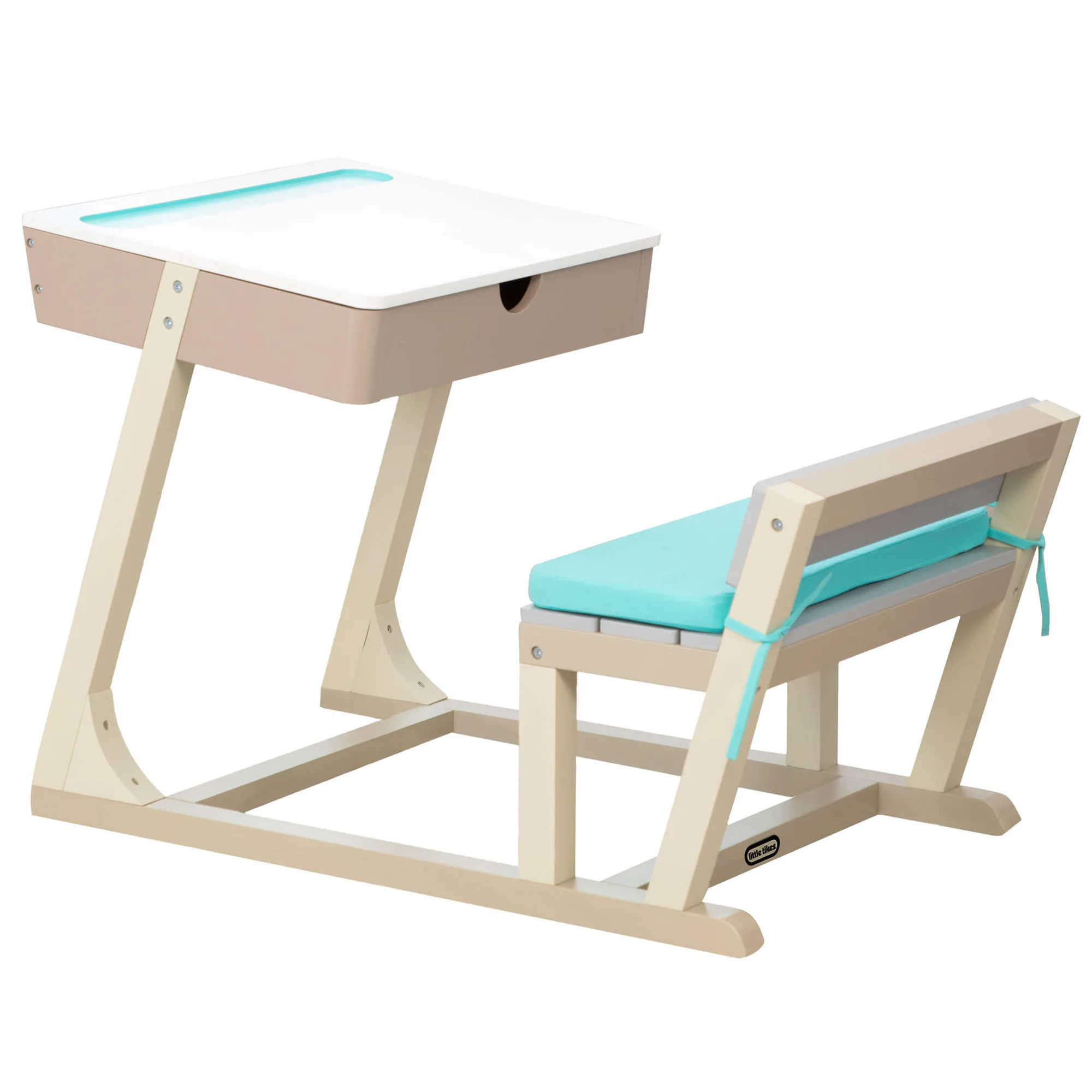
- 2-in-1 Fun & Study Swivel Desk: 2-in-1 Fun & Study Swivel Desk is designed for kids ages 3-8 with a rotating desk surface and plush fabric cushion. If indoor space is tight, a compact activity like this can serve as a quiet-time station without needing the overhead clearance a trampoline requires.
Is a small-yard trampoline right for you?
Best for
- Families with a level, clear patch of yard at least 3 feet larger than the trampoline on all sides
- Parents of toddlers who want a mini trampoline with a handle or enclosure for supervised bouncing
- Homes with a basement or playroom that can meet indoor height and clearance needs
Not for
- Yards with slopes, tight fence lines, or less than 3 feet of clear space around the frame
- Families who want a permanent large trampoline but cannot meet overhead or side clearance
- Anyone planning to leave young children unsupervised on any trampoline