Quick Answer
To support heart health, choose a krill oil supplement that provides pure krill oil with a high omega-3 content, and take it consistently with meals. Look for a product that emphasizes absorption and purity, like Vitabiotics Ultra Red Krill Oil.
Why Krill Oil Stands Out for Heart Health
Krill oil is a special source of omega-3 that’s more easily absorbed through the body than standard omega-3. This means your body can use it more efficiently, which is important when you’re taking a supplement for long-term heart support.
The omega-3s in krill oil are attached to phospholipids, which help them integrate into cell membranes. This is different from most fish oils, where omega-3s are stored as triglycerides. Because of this structural difference, krill oil may be a better option for people who want a more efficient omega-3 delivery.
When choosing a krill oil, look for a product that specifies the source and purity. A reputable brand will clearly state that the oil is pure and sustainably sourced, which gives you confidence in what you’re putting into your body.
Krill Oil vs Fish Oil: What’s the Difference?
The main difference between krill oil and fish oil is the form of omega-3. Krill oil provides omega-3s in a phospholipid form, which is more easily absorbed. Fish oil typically provides omega-3s in triglyceride form, which requires more digestion.
Because krill oil is more absorbable, you may need a lower dose to achieve the same effect. This can be beneficial if you prefer smaller capsules or want to avoid fishy aftertaste, which is less common with krill oil.
However, krill oil tends to be more expensive than fish oil. If budget is a concern, weigh the cost against the potential for better absorption. For heart health, consistency matters more than the specific source, so choose what you can stick with long-term.
What to Look for in a Krill Oil Supplement
When shopping for krill oil, check the label for the amount of omega-3s (EPA and DHA) per serving. Higher concentrations mean you get more benefit per capsule.
Also look for purity certifications, such as testing for heavy metals and contaminants. A trustworthy brand will provide this information on its website or packaging.
Consider the capsule size and whether it’s easy to swallow. Some krill oil supplements are smaller than fish oil capsules, which can make them easier to take daily.
Steps to Choose the Right Krill Oil
- Check the Omega-3 Content: Look for the amount of EPA and DHA per serving on the label. Aim for a product that provides a meaningful dose, typically at least 200-300 mg of combined EPA and DHA per serving. This ensures you’re getting enough to support heart health. If the label doesn’t list EPA and DHA, choose a different product.
- Verify Purity and Source: Choose a krill oil that is pure and sustainably sourced. Look for third-party testing or certification for heavy metals and contaminants. A reputable brand will be transparent about its sourcing. If purity information is missing, contact the brand or choose a product that provides it.
- Consider Absorption and Form: Krill oil is more easily absorbed than standard omega-3, so you can often take a lower dose. If you have trouble with fish oil aftertaste or large capsules, krill oil may be a better fit. If you’ve tried fish oil and didn’t like it, krill oil is worth trying.
- Take It Consistently with Meals: For best results, take krill oil with a meal that contains some fat to enhance absorption. Follow the dosage instructions on the label, and take it at the same time each day to build a habit. Set a daily reminder so you don’t miss a dose.
Product Fact: Vitabiotics Ultra Red Krill Oil
-
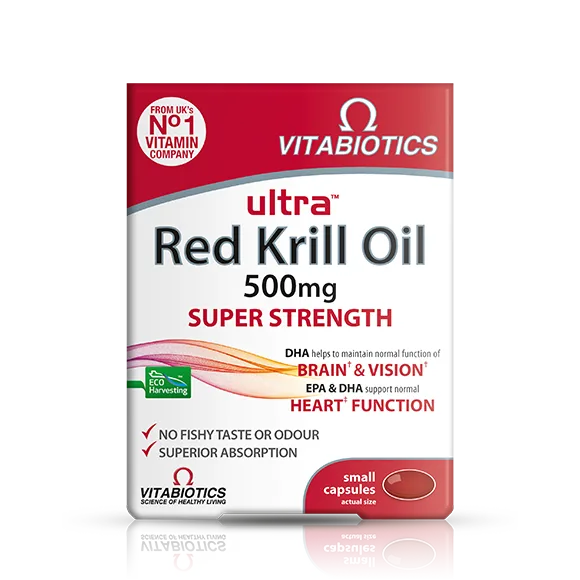
Ultra Red Krill Oil: Ultra Red Krill Oil provides pure krill oil - a special source of Omega-3 that’s more easily absorbed through the body than standard Omega-3. This means you get efficient omega-3 absorption, which is key for supporting heart health without needing very high doses.
Ultra Red Krill Oil