Quick answer
Choose the magnification range that matches your farthest routine target and the field of view you need at close range. For mixed short- to mid-range work, a 1-6x or 1-8x LPVO covers fast 1x aiming and enough zoom for 300-600 m. For dedicated precision and extreme-range shooting, a high-power variable like 10-60x gives the resolution and turret control to see and dial at distance. Match the reticle and turret design to your shooting style, not just the magnification number.
Start with your real shooting distances
Magnification should follow the distances you actually shoot, not the farthest distance you hope to shoot. If most of your targets are inside 100 m and you occasionally stretch to 300 m, a 1-6x or 1-8x low-power variable optic gives you a true 1x view for both-eyes-open speed and enough zoom for positive identification. If your routine is 500 m and beyond from a bench or prone position, a high-power variable with a large objective and fine reticle will let you see trace, mirage, and small target detail.
A practical rule: for every 100 m of routine distance, you want roughly 1x of magnification available for comfortable target identification. That is a starting point, not a hard limit. Target size, light, and mirage matter as much as distance. Small steel at 600 m in good light may be easy at 12x, while a large paper target at 300 m in heavy mirage may be clearer at 8x.
Low-power variables: 1-6x and 1-8x
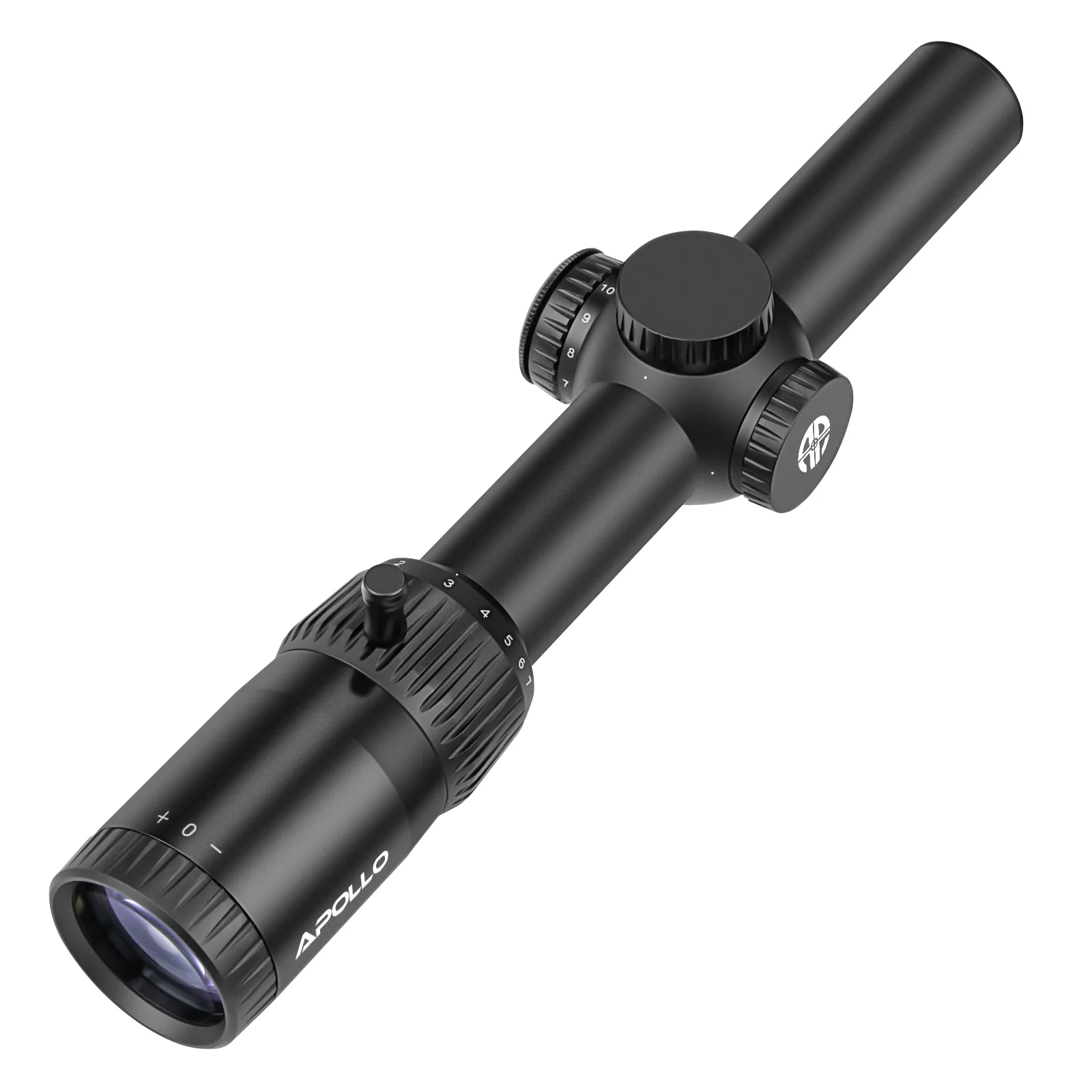
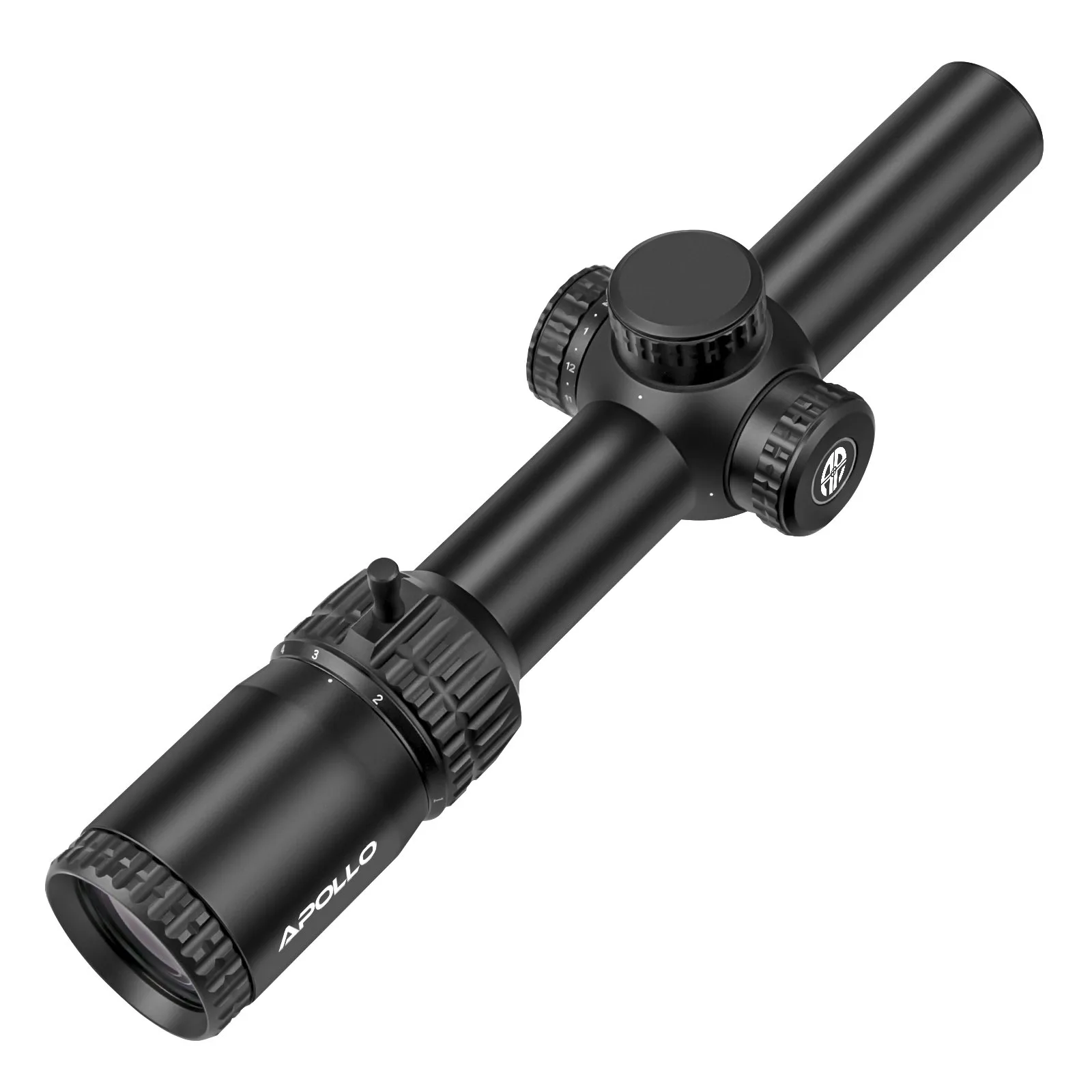
LPVOs are defined by a true 1x setting that works like a red dot for close-range, both-eyes-open engagement, then zoom into a magnified sight picture for mid-range precision. The Apollo Phoenix 1-8X24 LPVO uses a hybrid horseshoe-center-dot plus outer drift-ring reticle for a high-visibility aiming point, and its 8x setting provides a tighter sight picture for medium-range precision. The Apollo Obsidian 1-6×24 LPVO is built for distortion-free speed at 1x and refined clarity at higher magnification, with an illuminated etched reticle and 1/2 MOA adjustments.
The trade-off is top-end magnification. A 1-6x or 1-8x will not resolve the same fine detail as a dedicated high-power scope at 600 m and beyond, and the 24 mm objective limits low-light performance compared with larger objectives. If you rarely shoot past 300-400 m and value speed at close range, that trade is usually worth it. If you spend most of your time at distance, it is not.
High-power variables: 10-60x and beyond
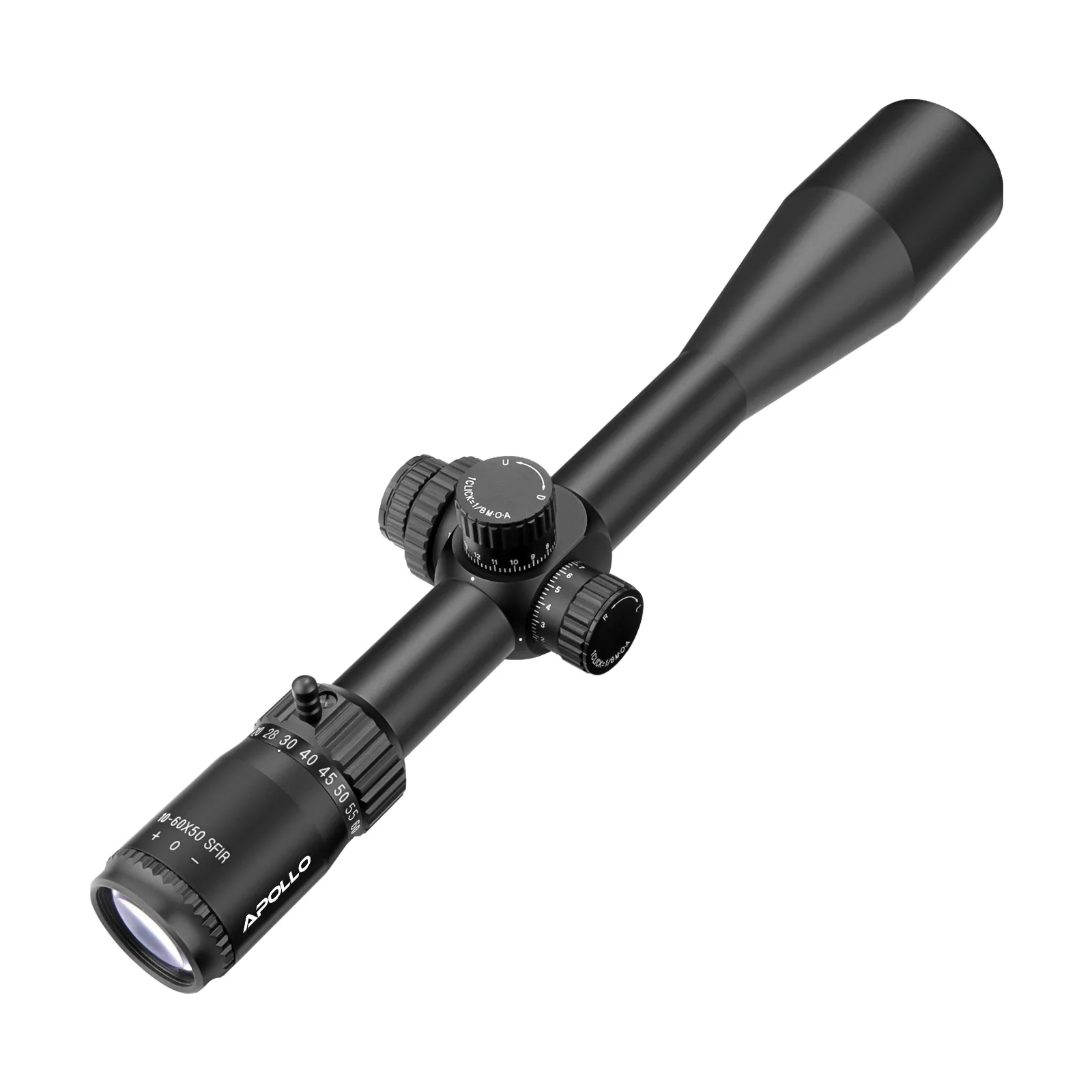
High-power variable scopes are built for distance. The Apollo Atlas 10–60×50 uses a 50 mm objective, a true 10-60x magnification range, a precision 30 mm tube, and high-resolution glass to deliver resolution, range, and turret control for extreme-range work, precision competition, and serious tactical applications. It is designed to hold zero under heavy use.
The cost is size, weight, and a narrow field of view at high magnification. A 10-60x scope is not a fast close-range optic; at 10x, finding a moving target inside 50 m is slow. Use this class of scope when your shooting is deliberate, supported, and mostly beyond 300 m. If you need one rifle to do both close and far work, an LPVO plus a separate high-power setup is usually a better answer than forcing one scope to do both.
Reticle and turret choices that follow magnification
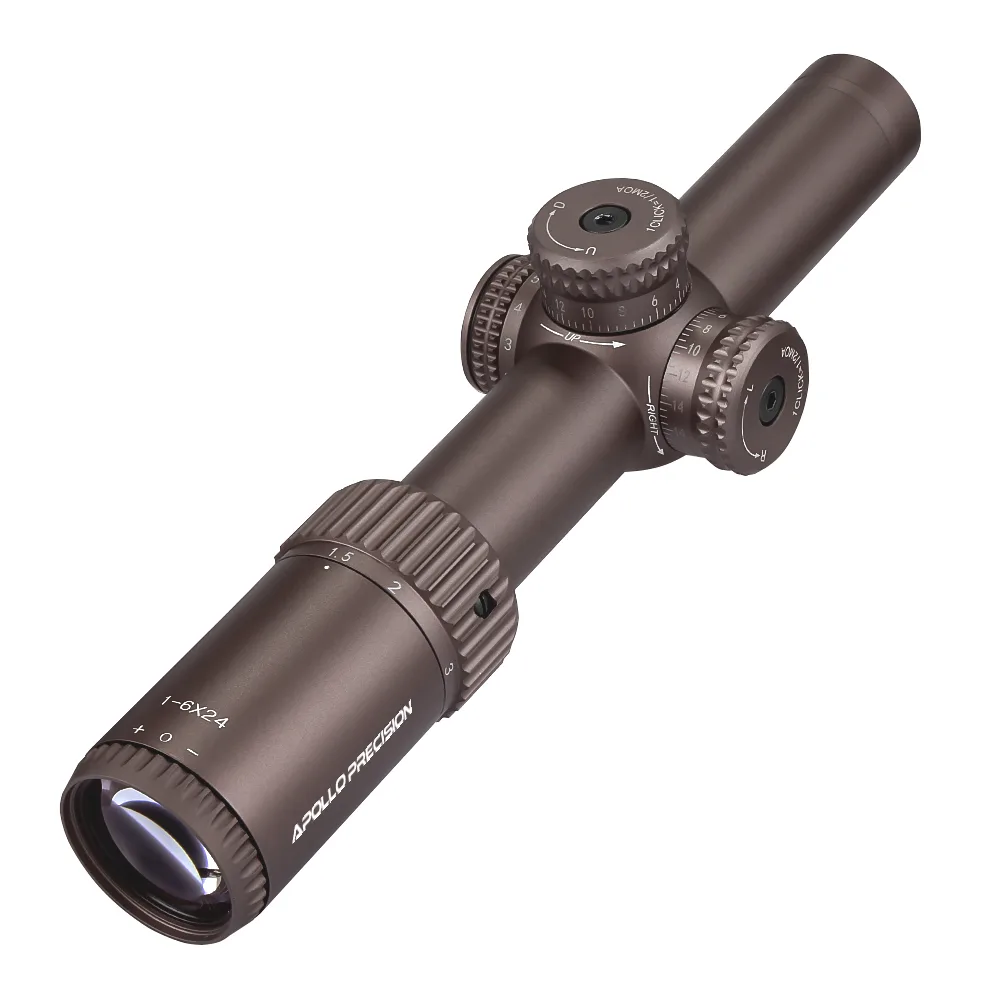
Your magnification range should drive your reticle choice. At 1-6x and 1-8x, a bright, simple aiming point at 1x matters most, with holdovers that stay usable when you zoom. At 10-60x, a fine etched reticle with a precise center and a graduated grid lets you hold or dial for wind and drop without obscuring small targets. The Apollo Terra 1-6×24 LPVO uses a specially designed etched-glass ranging reticle for quick target focus, range estimation, and holdovers out to 900 m for popular calibers like .223, 5.56, and .308.
Turret design follows the same logic. Locking turrets, like those on the Terra, prevent accidental adjustment during carry and close-range movement. Exposed, repeatable target turrets with precise clicks are more useful for dialing at distance, which is why high-power precision scopes prioritize turret control. Decide whether you will hold or dial before you decide on magnification.
Decision rules for choosing magnification
- If most targets are inside 100 m and you occasionally shoot to 300 m: Choose a 1-6x or 1-8x LPVO with a true 1x and a bright close-range aiming point. Prioritize field of view and speed over top-end magnification. The Apollo Obsidian 1-6×24 or Apollo Phoenix 1-8X24 fits this pattern.
- If your routine distance is 500 m and beyond from a supported position: Choose a high-power variable with a large objective and fine reticle. Accept the weight and narrow field of view in exchange for resolution and turret control. The Apollo Atlas 10–60×50 is built for this role.
- If you plan to hold for drop and wind rather than dial: Choose a reticle with graduated holdovers and locking turrets so your zero stays put during movement. Confirm the reticle is calibrated for your caliber and distance. The Apollo Terra 1-6×24 offers holdovers out to 900 m for .223, 5.56, and .308.
- If you cannot decide between close and far: Do not force one scope to cover both extremes. A 1-6x or 1-8x plus a separate high-power scope covers both jobs better than a single compromise optic. Two purpose-built setups usually beat one dual-purpose compromise.
Product facts
- Apollo Obsidian 1-6×24 LPVO: The Apollo Obsidian 1-6×24 LPVO is built with high-clarity glass and a rugged integrated 30 mm tube, with an illuminated etched reticle and precise 1/2 MOA adjustments. The 1x speed and 6x clarity suit shooters who need fast close-range aiming plus mid-range precision, and the 30 mm tube gives a common mounting platform.
- Apollo Atlas 10–60×50: The Apollo Atlas 10–60×50 has a 50 mm objective, true 10-60x magnification, a precision 30 mm tube, and high-resolution glass for extreme-range work, precision competition, and tactical applications. The high top-end magnification and large objective support target identification and dialing at long distance, where small target detail and light gathering matter most.
- Apollo Phoenix 1-8X24 LPVO: The Apollo Phoenix 1-8X24 LPVO has a hybrid horseshoe-center-dot plus outer drift-ring reticle and a rugged 30 mm tube with Picatinny-ready mounting. The 8x top end and high-visibility reticle fit dynamic shooting where fast close-range engagement and medium-range precision are both required.
- Apollo Terra 1-6×24 LPVO: The Apollo Terra 1-6×24 LPVO has an etched-glass ranging reticle for holdovers out to 900 m for calibers like .223, 5.56, and .308, plus locking turrets and a 30 mm tube. The holdover reticle and locking turrets suit hunters and field shooters who range and hold rather than dial, and who want turrets that stay put during carry.
Who this is for
Best for
- Shooters who want a clear rule for matching magnification to their real distances
- Hunters and field shooters choosing between an LPVO and a high-power precision scope
- Buyers comparing 1-6x, 1-8x, and 10-60x options before purchasing
Not for
- Anyone looking for a red dot or prism sight recommendation
- Shooters who only need a fixed-power scope for a single known distance
- Buyers who have already decided on magnification and only need mounting advice