Quick answer
For winter running, choose mittens over gloves when temperatures drop below freezing—they keep fingers together for warmth. Look for windproof shells and insulation rated for your coldest runs, like the Arctic Votta with Aerogel and PrimaLoft for extreme cold.
Why mittens beat gloves for cold runs
Mittens allow your fingers to share warmth, making them significantly warmer than gloves at the same insulation thickness. For runs below -10°C, mittens are the smarter choice. The trade-off is dexterity—you lose some finger mobility, which matters for tasks like adjusting zippers or using a phone. If you need fine motor control, consider convertible mittens with a flip-back mitten cap.
Insulation types and what they mean
Down insulation offers excellent warmth-to-weight ratio but loses insulating power when wet. Synthetic fills like PrimaLoft retain warmth even damp and dry faster. Aerogel is an advanced insulator used in extreme conditions—it's lightweight and blocks cold without bulk. For winter running, synthetic or hybrid insulations are practical because sweat and snow can get inside. The Arctic Votta combines Aerogel, PrimaLoft, and goose down for extreme cold, but for milder runs, a simpler synthetic mitten may be enough.
Fit considerations for running
Mittens for running should fit snugly but not tight—you need room for a thin liner glove if temperatures drop further. A loose fit reduces warmth because air circulates inside. Check the cuff: long cuffs that tuck under your jacket sleeve seal out snow, while short cuffs may let cold air in. Also consider a wrist leash or clip to avoid losing a mitten when you take it off briefly.
How to choose your winter running mittens
- Check the temperature rating: Choose mittens rated for temperatures at least 10°C colder than your typical run. For runs above -10°C, a basic synthetic mitten works. For -10°C to -20°C, look for insulated mittens with PrimaLoft or similar. Below -20°C, consider extreme-rated options like the Arctic Votta.
- Decide on dexterity needs: If you need to handle keys, phone, or harness clips during the run, choose mittens with a flip-back cap or a separate liner glove. For pure warmth without handling tasks, standard mittens are fine.
- Match insulation to activity level: High-intensity running (e.g., canicross) generates more body heat—choose less bulky insulation to avoid sweaty hands. For slower jogs or walking the dog, thicker insulation is better. The Arctic Votta is best for low-to-moderate activity in extreme cold.
- Test the fit with your jacket: Try the mittens with your running jacket to ensure the cuff fits under or over the sleeve without gaps. A snug seal prevents snow and wind from entering.
Product facts
-
Arctic votta: Extremely warm mittens with Aerogel, PrimaLoft, and premium goose down insulation rated for far below -20°C. For runners who train in extreme cold (below -20°C), this mitten provides reliable warmth without needing multiple layers, letting you focus on your run.
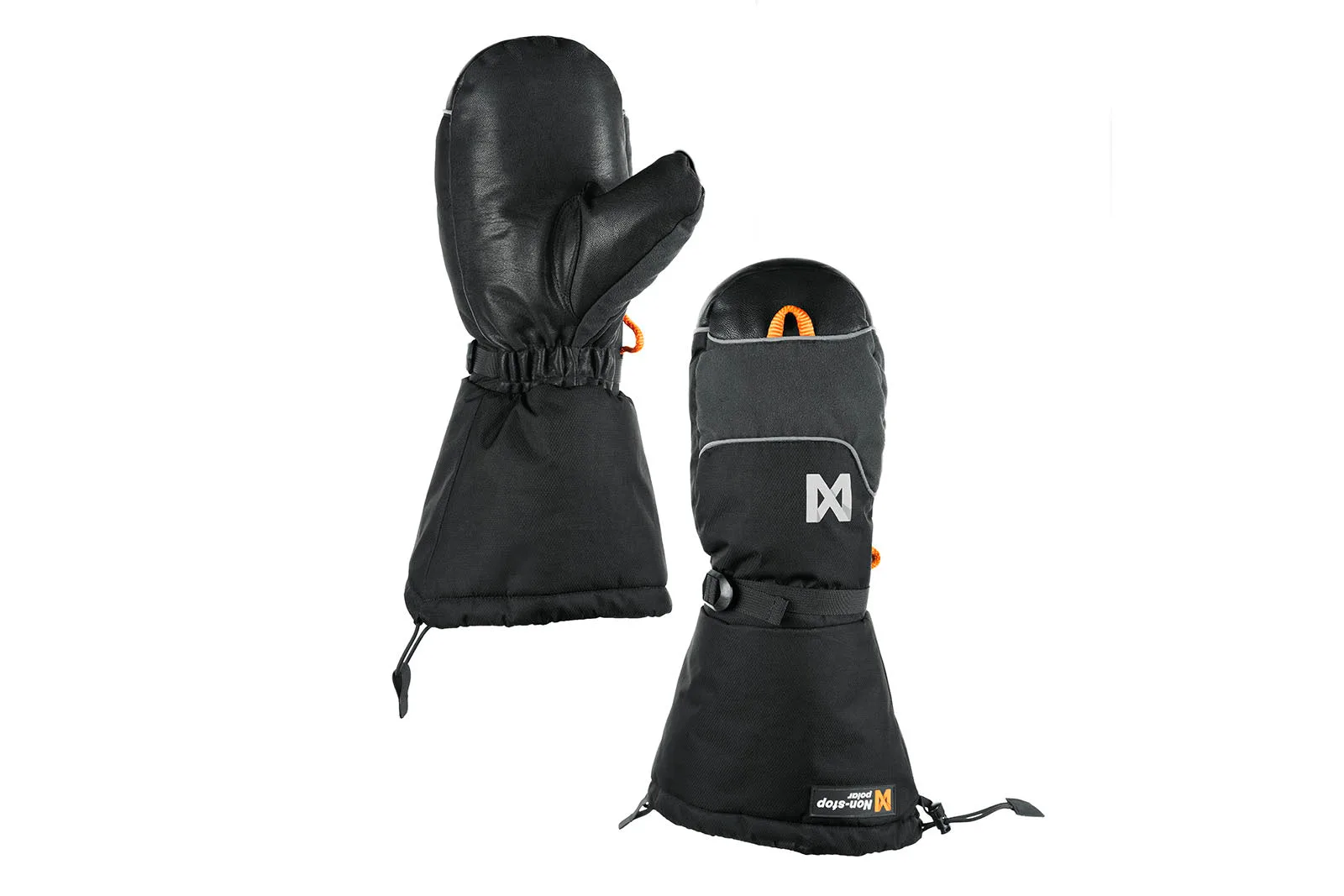
Arctic votta
Who should choose what
Best for
- Runners who train in temperatures below -10°C and prioritize warmth over dexterity
- Canicross or dog runners who need reliable hand protection during long cold runs
Not for
- Runners who need frequent finger access for phone or gear adjustments—consider convertible mittens or liner gloves instead
- Mild winter climates above freezing—lighter gloves or windproof shells are sufficient