Quick answer
Choose a natural baby fabric softener with plant-derived ingredients, a simple fragrance profile, and no synthetic dyes or phthalates to keep your baby's sensitive skin comfortable.
Why natural ingredients matter for baby's skin
A baby's skin is thinner and more absorbent than adult skin, making it more vulnerable to irritants. Natural fabric softeners typically rely on plant-based emollients and essential oils rather than synthetic chemicals, reducing the risk of contact dermatitis or allergic reactions. However, "natural" is not a regulated term, so you still need to check the ingredient list for potential triggers like essential oils if your child has known sensitivities.
The trade-off between softness and fragrance
Many natural fabric softeners use essential oils or botanical extracts for scent. While these can be pleasant, they may still cause irritation for extremely sensitive skin. Unscented options are the safest choice for newborns or babies with eczema. If you prefer a light scent, look for softeners with a single, mild fragrance note rather than complex blends.
How to choose a natural baby fabric softener for sensitive skin
- Check the ingredient list for plant-based bases: Look for softeners that list plant-derived ingredients like vegetable glycerin, coconut-based surfactants, or natural oils as the primary components. Avoid products with quaternary ammonium compounds (quats) derived from petroleum, as these can be harsh on sensitive skin. If the first few ingredients are unrecognizable or synthetic, keep looking.
- Choose a fragrance profile that matches your baby's tolerance: Decide between unscented or lightly scented with a single natural fragrance note (e.g., pear nectar or apple). For babies with known skin conditions like eczema, unscented is the safest bet. If you want a mild scent, test a small patch of fabric first. Remember that 'fragrance-free' on the label is more reliable than 'unscented' for avoiding hidden irritants.
- Verify it's free from common irritants: Ensure the product is labeled as free from synthetic dyes, phthalates, parabens, and optical brighteners. These additives offer no benefit for fabric softness and can trigger reactions on sensitive skin. A short, transparent ingredient list is a good sign. If the label doesn't list these claims, check the full ingredient list online before purchasing.
- Test on a small load before full use: Wash a few baby items (like a onesie or burp cloth) with the softener and check for any skin reaction after your baby wears them. This low-risk test helps you confirm compatibility without committing to a full bottle. Even natural products can cause reactions in some babies, so always patch test.
Product facts
-
Baby Fabric Softener Pear Nectar-33.8 FL.OZ. - 40 loads: Formulated with 98.1% naturally derived ingredients and works on all types of fabric, including delicate baby clothes and blankets. This high percentage of naturally derived ingredients means fewer synthetic additives touching your baby's skin, while still being effective on sensitive fabrics.
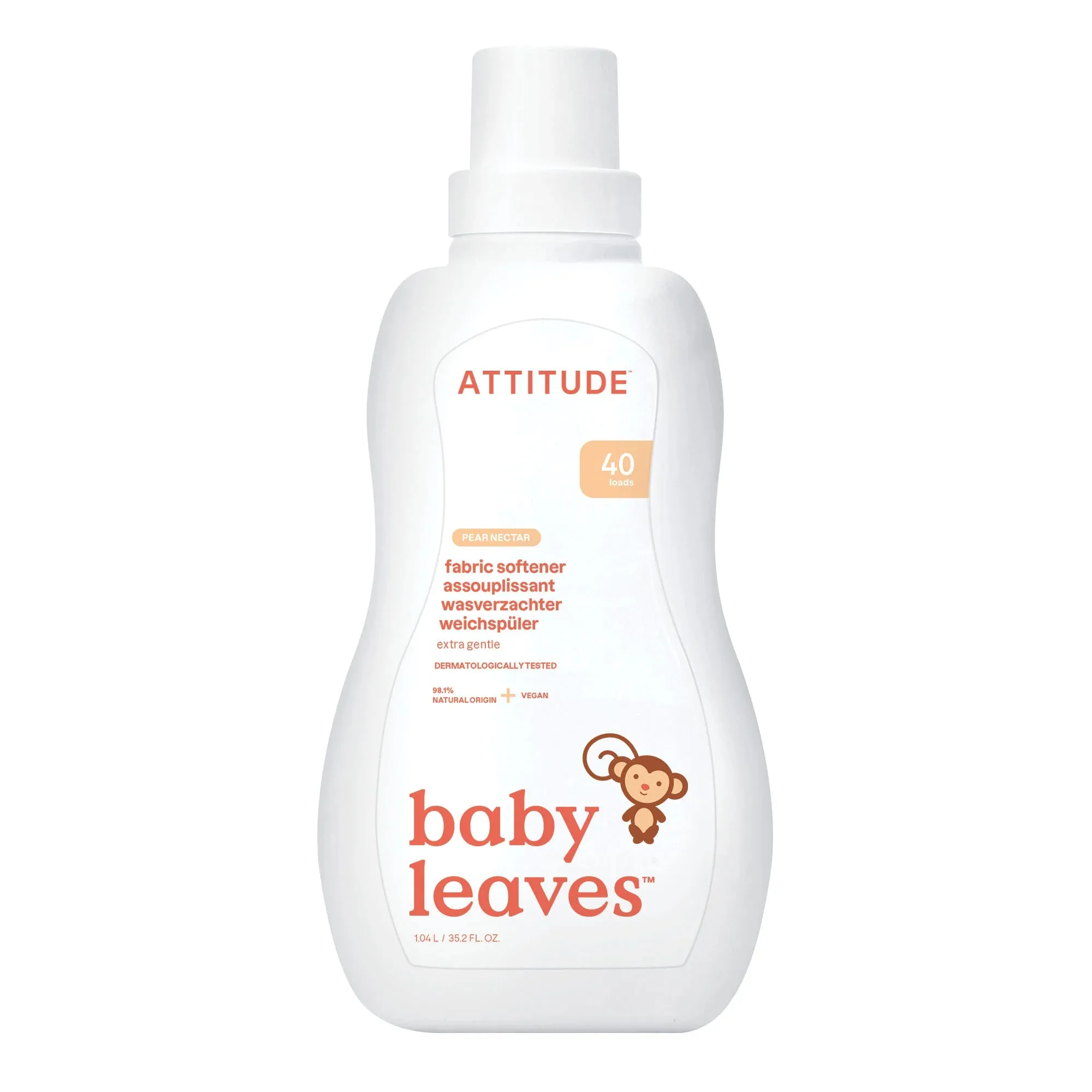
Baby Fabric Softener Pear Nectar-33.8 FL.OZ. - 40 loads