Quick answer
For 18 mesh needlepoint, use a size 22 or 24 tapestry needle and a single strand of a fine thread such as DMC Pearl Cotton Size 5 or a comparable silk or wool. The smaller needle size matters because 18 mesh has more holes per inch than 13 mesh, so a thicker needle or thread will crowd the canvas and distort the design.
18 mesh canvas packs more holes per inch than 13 mesh, which gives you finer detail and a smoother finished surface. It also leaves less room for error. Pick a needle or thread that is even slightly too thick and the canvas will bulge, the holes will stretch, and the painted design underneath will shift.
This guide walks through the choices in order: needle size, thread weight, strand count, and tension. Each step includes the mistake that most often trips up stitchers new to fine mesh needlepoint tips.
Start with needle size, not thread
The needle determines how much the canvas holes stretch before you even add thread. For 18 mesh needlepoint needle size, a tapestry needle in size 22 or 24 is the standard range. Size 22 is slightly larger and easier to thread; size 24 is finer and leaves more room for thread in each hole. Both work, but the choice affects how densely you can stitch.
A common mistake is grabbing the same needle used for 13 mesh. That needle is too thick for 18 count canvas and will enlarge the holes permanently. Check by inserting the needle into an unpainted corner of the canvas: it should pass through with light resistance, not force.
- If the needle bends or the canvas dimples, go down one size.
- Keep a size 22 and a size 24 on hand and switch when a stitch area feels tight.
Match thread weight to 18 count canvas
The best thread for 18 count canvas is one that covers the canvas without bulging. DMC Pearl Cotton Size 5 is a reliable default because it is fine enough for 18 mesh and still has enough body to cover the grid. Silk and fine wool also work well, but they behave differently under tension, so test a small area first.
Thread for 18 mesh canvas should be thin enough that a single strand fills the hole without forcing the canvas threads apart. If you can see the painted design peeking through after stitching, the thread is too thin. If the canvas buckles between stitches, it is too thick.
- Stitch a one-inch test square before committing to a full project.
- Hold the thread against the canvas: it should roughly match the width of one canvas thread.
Decide on strand count before you start
Strand count is where most 18 mesh canvas tutorial advice gets vague. With Pearl Cotton Size 5, you typically use one strand as it comes off the skein. With divisible threads like embroidery floss, you may need two or three strands to get equivalent coverage. The right number depends on the thread, not the canvas alone.
The checkpoint is coverage: after one row, the canvas grid should be mostly hidden without the stitches sitting on top of each other. If you can still see the painted line clearly, add a strand. If stitches start to overlap or lean, remove one.
- Write down your strand count and needle size on the canvas margin so you can repeat it.
- If you switch thread brands mid-project, re-test the strand count.
Manage tension on fine mesh
Fine mesh needlepoint tips often focus on thread and needle, but tension is what actually keeps 18 mesh looking clean. Pull each stitch snug enough to sit flat, then stop. Over-pulling stretches the hole and pulls the canvas out of shape; under-pulling leaves loops that snag.
A useful checkpoint is the canvas edge. If the edge starts to wave or curl, your tension is too tight. If stitches slide when you run a finger over them, it is too loose. Adjust before you finish the first section, because correcting tension later means ripping out stitches.
- Work in small sections and check the canvas shape every few rows.
- Let the needle do the work; do not yank the thread through.
Test on a hand-painted canvas before a full project
Hand-painted canvases are less forgiving than printed ones because the design is painted directly on the mesh. If your needle or thread is wrong, the paint can crack or the design can distort. A five-minute test on a corner or a scrap piece of 18 mesh saves hours of unpicking.
Use the test to confirm three things: the needle passes cleanly, one strand covers the grid, and your tension keeps the canvas flat. Once those are true, you can stitch the rest with confidence.
- Keep a small scrap of 18 mesh in your kit specifically for testing.
- If the test area looks crowded, size down the needle before changing thread.
Your 18 mesh setup, step by step
- Pick a size 22 or 24 tapestry needle: Test it in an unpainted corner of the canvas. It should slide through with light resistance, not force. Checkpoint: if the canvas dimples, go down one needle size.
- Choose a fine thread such as DMC Pearl Cotton Size 5: Match the thread width to roughly one canvas thread so it covers the grid without bulging. Checkpoint: if the painted design shows through, the thread is too thin.
- Set your strand count with a one-inch test square: Use one strand of Pearl Cotton Size 5, or adjust divisible threads until the grid is hidden without overlap. Checkpoint: stitches should sit flat, not lean or stack.
- Stitch with even, moderate tension: Pull each stitch snug and stop. Watch the canvas edge for waving or curling as you work. Checkpoint: a flat canvas edge means your tension is right.
- Confirm the setup on a hand-painted canvas before committing: Run a small test area on the actual canvas or a scrap of 18 mesh to verify needle, thread, and tension together. Next step: once the test looks clean, stitch the full design with the same setup.
Products that fit 18 mesh work
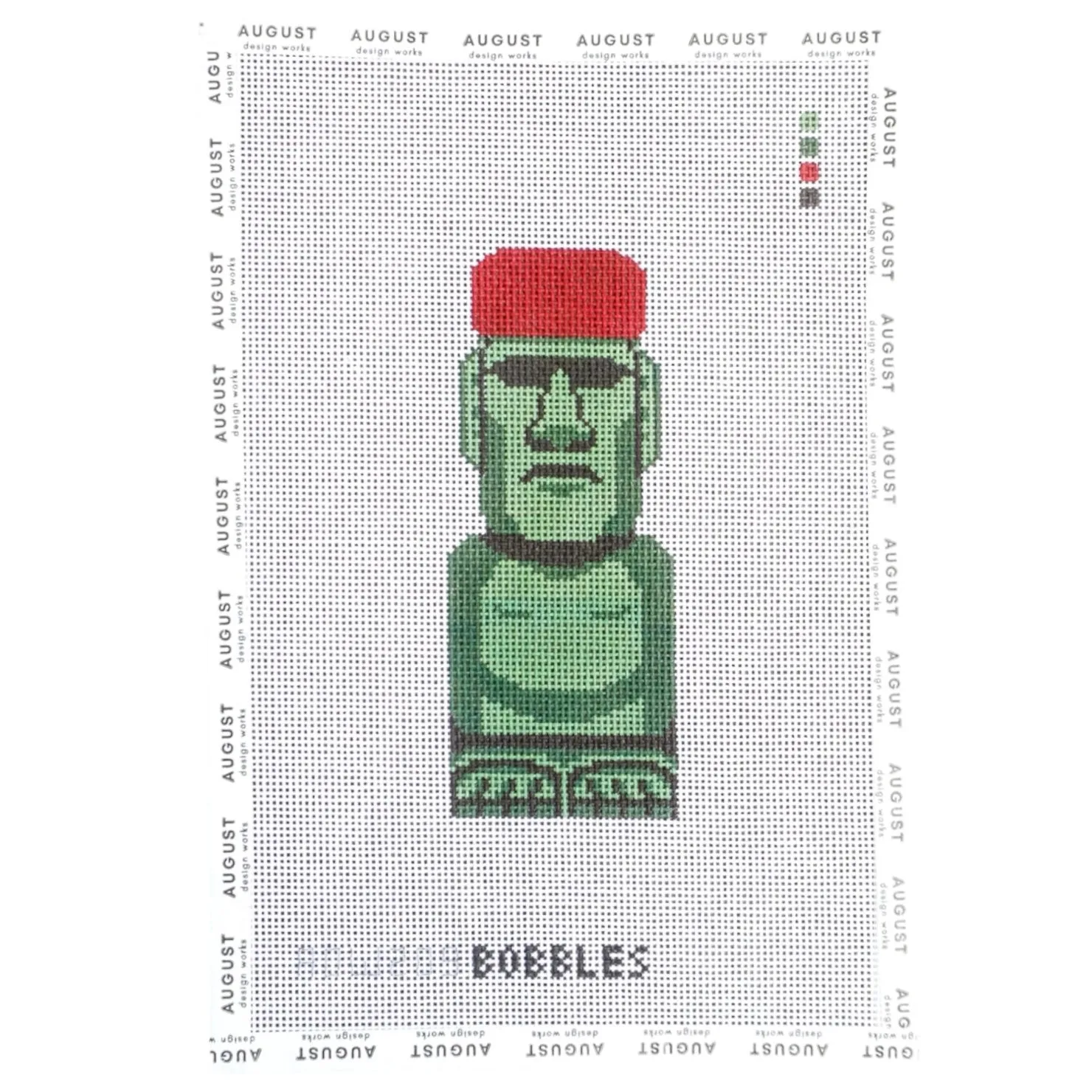
- Moai Bobble - Needlepoint Canvas: This is an 18 mesh hand-painted needlepoint canvas from the Bobbles Series, designed to be stitched, displayed, and collected. It is a direct example of the canvas type this guide covers, so the needle and thread choices here apply to it specifically.
- First of All I'm A Delight - Needlepoint Paperweight Kit (Wholesale - EXCLUDES THREADS): This glass paperweight kit is a self-finishing needlepoint project, and the wholesale note states that threads are not included and recommends DMC Pearl Cotton Size 5 in 3801 and 3326. It shows a real case where you must choose your own thread, and it names a Size 5 Pearl Cotton that matches the fine-thread recommendation for 18 mesh.
The right setup for 18 mesh canvas comes down to three choices: a size 22 or 24 tapestry needle, a fine thread like DMC Pearl Cotton Size 5, and tension that keeps the canvas flat. Test all three on a small area first, and the rest of the project will stitch smoothly.