Quick answer
Choose 18 mesh for detailed designs, fine threads, and small finished pieces, and choose 13 mesh for larger designs, thicker threads, and easier stitching. If you are new to needlepoint, start with a small 18 mesh canvas that comes with a thread kit, such as the Nauti Flag Key Fob, so you can learn tension and coverage without buying a lot of supplies.
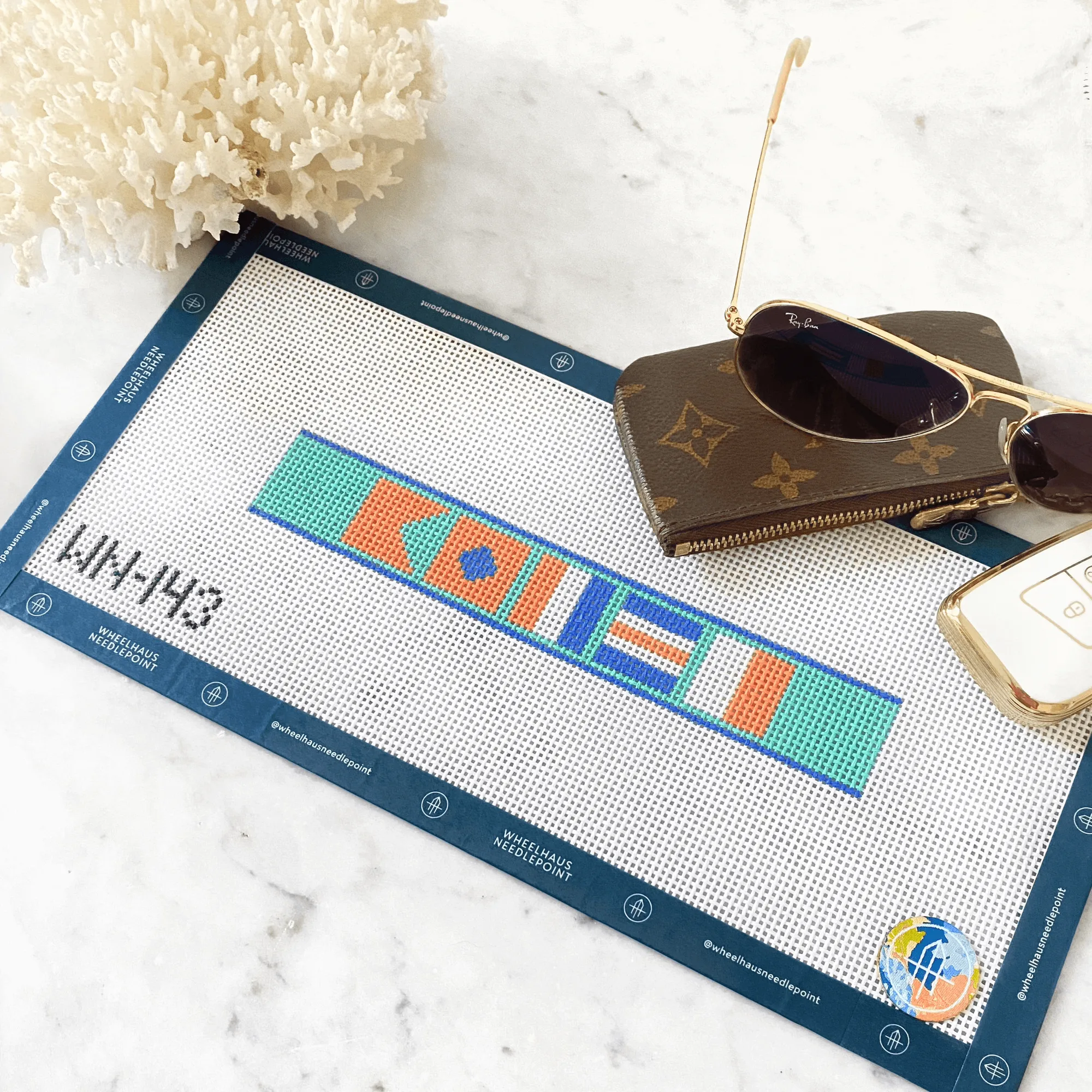
Nauti Flag Key Fob
Needlepoint canvas mesh count is simply the number of threads or holes per inch. It determines how much detail a design can hold, how thick your thread should be, and how large the finished piece will be. The right mesh count comes down to three things: the design, the thread you want to use, and how comfortable you are stitching small holes.
This guide walks you through a practical order of decisions, with checkpoints and common mistakes at each step. It uses real canvases from Wheelhaus Needlepoint to show how mesh count shows up in actual projects, from a tiny key fob to a tote design.
Start with the design, not the mesh number
Look at the level of detail in the design before you think about mesh. Fine lines, small letters, and facial features need more holes per inch to render clearly. A design with large color blocks and simple shapes can work on a lower mesh count because there is less detail to capture.
For example, the Nauti Flag Key Fob is stitched on 13 mesh and measures 8 by 1 inches. The nautical flags are simple shapes, so 13 mesh gives enough room to show them without requiring tiny stitches. If that same design were shrunk to a much smaller size, it would need a higher mesh count to keep the flags readable.
- Checkpoint: If your design has letters smaller than a quarter inch, you likely need 18 mesh or higher.
- Common mistake: Choosing a low mesh count for a detailed face or text, then discovering the details blur together.
Match thread thickness to the mesh
Thread and mesh must work together. On 18 mesh, you generally use finer threads such as silk, floss, or fine wool so the stitches do not overcrowd the holes. On 13 mesh, thicker threads like tapestry wool cover the canvas faster and give a fuller look.
If you use thread that is too thick for the mesh, the canvas will buckle and the holes will stretch. If the thread is too thin, the canvas shows through and the finished piece looks sparse. Many stitchers use a thread ring to keep multiple strands organized while they test coverage on a corner of the canvas.
- Checkpoint: Stitch a one-inch test square on the edge of your canvas before committing to a thread.
- Common mistake: Assuming one strand of thread works for every mesh count. Coverage changes with mesh size.
Decide how large you want the finished piece
Mesh count affects finished size. The same design stitched on 18 mesh will be smaller than on 13 mesh because there are more stitches per inch. If you want a piece to fit a specific frame, pillow, or tote panel, calculate the finished size before you buy the canvas.
The Pickle Ball Tote - Day 11 is an 18 mesh design measuring 3.5 inches wide by 3.75 inches high. That small finished size suits a tote accent or ornament. If you wanted the same image much larger, you would either need a larger painted design or a lower mesh count.
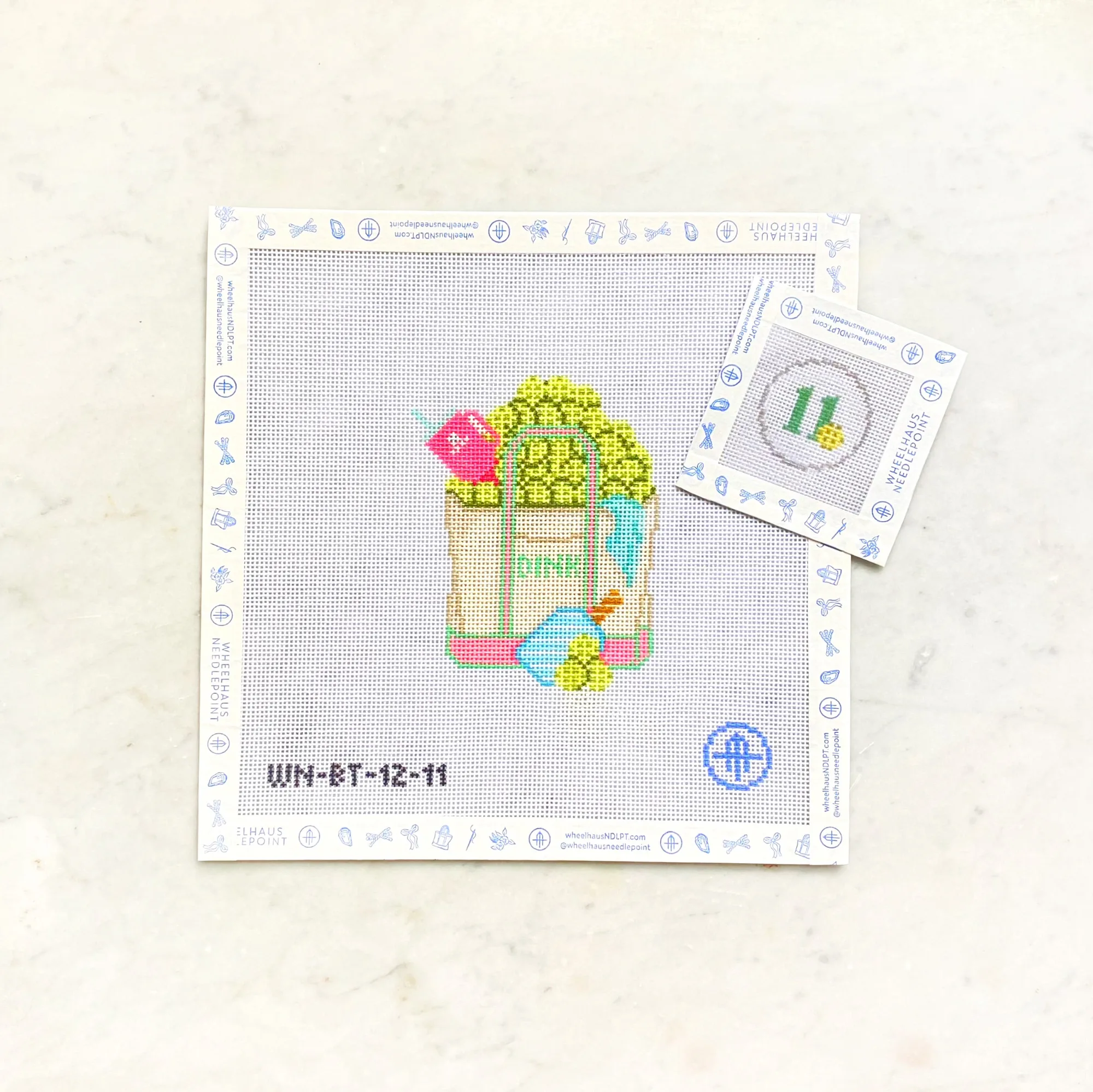
Pickle Ball Tote - Day 11
- Checkpoint: Multiply the stitch count by the mesh size to estimate finished dimensions.
- Common mistake: Buying a canvas that is too large for the intended finish, then having to frame it differently than planned.
Be honest about your stitching experience
Higher mesh counts require more precision because the holes are smaller and stitches are tighter. If you are new to needlepoint, 18 mesh is still manageable for small projects, but 13 mesh is more forgiving for full-size pillows or belts. The key is to start with a project that matches your patience for detail.
A small 18 mesh canvas with a thread kit is a good learning project because it includes the fibers, a thread ring, and a tapestry needle. The Nauti Flag Key Fob is available as canvas only or as a thread kit, so you can choose based on whether you already have threads at home.
- Checkpoint: If you have never stitched before, choose a canvas under 5 inches on 18 mesh or any size on 13 mesh.
- Common mistake: Starting with a large 18 mesh canvas that takes months to finish, which can stall your progress.
Check what comes with the canvas
The mesh count is only one part of the purchase. Some canvases come as canvas only, while others include a thread kit, a stitch pamphlet, a tapestry needle, and a reusable project bag. Knowing what is included helps you avoid buying duplicate supplies.
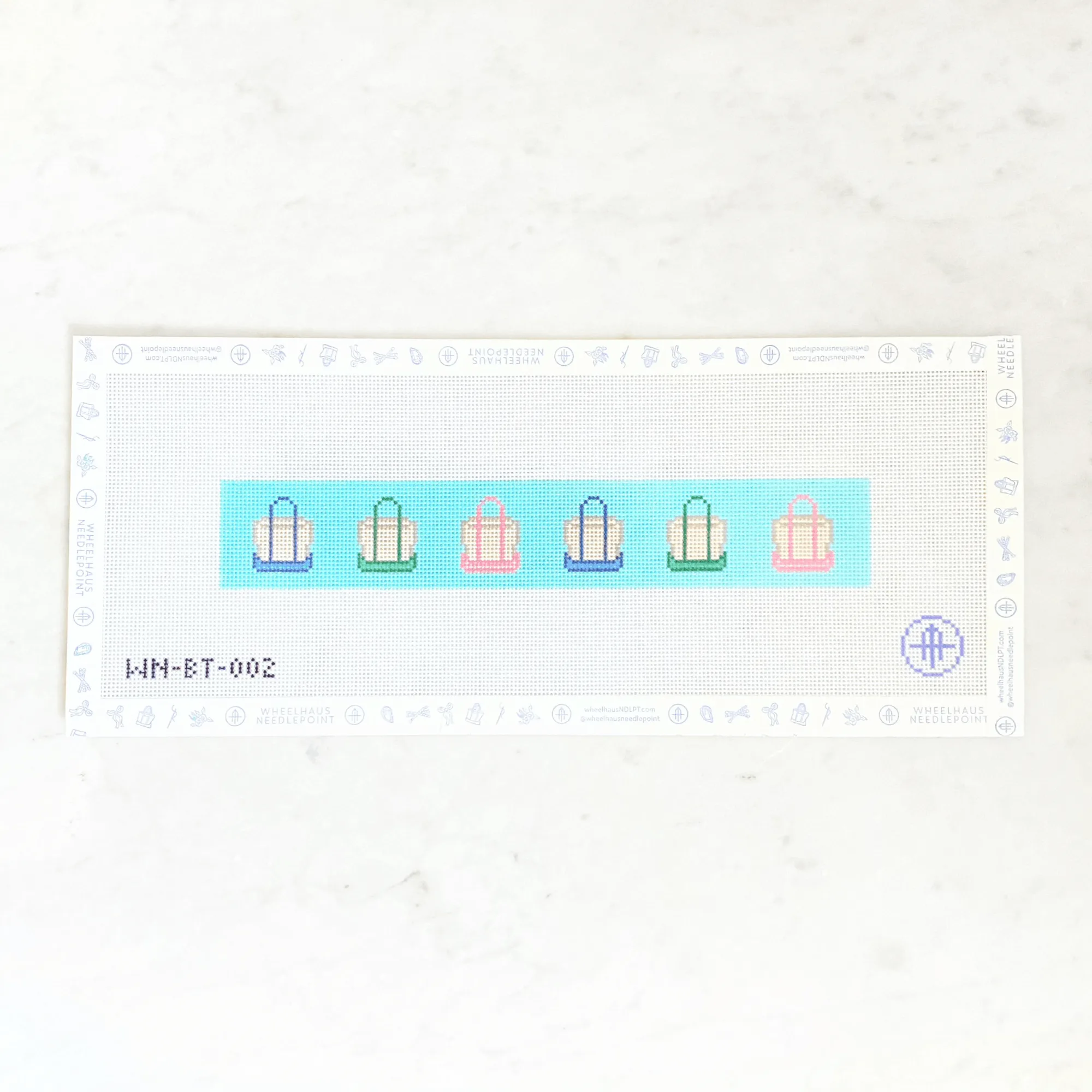
For example, the Tote Key Fob is 18 mesh and 9 by 1.5 inches. It is available as canvas only or as a thread kit that includes silk and wool fibers, a thread ring, a tapestry needle, and a stitch brochure. If you already have a thread stash, canvas only may be the better value.
- Checkpoint: Read the how-to-buy options carefully so you know whether threads are included.
- Common mistake: Buying a thread kit when you already own suitable threads, or buying canvas only without checking that you have the right fiber weight.
Think about how you will store and carry the project
Mesh count can influence how you organize a project. Smaller 18 mesh canvases fit easily into a project bag, while larger 13 mesh canvases need more space. A clear project bag lets you see what is inside without unpacking everything.
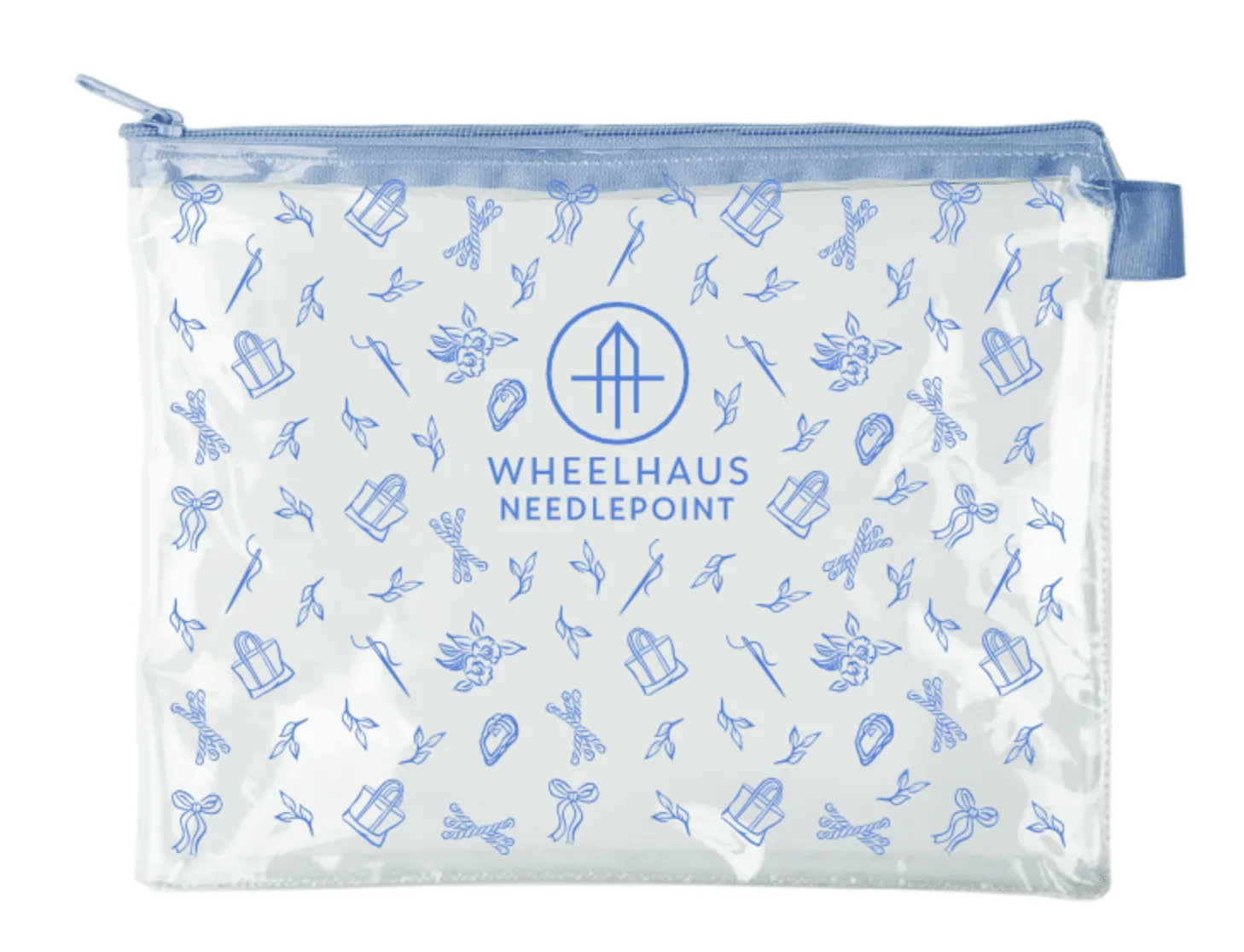
The Our Story Print Clear Needlepoint Project Bags come in four sizes, from Small 9x4 for carded threads to Extra Large 16x11 for travel. Matching the bag to your canvas size keeps threads, needles, and the canvas together, which matters more when you are working with fine 18 mesh threads that tangle easily.
- Checkpoint: Measure your canvas and any stretcher bars before choosing a bag size.
- Common mistake: Storing a finished or in-progress canvas loose in a tote, where threads can snag on the mesh.
Your step-by-step mesh count decision
- Step 1: Identify the smallest detail in the design: Look for letters, faces, or fine lines. If the smallest detail is under a quarter inch, plan for 18 mesh. If the design is mostly large shapes, 13 mesh is enough. Checkpoint: Write down the smallest feature size before comparing canvases.
- Step 2: Choose a thread weight that covers the mesh: Match fine silk or floss to 18 mesh and thicker wool to 13 mesh. Test a few stitches on the edge of the canvas to confirm coverage. Common mistake: Using the same thread on both mesh counts without testing.
- Step 3: Calculate the finished size: Multiply the stitch count by the mesh size. For example, a 3.5 inch wide design on 18 mesh has about 63 stitches across. Use that number to check framing or finishing plans. Checkpoint: Confirm the finished size fits your intended use, such as a tote panel or ornament.
- Step 4: Match the mesh to your experience: New stitchers should start with a small 18 mesh project or any 13 mesh project. Experienced stitchers can choose 18 mesh for detail without worrying about the smaller holes. Common mistake: Choosing a large 18 mesh canvas as a first project and losing momentum.
- Step 5: Decide between canvas only and a thread kit: Check whether the canvas includes threads, a needle, and a stitch guide. If you already have suitable fibers, canvas only saves money. If not, a thread kit removes the guesswork. Checkpoint: Read the how-to-buy options so you know exactly what arrives.
- Step 6: Store the project by size and mesh: Use a clear project bag that fits your canvas and threads. Smaller 18 mesh projects fit in a Small or Medium bag, while larger 13 mesh canvases may need a Large or Extra Large bag. Next step: Label the bag with the mesh count and thread weight so you can resume quickly.
Canvas examples by mesh count
- Nauti Flag Key Fob: 13 mesh, design 8 x 1 inches, available as canvas only or as a thread kit with silk and wool fibers, a thread ring, and a tapestry needle. A narrow 13 mesh design with simple shapes shows how lower mesh counts suit small, readable motifs and quick projects.
- Pickle Ball Tote - Day 11: 18 mesh, design 3.5 inches wide by 3.75 inches high, available as canvas only or with a stitch pamphlet and tapestry needle. A small 18 mesh canvas shows how higher mesh counts keep detail crisp in a compact finished size.
- Tote Key Fob: 18 mesh, design 9 x 1.5 inches, thread kit includes silk and wool fibers, a thread ring, a tapestry needle, and a stitch brochure. A longer 18 mesh piece demonstrates that high mesh counts are not limited to tiny projects and can still include a full thread kit.
- Our Story Print Clear Needlepoint Project Bags: Four sizes: Small 9x4, Medium 11x5x5, Large 11x8.5, Extra Large 16x11. Mesh count affects canvas size and thread needs, so the right bag size keeps a project organized and protected.
Choosing needlepoint canvas mesh count gets easier when you work in order: detail first, then thread, then finished size, then your own experience. Start with a small 18 mesh project if you want to learn fine stitching, or a 13 mesh canvas if you want faster coverage. Either way, check what comes with the canvas so you can start stitching without a second shopping trip.