Quick answer
Choose non-polarized sunglasses like the Freedom NP when you need clear LCD/HUD visibility, drive in low-light conditions, or prefer classic aviator styling without the color distortion polarized lenses can cause.
When polarized lenses work against you
Polarized lenses reduce glare but can make LCD screens, car dashboards, and modern instrument panels look dark or flicker. If you spend time reading displays while driving, flying, or boating, non-polarized lenses preserve full screen clarity.
Non-polarized sunglasses also let in more ambient light, which helps in overcast conditions or shaded roads where polarization can make the scene too dim.
What the Freedom NP brings to the table
The Freedom Non-Polarized collection draws from a design originally made for U.S. Navy pilots and NASA astronauts — a group that needs clear instrument reading. The stainless steel frame is lightweight yet rugged, and the bayonet temples fit comfortably under a helmet or cap.
Because it skips the polarizing filter, the Freedom NP keeps the same vintage pilot look without the added cost or the display interference that polarized versions introduce.
How to choose non-polarized sunglasses: 4 steps
- Check your primary activity: If you drive a car with a large LCD dashboard, operate a boat with GPS/chartplotter, or fly with glass cockpit instruments, non-polarized lenses prevent screen washout. Polarized lenses can make displays unreadable. If you rely on electronic displays during your activity, pick non-polarized.
- Consider the light conditions you face most: Non-polarized lenses transmit more light, so they work better in variable or low-light settings — dawn, dusk, overcast days, or shaded roads. Polarized lenses cut 20–30% more light, which can feel too dark in those conditions. For all-day wear in changing weather, non-polarized is more versatile.
- Examine frame and lens build quality: Look for scratch-resistant lenses and a sturdy frame. The Freedom NP uses a stainless steel frame and bayonet temples — a design that stays secure during active use. Avoid flimsy plastic frames that can warp in heat or bend under pressure. Test the hinge stiffness and temple grip before buying.
- Match the style to your face shape and headgear: Aviator frames like the Freedom NP suit most oval, round, and heart-shaped faces. The bayonet temples lie flat against the head, which makes them compatible with caps, motorcycle helmets, or headsets. If you wear headgear, choose sunglasses with bayonet or cable temples — not standard curved temples.
Product facts: Freedom Non-Polarized Sunglasses
-
Freedom Non-Polarized Sunglasses: Inspired by sunglasses originally crafted for the U.S. military and issued to U.S. Navy pilots and NASA astronauts. That heritage means the frame and lens design were tested for cockpit use where LCDs and instruments must stay readable — exactly the scenario where non-polarized lenses shine.
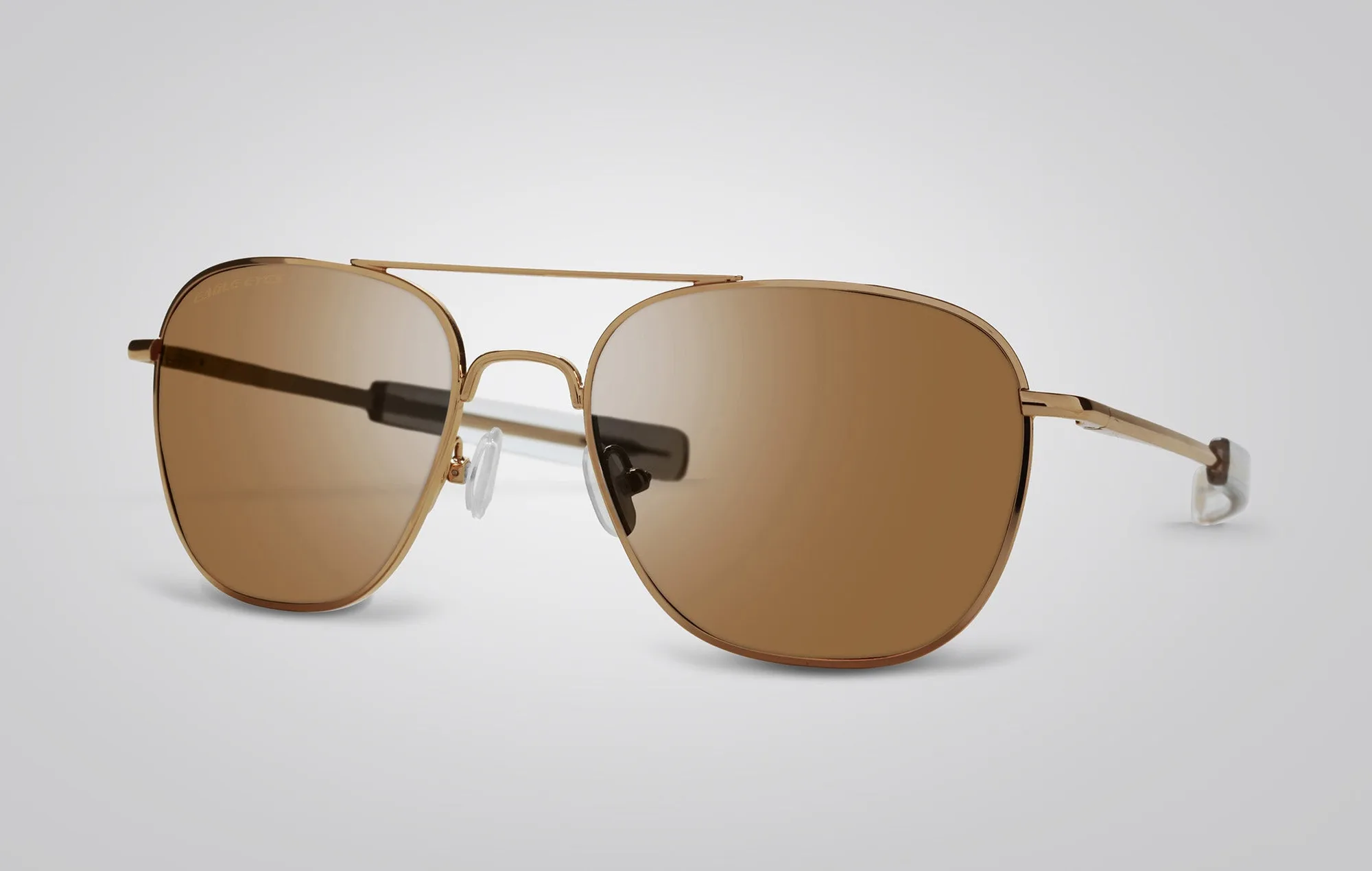
Freedom Non-Polarized Sunglasses
-
Freedom Non-Polarized Sunglasses: Constructed with rugged yet lightweight stainless steel, available in gold, silver, or black, with bayonet temples and soft-temple tips. The metal frame holds up to daily wear without adding weight, and the bayonet temples slide easily under headgear or behind the ears without pinching.