Quick answer
For true archival prints, choose a paper with a smooth matte or microporous coating that is compatible with pigment inks and has a neutral, bright white base.
Surface finish matters for display and handling
Gloss and semigloss papers deliver high contrast and vivid colors, but they can show fingerprints and reflections. Matte papers hide fingerprints and work well under direct light, making them ideal for portfolios or framed displays behind glass.
Pearl or satin finishes offer a middle ground: they provide a subtle sheen without the glare of gloss, and the slight texture adds a tactile quality that many photographers prefer for fine art prints.
Weight and coating affect longevity and feel
Heavier papers (250gsm and above) feel substantial and resist curling, which is important for unframed prints or albums. Lighter papers are more economical but may require careful handling.
Microporous coatings absorb ink quickly and are water-resistant, helping preserve image detail and preventing smudging. Papers without such coatings may be prone to bronzing or metamerism with certain inks.
Decision rules for archival inkjet paper
- Choose matte for portfolios and non-reflective display: Select a smooth matte paper (e.g., 230gsm) when you need to avoid glare, want a natural feel, or are framing behind glass. Matte also hides fingerprints better. If you print for portfolio submission or wall display without glass, matte is the safer choice.
- Choose gloss or semigloss for maximum color pop: Pick a high-gloss or semigloss paper (e.g., 270gsm gloss or 251gsm semigloss) when you want vivid colors, deep blacks, and a traditional photographic look. Be prepared to handle reflections and fingerprints. Gloss works best for images that will be viewed under controlled lighting or in albums.
- Choose pearl for a refined, low-glare finish: A premium photo pearl paper offers a subtle stippled texture and silky sheen. It resists fingerprints better than gloss and provides a unique tactile quality for fine art prints. Pearl is ideal when you want a luxurious feel without the high gloss of traditional photo papers.
Product facts
-
Firstcall Photo Matte Archival (Olmec) A2 100 Sheets: This 230gsm smooth matt paper has a bright white finish and is made to the same standards as Olmec. It gives students and budget-conscious photographers a reliable archival surface without the premium price, ideal for portfolios and proof sheets.
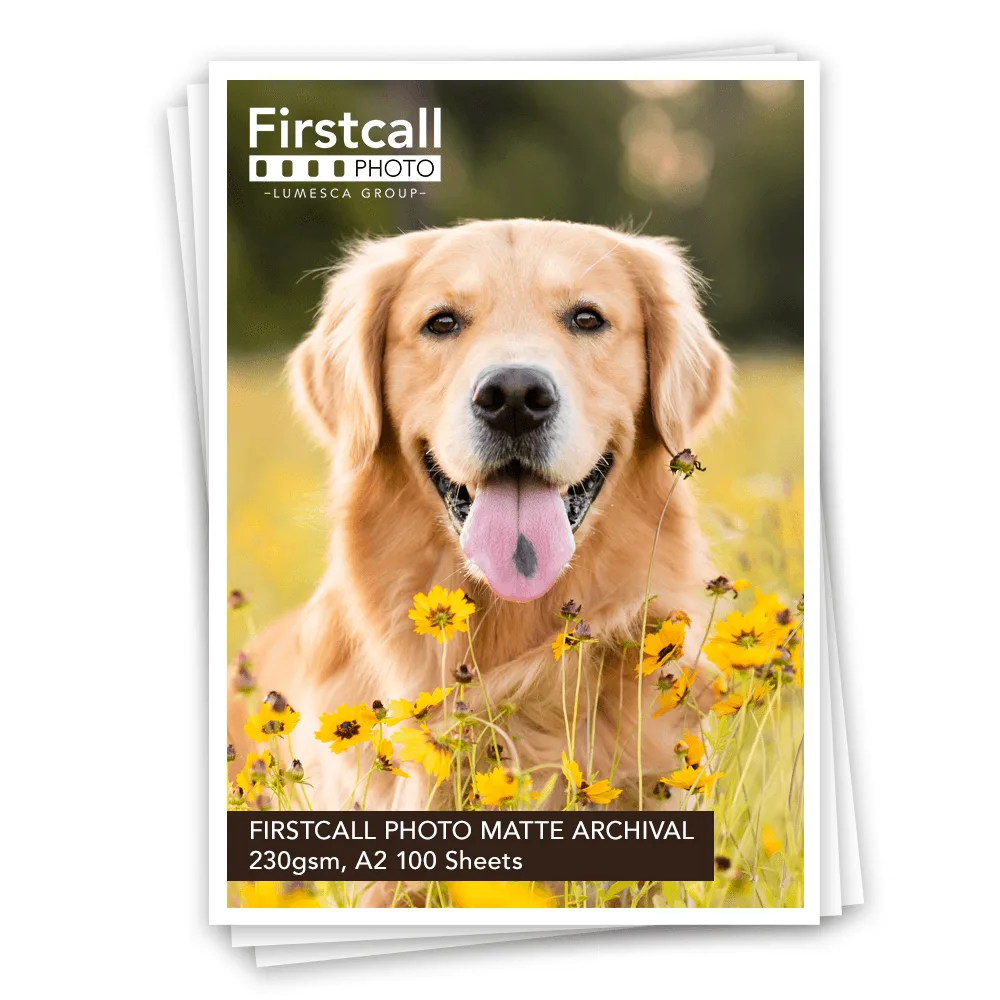
Firstcall Photo Matte Archival (Olmec) A2 100 Sheets
-
Fotospeed Pigment Friendly Gloss 270 A3 50 Sheets: A 270gsm high-gloss paper with a bright white base and instant-dry coating, compatible with both pigment and dye inks. Its robust weight and instant-dry coating make it a versatile, cost-effective choice for lab-quality glossy prints at home or in the studio.
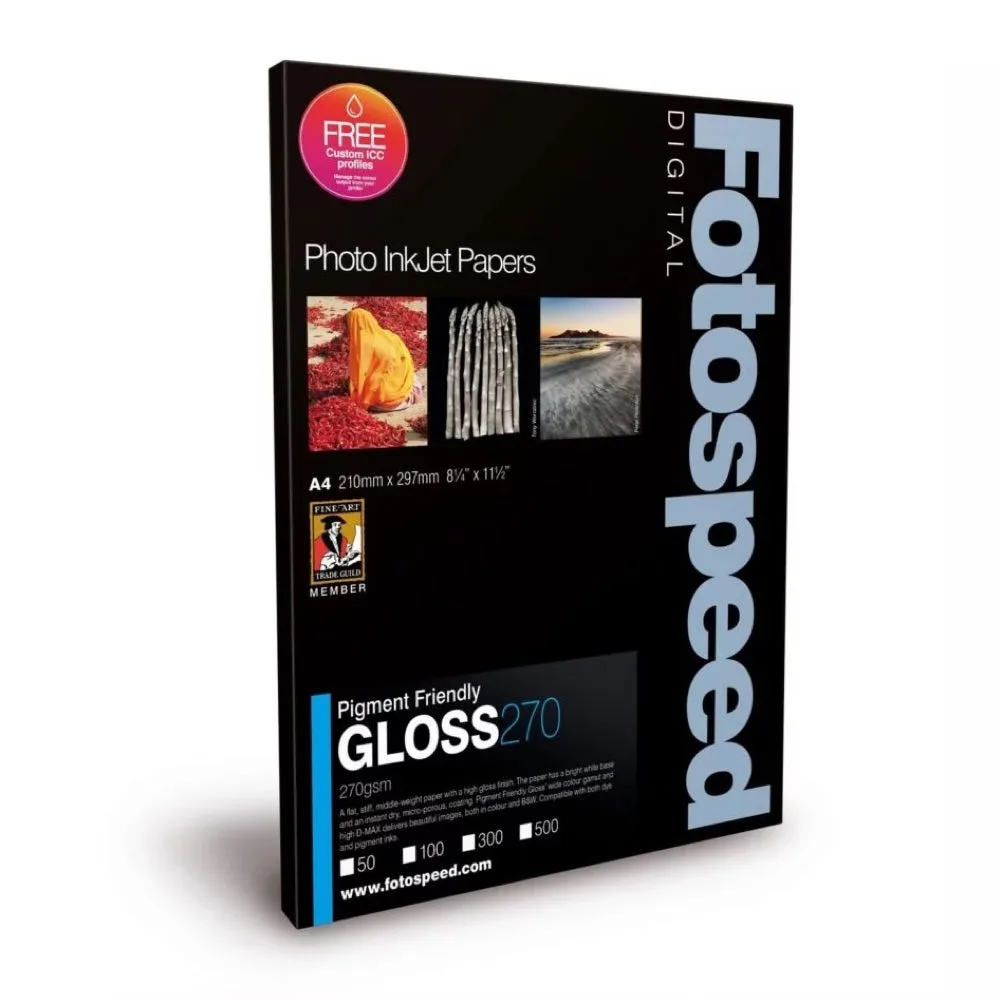
Fotospeed Pigment Friendly Gloss 270 A3 50 Sheets
Which paper fits your print?
Best for
- Archival portfolios and student submissions: smooth matte paper (e.g., Firstcall Photo Matte Archival)
- Lab-quality glossy prints with pigment or dye inks: pigment-friendly gloss paper (e.g., Fotospeed Pigment Friendly Gloss)
- Fine art prints with a subtle sheen: premium photo pearl paper (e.g., Innova Olmec Premium Photo Pearl)
Not for
- Heavy retouching or wet mounting: avoid matte papers that may show scuff marks
- Quick snapshots on a dye-based printer without instant-dry coating: choose a paper explicitly labeled for dye inks