Quick answer
To choose a plastic-free glass baby bottle, prioritize borosilicate glass for durability, a natural rubber nipple for safety, and a wide-neck design for easy cleaning.
Why glass over plastic?
Glass baby bottles eliminate the risk of chemicals like BPA, BPS, and phthalates leaching into your baby's milk. They are also more durable and easier to sanitize than plastic alternatives. The trade-off is weight and breakability, but modern borosilicate glass is shock- and heat-resistant, reducing that risk.
What to look for in a nipple
The nipple material matters because it touches your baby's mouth. Natural rubber is a renewable, plastic-free option that is soft and flexible. Silicone is also common but is not plastic-free. Check that the nipple is labeled as food-grade and free from synthetic additives.
Step-by-step guide to choosing a plastic-free glass baby bottle
- Check the glass type: Look for borosilicate glass, which is more resistant to thermal shock and physical impact than soda-lime glass. This reduces the chance of breakage when moving from fridge to warmer. Avoid bottles that do not specify the glass type, as they may use less durable materials.
- Examine the nipple material: Choose natural rubber nipples for a plastic-free option. They are soft, flexible, and biodegradable. Ensure the nipple is free from synthetic rubber or silicone if you want a fully plastic-free bottle. Natural rubber may discolor or wear faster than silicone, so inspect regularly and replace as needed.
- Select the right size and shape: Wide-neck bottles are easier to clean and fill, and they work with most standard breast pumps. Choose a 5oz size for newborns and an 8.5oz for older babies who drink more per feeding. A 2-pack with both sizes can cover your baby's needs as they grow, saving you from buying separate sets.
- Verify the cap and seal: A vacuum-sealed natural rubber cap prevents leaks during travel. Test the seal by filling the bottle with water, closing it, and shaking gently upside down. If the cap is plastic or silicone, the bottle is not fully plastic-free.
- Consider cleaning and care: Glass bottles can be sterilized by boiling, steaming, or using a dishwasher. Borosilicate glass is safe for these methods. Avoid abrasive scrubbers that can scratch the glass. Check if the bottle is dishwasher-safe before purchasing to simplify daily cleaning.
Product spotlight
-
Plastic Free Glass Baby Bottle 2-Pack: Made from shock- and thermo-resistant borosilicate glass with a natural rubber nipple and cap. Borosilicate glass withstands temperature changes and drops better than standard glass, making it safer for daily use and cleaning.
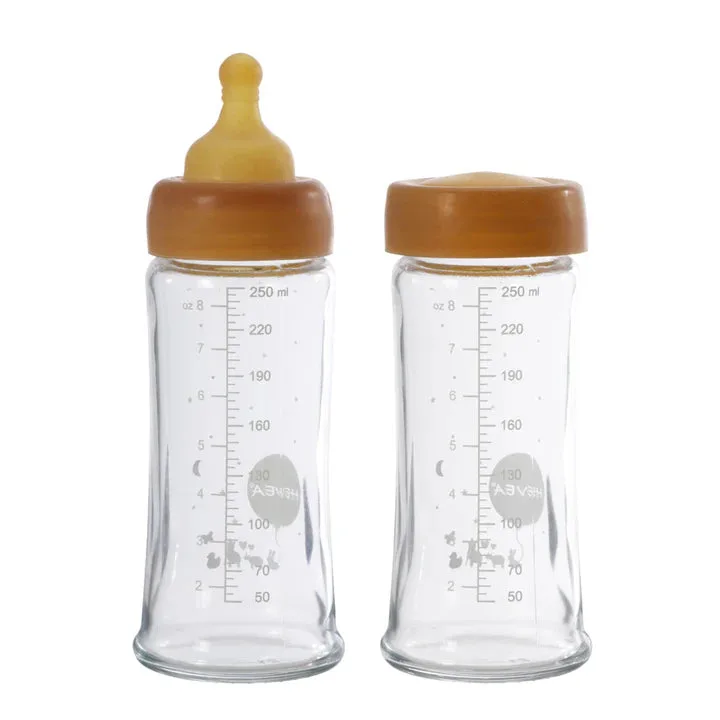
Plastic Free Glass Baby Bottle 2-Pack