Quick answer
Choose a pre-seasoned carbon steel pan based on your cooking volume, stovetop size, and whether you want a matching lid. For most home cooks, a 10-inch pan is the versatile starting point, while a 12-inch pan suits larger meals or high-heat searing.
Why pre-seasoned matters
Pre-seasoned carbon steel pans come with an initial layer of polymerized oil, so you can start cooking right away without the first seasoning step. This saves time and reduces the risk of rust before your first use. However, the factory seasoning is thin, so you will still need to build up additional layers over time for better nonstick performance and rust protection.
Size trade-offs: 8, 10, or 12 inches
An 8-inch pan is ideal for single eggs, small omelets, or a quick side of vegetables, but it limits batch cooking and larger cuts of meat. A 10-inch pan handles most daily tasks like sautéing aromatics, searing chicken breasts, or frying two eggs. A 12-inch pan gives you more surface area for searing steaks without crowding or cooking for two to three people, but it requires a larger burner and more storage space.
Glass lid or no lid?
A glass lid lets you monitor cooking without lifting the lid, which helps retain moisture and heat. It is useful for braising, simmering sauces, or steaming vegetables. However, glass lids add weight and cost, and they are not oven-safe at high temperatures like a metal lid would be. If you rarely cover your pan, a lid may be an unnecessary expense.
Decision rules for choosing your pan
- Start with your most common dish: If you frequently cook for one or two people and make eggs, small portions of protein, or single servings of vegetables, a 10-inch pan is the most versatile size. For larger batches or whole fish, go with 12-inch.
- Match your stovetop burner size: A 12-inch pan needs a burner at least 10 inches wide to heat evenly. If your largest burner is smaller, a 10-inch pan will heat more consistently and reduce hot spots. Measure your burner diameter before deciding on a 12-inch pan.
- Decide on lids based on cooking method: Choose a pan with a glass lid if you often braise, steam, or simmer with the cover on. Skip the lid if you primarily sear, sauté, or fry without covering, and save the extra cost.
- Consider a set for flexibility: If you cook for varying numbers of people or like having a backup pan, a 10-inch and 12-inch set (with or without lids) gives you both sizes at a lower combined price than buying separately. A set also simplifies storage because the pans nest or stack neatly.
Product facts
-
12” Pre-Seasoned Carbon Steel Frying Pan + Glass Lid: A staff-favorite pan for serious searing and naturally nonstick cooking, and a glass lid to match. Pre-seasoned and ready to roll right out of the box. The included glass lid makes this 12-inch pan convenient for one-pan meals where you want to trap steam or reduce splatter.
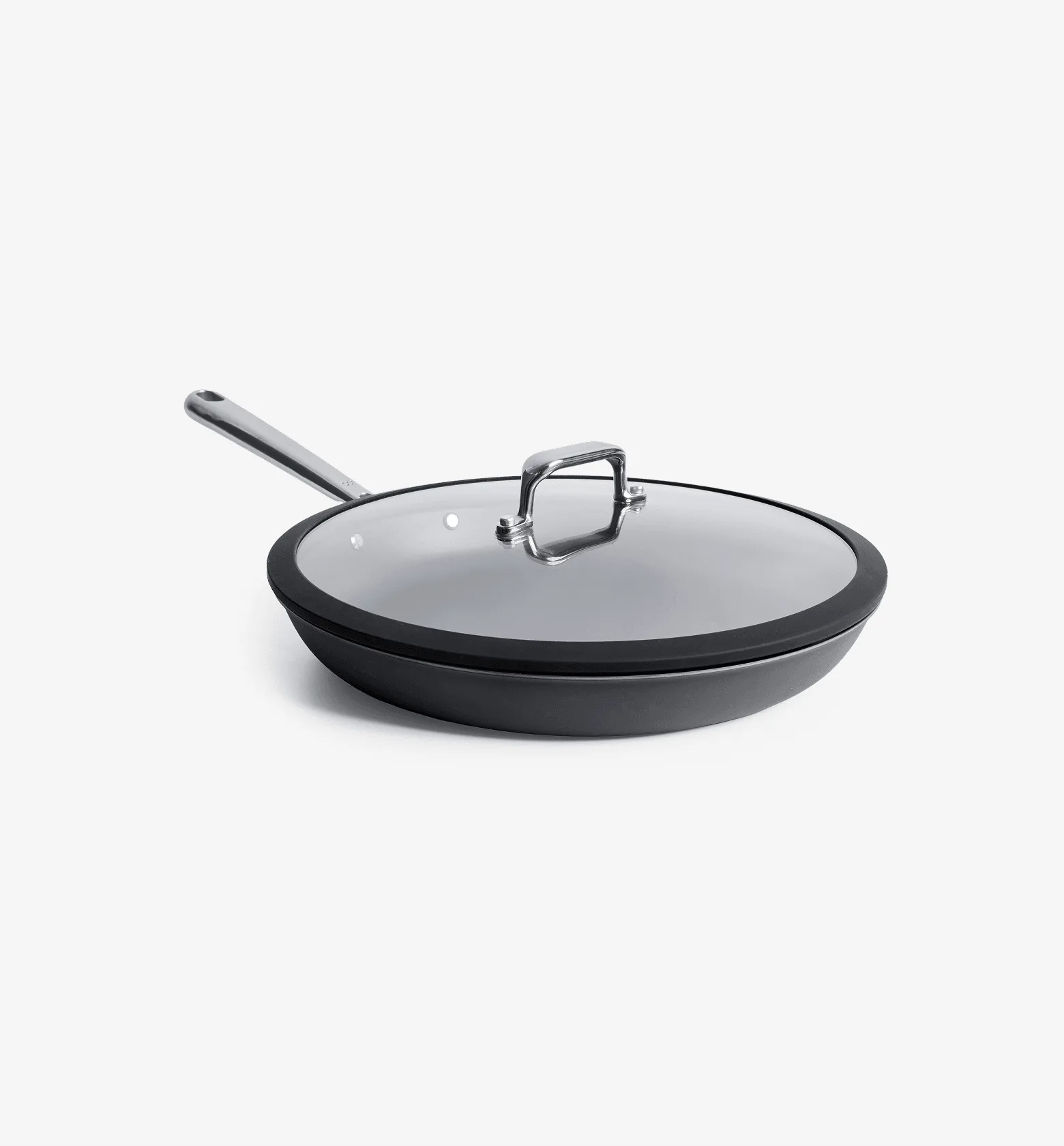
12” Pre-Seasoned Carbon Steel Frying Pan + Glass Lid
-
10" + 12" Pre-Seasoned Carbon Steel Frying Pan: A staff-favorite pan for serious searing and naturally nonstick cooking. Pre-seasoned and ready to roll right out of the box. The 10-inch and 12-inch set gives you two workhorse sizes without buying lids, ideal for cooks who prefer open-pan searing and sautéing.
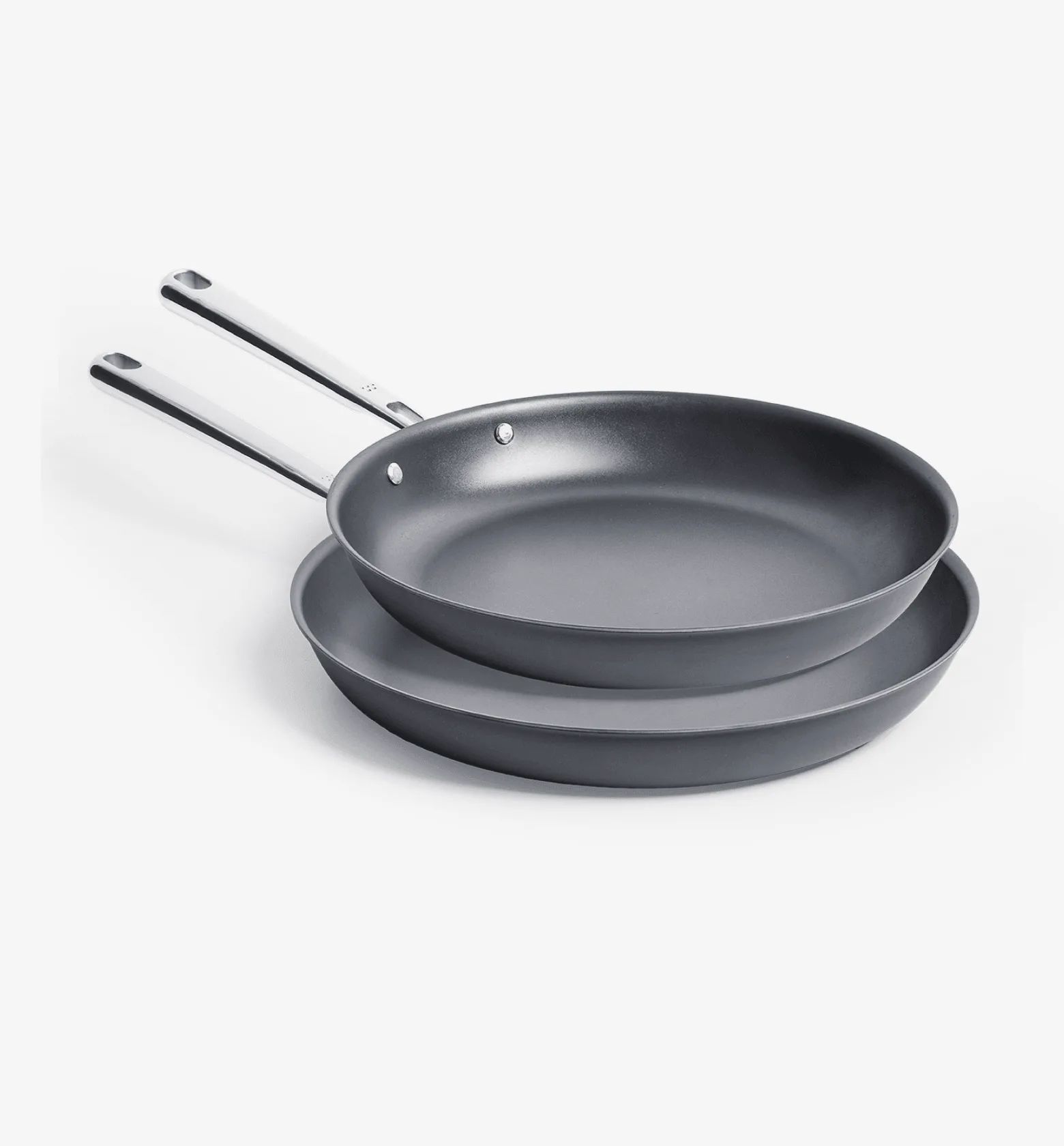
10" + 12" Pre-Seasoned Carbon Steel Frying Pan
Which pan fits you?
Best for
- Home cooks who want a versatile daily pan and cook for 1–2 people — a 10-inch pan with or without a lid
- Serious sear enthusiasts or those cooking for 3+ people — a 12-inch pan or the 10" + 12" set
Not for
- Cookware minimalists who only need one pan and prefer a lightweight option — consider a smaller size or a nonstick alternative
- Oven-heavy recipes that require high heat above 400°F — glass lids are not oven-safe at those temperatures