Quick answer
Count the cameras you need today, then add two or three for future coverage. If that total is 8 or fewer, an 8-channel PoE NVR is the right size. If it is 9 or more, or you expect to expand across a large property, choose a 16-channel NVR. The NVR's channel count is the hard ceiling on how many cameras it can record, so sizing it correctly now avoids replacing the whole system later.
Why channel count is the first decision, not the last
Every PoE NVR has a fixed number of camera inputs. An 8-channel NVR can record from up to eight cameras; a 16-channel unit handles up to sixteen. That number determines how many cable runs you can terminate, how many live views you can watch at once, and how much recorded footage the hard drive must hold.
Because PoE cameras draw power and data over the same Ethernet cable, adding a camera later means running another cable to the NVR. If you buy an 8-channel NVR and later need a ninth camera, you cannot simply plug it in. You either replace the NVR or add a second recorder. Planning the channel count before you buy is the difference between a clean single-system setup and a patchwork of hardware.
How to count the cameras you actually need
Walk your property and list every point where someone could approach without being seen from a main entrance. Typical single-family homes land between four and eight cameras: front door, driveway, back door, and one or two side or rear coverage points. Add cameras for detached garages, side gates, or blind spots created by fences and shrubs.
Then add two or three channels of headroom. Headroom is not about buying cameras you do not need today; it is about reserving inputs for the cameras you will want after living with the system for a year. A camera over a new shed or a second angle on a dark driveway is a common first addition. If your count plus headroom stays at eight or below, an 8-channel NVR is sufficient. If it crosses nine, a 16-channel NVR is the safer buy.
What changes when you move from 8 to 16 channels
The jump from 8 to 16 channels is not just more inputs. A 16-channel NVR is built for larger camera counts, which usually means more simultaneous recording streams and a larger hard drive to hold the extra footage. That is why 16-channel systems often ship with 2TB drives while 8-channel systems commonly include 1TB.
The trade-off is cost and physical footprint. A 16-channel NVR costs more upfront, and if you only populate eight of its channels, you are paying for capacity you are not using. For a typical single-family home with eight or fewer cameras, an 8-channel system keeps the budget focused on cameras and coverage rather than unused recorder capacity.
Storage, resolution, and channel count work together
Channel count sets the maximum number of cameras, but resolution and recording schedule determine how long the hard drive lasts. Four 4K cameras recording continuously will fill a 1TB drive faster than four 1080p cameras. When you compare 8 vs 16 channel NVRs, check the included drive size against your camera count and resolution.
If you plan to run eight 4K cameras around the clock, a 1TB drive may give you only a few days of footage before overwriting. A 2TB drive in a 16-channel system provides more retention for the same camera load. Match the drive to your channel count and resolution, or plan to add a larger drive later if the NVR supports it.
Match the NVR to your installation reality
PoE NVRs require a wired Ethernet run from each camera to the recorder. If you are building or renovating, running cable is straightforward. If you are retrofitting a finished home, each run may need attic, basement, or exterior conduit work. A 16-channel NVR concentrates sixteen cable runs at one point, which can be harder to route than eight.
For homes where cabling is difficult, an 8-channel system with four to eight cameras often covers the priority zones without overwhelming the installation. For larger properties with outbuildings or long perimeters, the 16-channel system's capacity is worth the extra cabling effort because it avoids a second recorder and a second power source.
Decision rules for choosing your PoE NVR channel count
- Rule 1: Count cameras, then add two: List every camera you need today. Add two channels for future coverage. If the total is 8 or fewer, buy an 8-channel NVR. If it is 9 or more, buy a 16-channel NVR. This single rule prevents the most common mistake: running out of channels within a year.
- Rule 2: Let property size set the floor: Homes under 2,500 square feet with a single main entrance and a driveway usually fit within 8 channels. Properties with detached structures, long perimeters, or multiple entry points often need 9 or more. If you are unsure, sketch your property and mark every approach path. The count will become obvious.
- Rule 3: Match the hard drive to the channel count: An 8-channel system with 4K cameras and a 1TB drive gives limited retention if all channels run continuously. A 16-channel system with a 2TB drive provides more days of footage for a larger camera load. Check the included drive size against your camera count and resolution before buying.
- Rule 4: Do not buy 16 channels for eight cameras: A 16-channel NVR costs more and takes more cabling effort. If you will never exceed eight cameras, an 8-channel system keeps your budget in cameras and coverage instead of unused inputs. Buy headroom you will actually use, not capacity that sits empty.
PoE NVR systems that match common channel counts
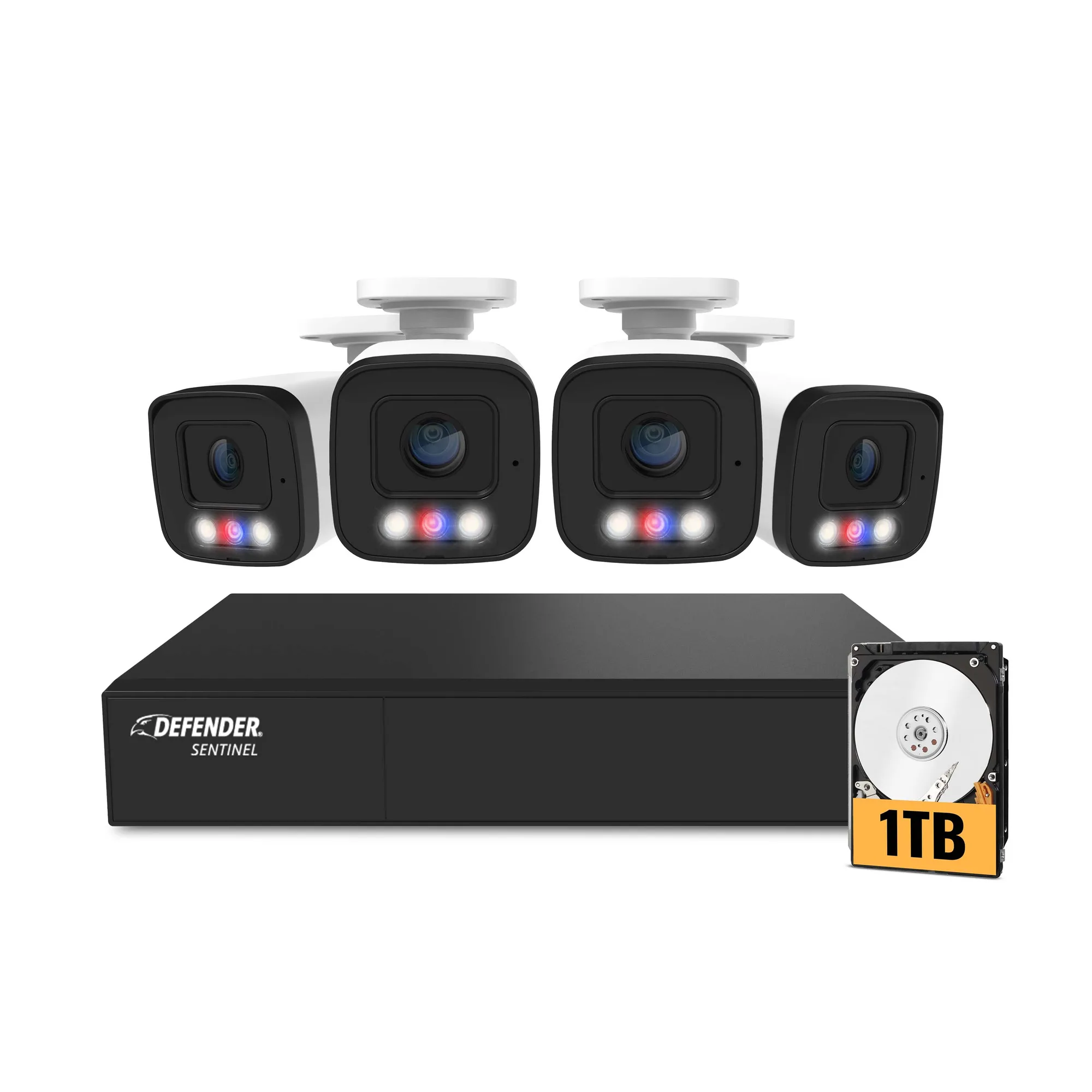
- AI POWERED Sentinel 4K Ultra HD Wired 8 Channel PoE NVR Security System, 4 Metal Cameras & 1TB HDD: 8-channel PoE NVR with four metal cameras and a 1TB hard drive, plus AI-powered processing and 4K Ultra HD resolution. A ready-to-use 8-channel system for a typical home that needs four cameras now and has room for four more later.
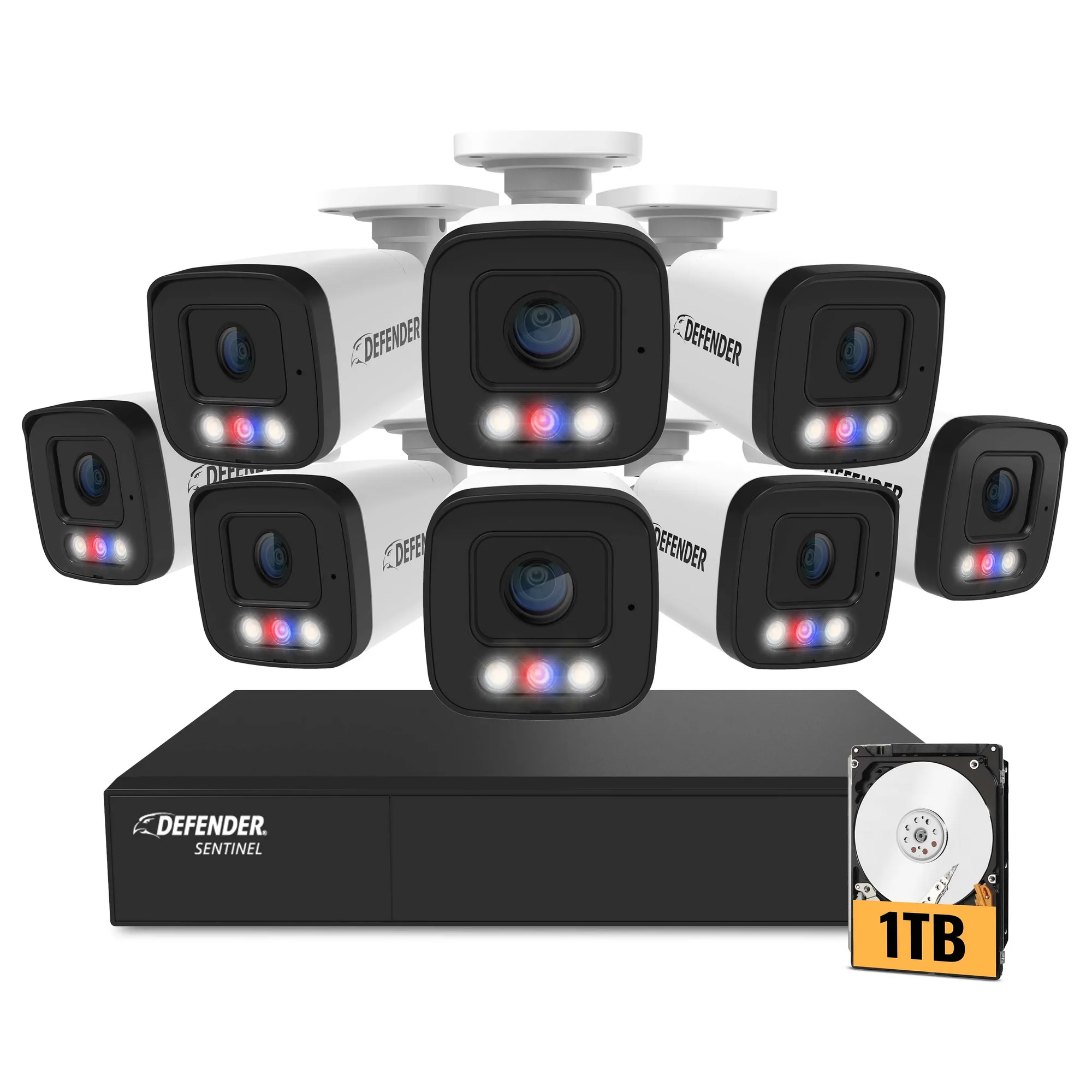
- AI POWERED Sentinel 4K Ultra HD Wired 8 Channel PoE NVR Security System, 8 Metal Cameras & 1TB HDD: 8-channel PoE NVR with eight metal cameras and a 1TB hard drive, plus AI-powered video analytics and 4K Ultra HD resolution. Fills all eight channels immediately, so it suits a home that already knows it needs eight cameras and does not plan to expand beyond that.
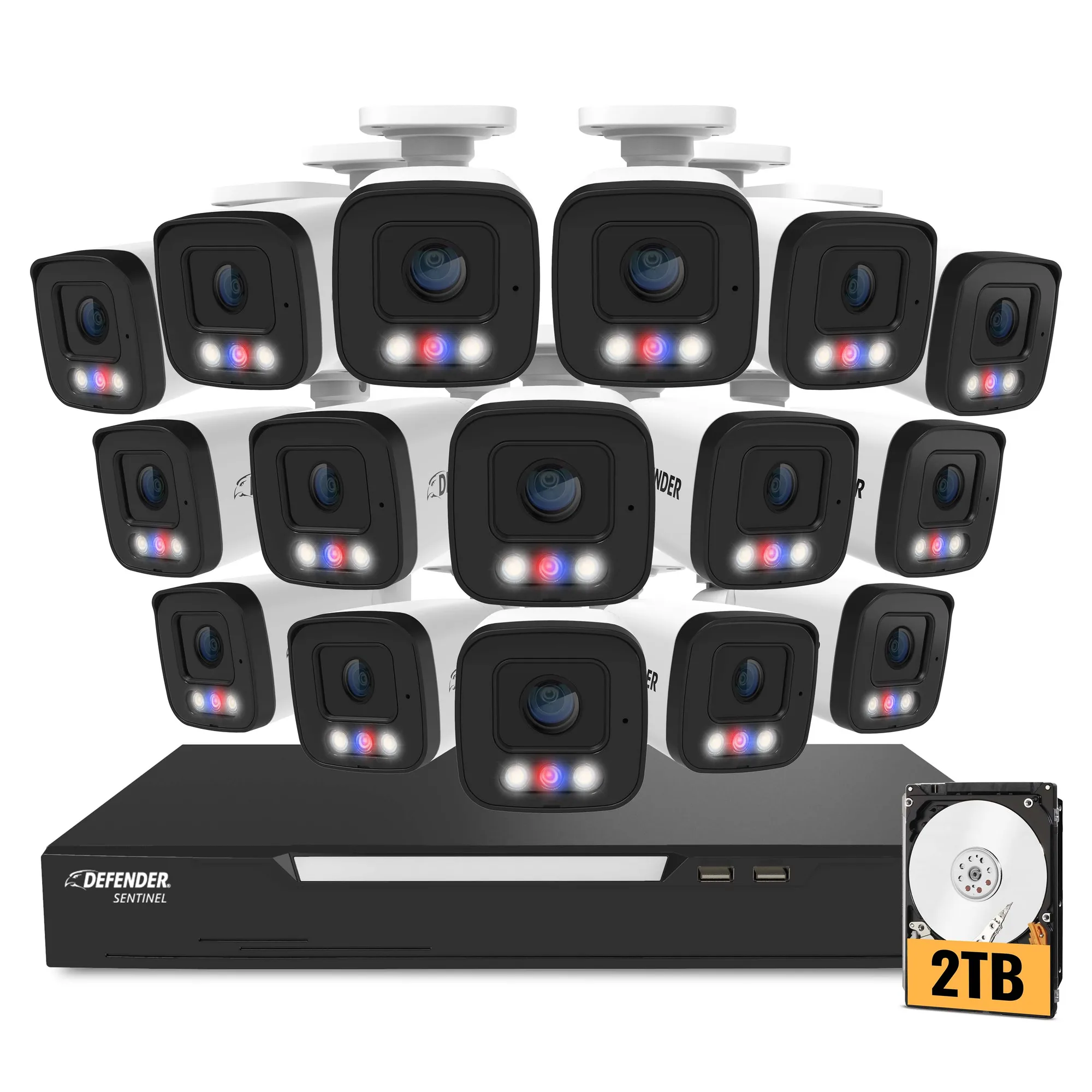
- AI POWERED Sentinel 4K Ultra HD Wired 16 Channel PoE NVR Security System, 16 Metal Cameras, 2TB HDD: 16-channel PoE NVR with sixteen metal cameras and a 2TB hard drive, plus AI-powered detection and 4K Ultra HD resolution. The choice for large properties or anyone who needs more than eight cameras or wants substantial headroom for future additions.
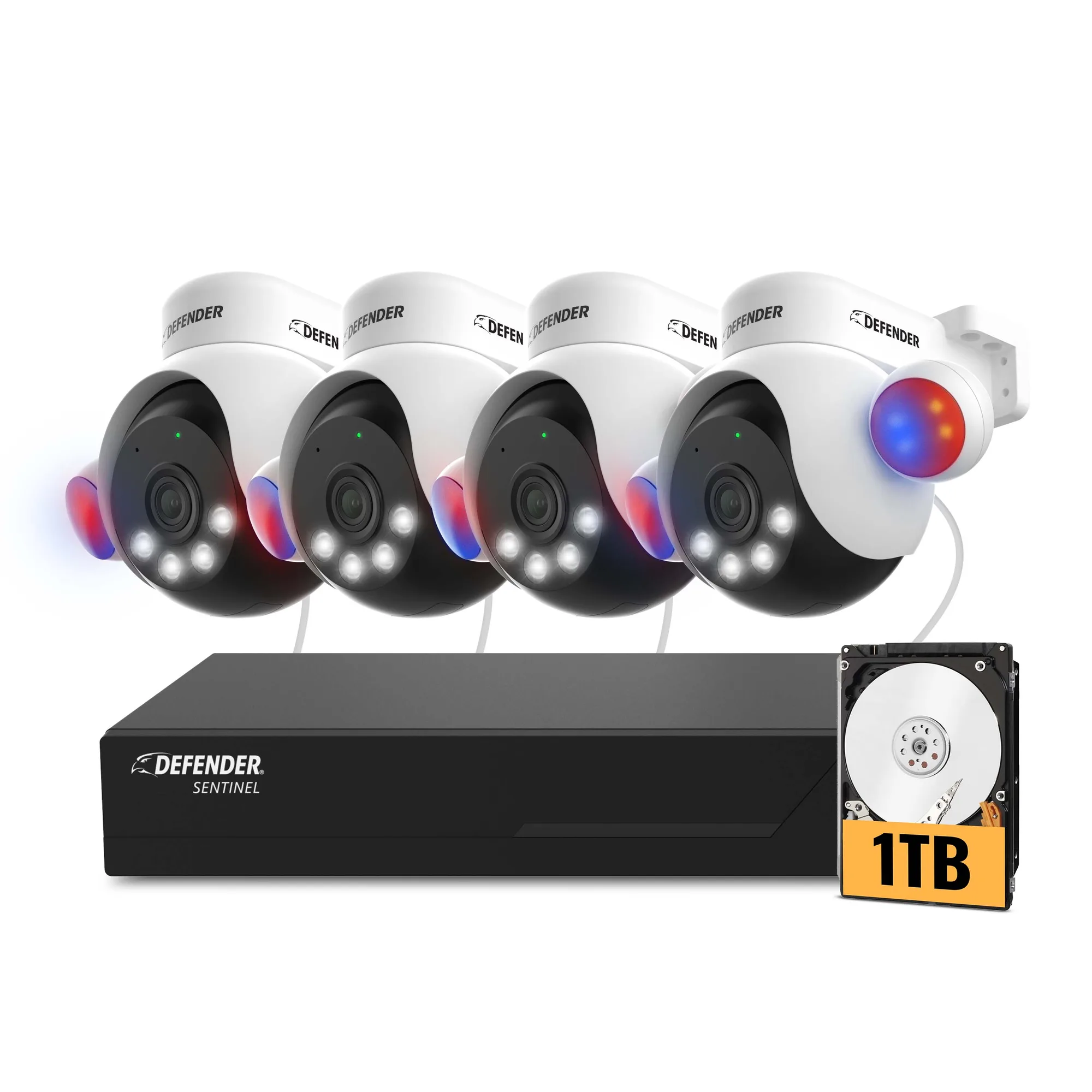
- AI Powered Sentinel 4K PTZ Wired 8 Channel PoE NVR Security System, 4 Cameras, 1TB HDD: 8-channel PoE NVR with four PTZ cameras and a 1TB hard drive, plus 4K resolution and AI-enabled motion detection. An 8-channel option when you want adjustable views from fewer cameras, useful for covering wide areas without running as many cable runs.
Is an 8-channel or 16-channel PoE NVR right for you?
Best for
- Single-family homes needing four to eight cameras with room for one or two future additions
- Renters or homeowners who want a straightforward wired system without complex cabling for more than eight runs
- Small businesses with a single entrance and a compact perimeter
Not for
- Properties that already need more than eight cameras or have detached buildings and long perimeters
- Anyone planning a phased installation that will exceed eight cameras within a year or two
- Large commercial sites where a single 16-channel NVR may still be too small