Quick answer
Choose a softshell jacket for kids when you need wind resistance, breathability, and light weather protection for active play—not for heavy rain or cold winter days.
Why softshell is not a raincoat
Softshell jackets are designed to block wind and light drizzle, but they are not fully waterproof. If your child will be out in steady rain, a dedicated rain jacket is a better choice. This distinction matters more than the label on the tag.
The trade-off is breathability: softshell fabrics let moisture escape, so kids stay comfortable during running and climbing. A fully waterproof jacket often traps heat and sweat, which can make a child feel clammy.
Seasonal fit: spring and summer use
Many softshell jackets are designed as transitional pieces for spring and summer. They provide a barrier against wind and a bit of chill without the bulk of a winter coat. If you need a jacket for cold winter days, look for a lined softshell or add a fleece layer underneath.
For school, a softshell is often ideal because it is easy to move in and can be packed into a backpack when the sun comes out.
Decision rules for choosing a kids' softshell jacket
- Check the weather first: If rain is in the forecast, choose a waterproof rain jacket instead of a softshell. Softshell handles wind and light drizzle, not steady rain. Always check the forecast before sending your child out in a softshell.
- Match the season: Use a softshell as a spring or summer jacket. For cold winter days, pick a lined softshell or layer it over a fleece.
- Prioritize breathability for active kids: If your child runs, jumps, or plays sports, choose a softshell with good breathability to prevent overheating. A fully waterproof jacket may be too sweaty for high activity. Look for a jacket that lets moisture out, not just one that keeps wind out.
- Consider the fit for movement: Choose a cut that allows free arm movement and layering. An A-line cut or elastic waist can add comfort and style, but make sure it does not restrict play. Have your child try the jacket with a light sweater underneath to check the fit.
- Use the size guide, not just age: Softshell jackets often have a slim fit. Measure your child's chest and compare it to the size chart. If between sizes, choose the larger size for room to grow and layer. Measure your child before buying, and check the specific size chart for the jacket.
Softshell options at Wheat
-
Secondhand Softshell Jakke Elois - multi flowers - / 110/5y: This flower-print softshell jacket is designed for spring and summer, blocks wind and light sleet, is not waterproof, has an A-line cut with elastic waist, and is lightly lined with fleece. It gives you a clear example of a softshell's strengths (wind protection, feminine fit) and its limit (not for rain), so you know exactly when to use it.
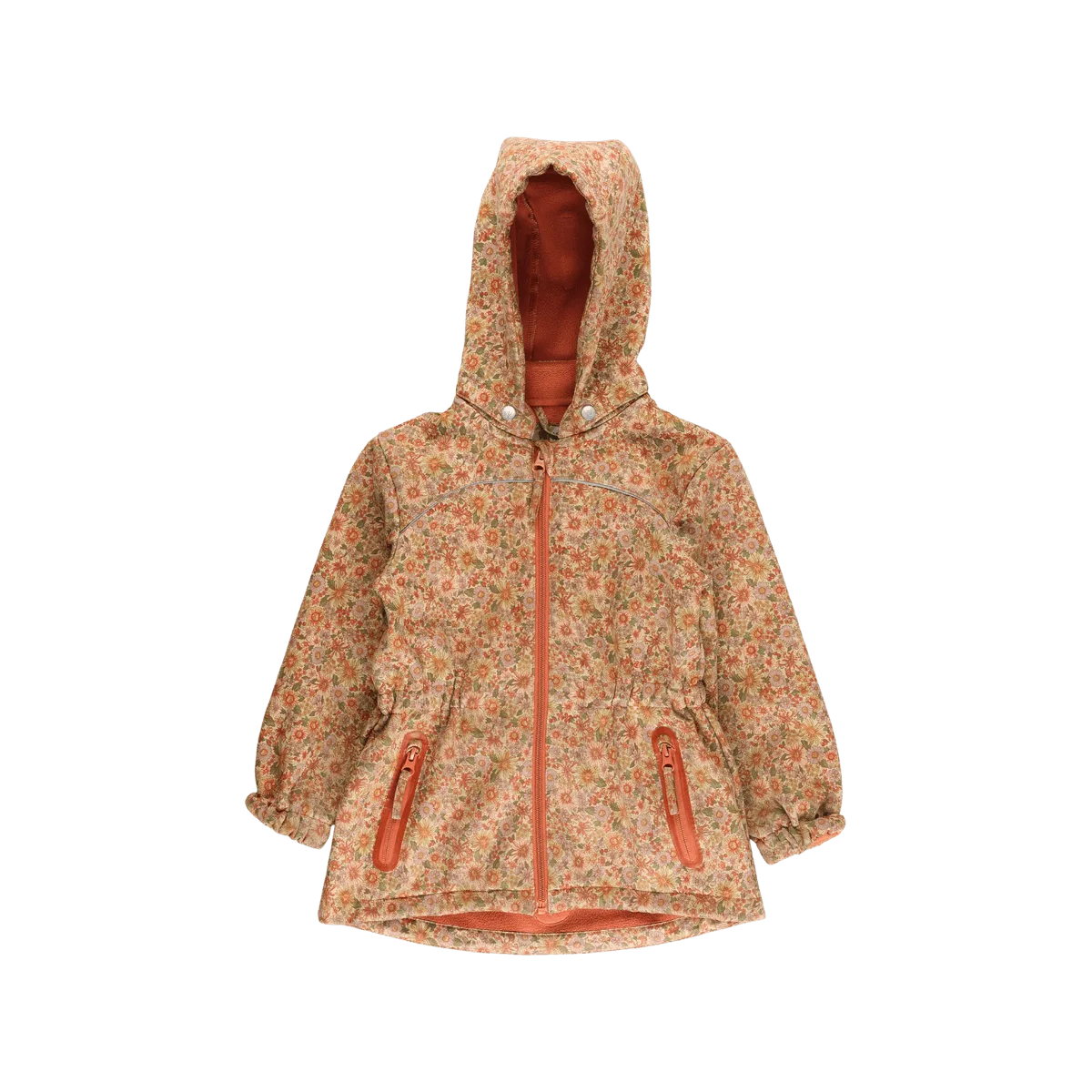
Secondhand Softshell Jakke Elois - multi flowers - / 110/5y
Who is a softshell jacket for?
Best for
- Active kids who need a breathable, wind-resistant layer for school and outdoor play in mild weather
- Parents looking for a lightweight jacket that is easy to pack and move in
Not for
- Rainy days—choose a waterproof rain jacket instead
- Cold winter days—opt for a lined softshell or a warmer coat