Quick answer
The right alphabet puzzle depends on your child's age and what you want them to learn: letter recognition, phonics, or spelling. For most preschoolers, a phonics puzzle that says letter sounds is a strong choice; for early readers, a see-and-spell set builds sight words.
Match the puzzle to your child's learning stage
Alphabet puzzles are not one-size-fits-all. A toddler just starting to recognize letters needs a simple puzzle with large, easy-to-grip pieces. A kindergartner ready to read needs a puzzle that goes beyond letter names to sounds and word building. Choosing a puzzle that matches your child's current skills keeps them engaged and prevents frustration.
Consider the learning goal: phonics, spelling, or letter recognition
Some puzzles focus on letter recognition and matching shapes. Others add phonics by saying letter sounds and words. See-and-spell puzzles take it further by having children spell whole words. Think about what you want your child to practice most. If they already know their ABCs, a spelling puzzle might be the next step. If they are just starting, a phonics or letter-matching puzzle is often better.
Think about language and bilingual needs
Most alphabet puzzles are in English only. If your family speaks Spanish at home or you want your child to learn Spanish, look for a puzzle specifically designed for that language. A Spanish see-and-spell puzzle can support native speakers and kids learning a second language. Always check the language of the puzzle before buying.
Decision rules for choosing an alphabet puzzle
- Age 2-3: Start with letter recognition: Choose a puzzle with large, chunky letters that fit into clearly shaped spaces. Focus on matching shapes, not phonics or spelling. The Upper & Lower Case Alphabet Puzzle helps with letter shape matching, but it may be too advanced for the youngest toddlers.
- Age 3-4: Add phonics and sounds: If your child is learning letter sounds, pick a phonics puzzle that says the letter and a word when the piece is lifted. The Ms. Rachel™ Wooden Phonics Alphabet Sound Puzzle is a good fit because it provides audio feedback and has an on/off switch for quiet play. Check if the puzzle has an on/off switch if you want to control sound.
- Age 4-5: Build spelling and sight words: Once your child knows most letter sounds, move to a see-and-spell puzzle. The See & Spell Learning Toy uses 50 letters and double-sided boards to spell three- and four-letter words, helping build sight-reading vocabulary. The Spanish See & Spell version is best if you want Spanish words. If your child is bilingual or learning Spanish, choose the Spanish version.
Alphabet puzzles to consider
-
Ms. Rachel™ Wooden Phonics Alphabet Sound Puzzle - 26 Pieces: The Ms. Rachel™ Wooden Phonics Alphabet Sound Puzzle has 26 wooden letter-shaped pieces that lift to reveal pictures and play letter sounds and words when removed. This puzzle is ideal for preschoolers who are just learning letter sounds and need multisensory feedback to stay engaged.
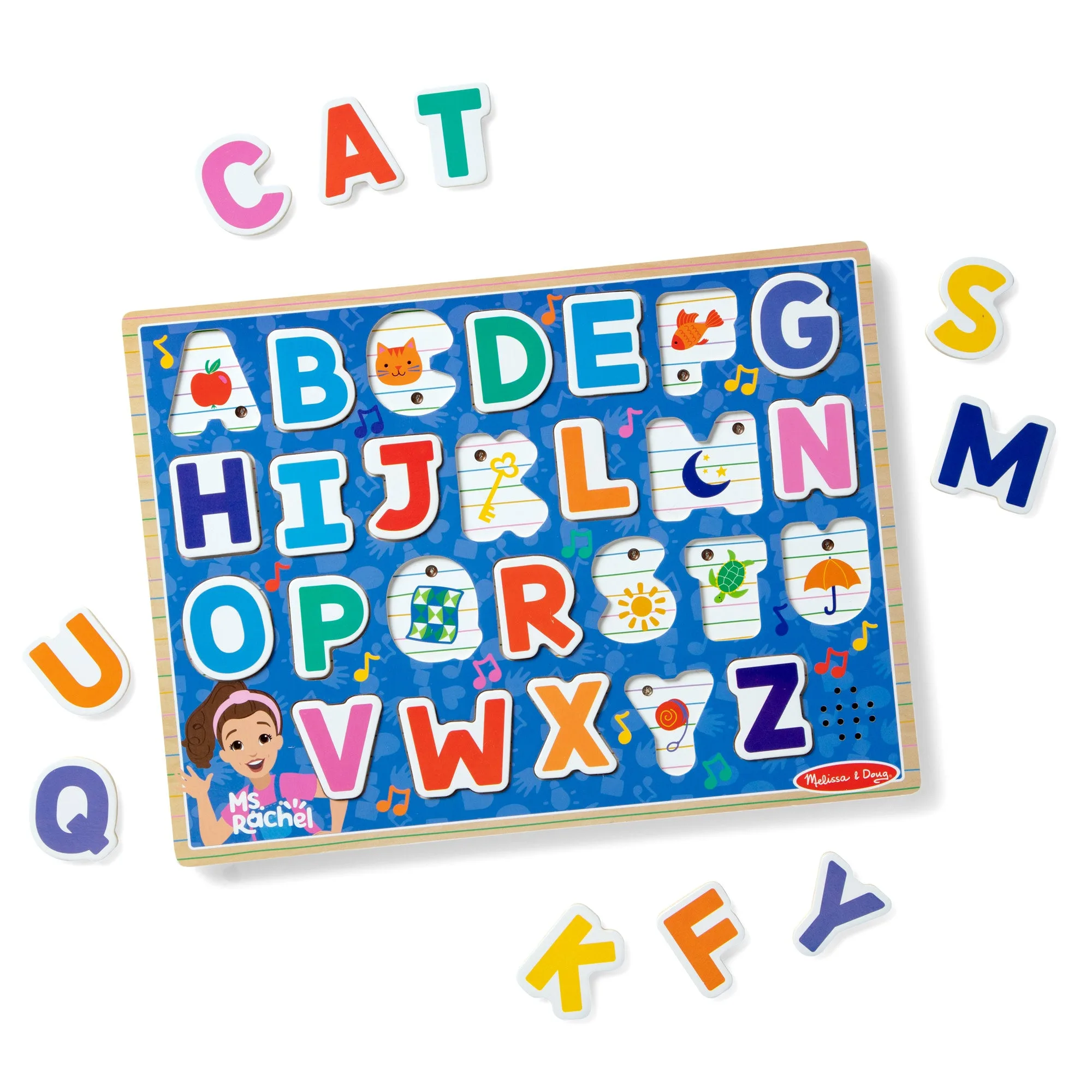
Ms. Rachel™ Wooden Phonics Alphabet Sound Puzzle - 26 Pieces
-
See & Spell Learning Toy: The See & Spell Learning Toy includes 50 colorful wooden letters and eight two-sided boards that spell three- and four-letter words. It's a great next step for children who know their letters and are ready to build sight-reading vocabulary.
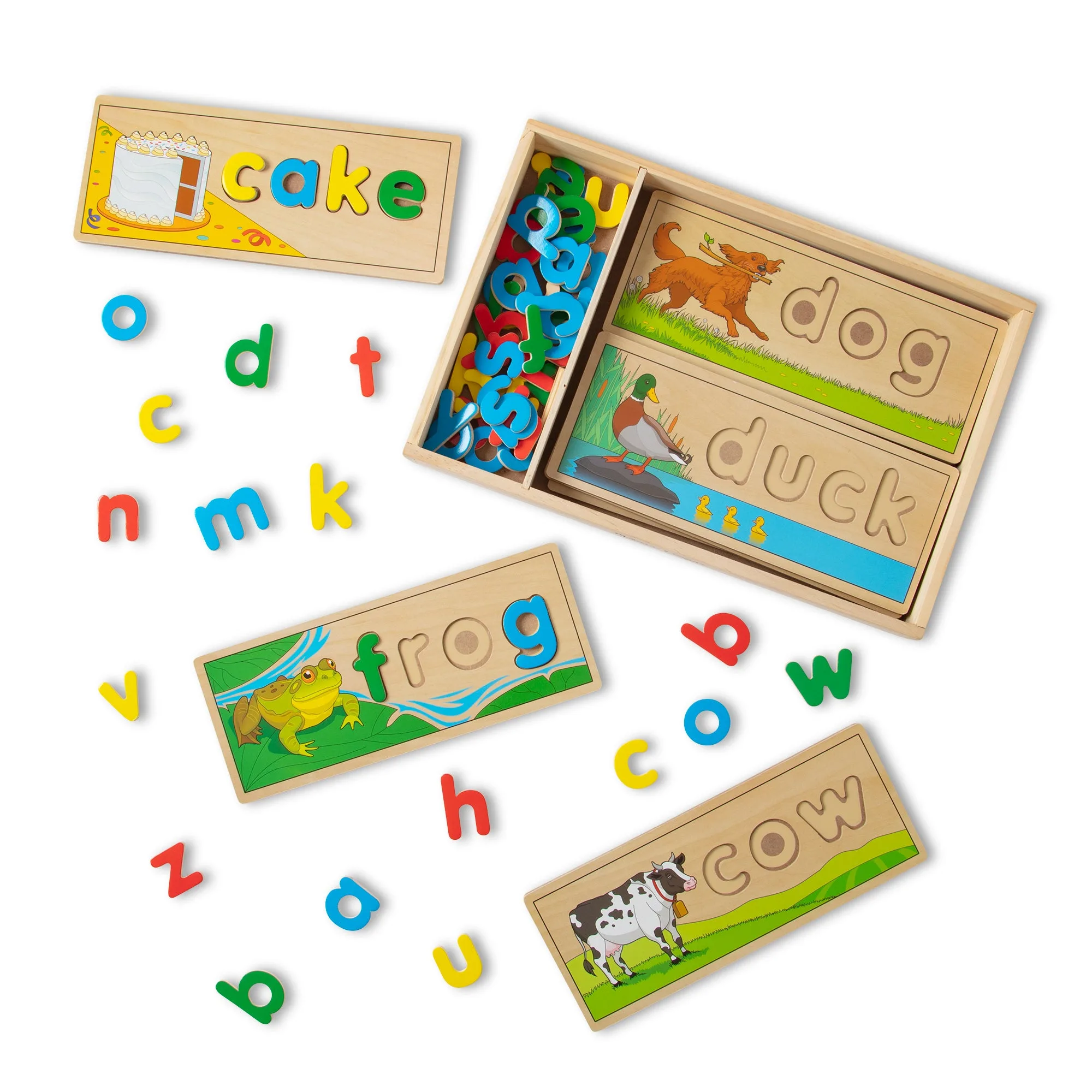
See & Spell Learning Toy
Who each type is best for
Best for
- Phonics puzzles: children ages 3-4 who are learning letter sounds and enjoy interactive play
- See-and-spell puzzles: children ages 4-5 who know their letters and are ready to build sight words
Not for
- Phonics puzzles: children who already read fluently and need spelling practice
- See-and-spell puzzles: toddlers who are still working on basic letter recognition and may find the pieces too small