Quick answer
The right newborn bottle balances a soft, breast-like teat with an effective anti-colic system and the correct flow rate. For most newborns, a bottle with a slow-flow silicone teat and a vented design is the safest starting point.
Why teat feel matters most for newborns
Newborns have a strong natural sucking reflex and are used to the softness and flexibility of the breast. A teat that mimics the mother's skin can make the switch between breast and bottle much smoother. Look for teats made from extra-soft silicone that are flexible and have a wide base that encourages a deep latch.
Anti-colic systems are not all equal
Many bottles claim to reduce colic, but the mechanism varies. Some use a vent tube, others a built-in air channel in the teat, and some rely on a collapsible bag. For newborns, a passive vent system (one that doesn't require extra cleaning steps) is often the most practical. The key is to minimize the air your baby swallows during feeding, which can reduce gas and fussiness.
Flow rate and age labeling can be confusing
Bottle teat flow rates are usually labeled by age, but every baby is different. A 'slow flow' or 'newborn' teat is essential for the first few months to prevent choking and overfeeding. However, some babies may need a faster flow sooner if they tire easily during feeds. Watch your baby's feeding cues: gulping, milk leaking from the mouth, or frustration are signs the flow might be too fast or too slow.
Your quick decision rules
- Start with a slow-flow silicone teat: Choose a bottle labeled 'slow flow' or for 0-3 months. Silicone teats are durable, clear, and hold their shape well. For breastfed babies, look for a teat that is extra soft and wide at the base. A slow flow prevents overfeeding and choking in newborns.
- Prioritize an anti-colic vent system: Look for a bottle with a built-in air vent or a teat with an anti-colic channel. Avoid bottles that require additional inserts or tubes if you prefer a minimal cleaning routine. A vented design reduces air swallowing and can ease colic symptoms.
- Check the bottle material and weight: Plastic bottles (like polypropylene) are lightweight and shatterproof, ideal for newborns. Glass bottles are heavier but easier to sterilize. For a newborn, a lightweight, easy-to-hold bottle makes feeding less tiring for you. Lightweight plastic is practical for newborn feeding sessions.
Products that help you decide
-
NUK First Choice Anti-Colic Whale Baby Bottle 300ml: The NUK First Choice Anti-Colic Whale Baby Bottle features a soft, flexible Perfect Match teat that mimics the feel of the mother’s breast, supporting an easy switch between breast and bottle feeding. This makes it an excellent choice for breastfed babies who need a bottle that feels familiar and reduces the risk of nipple confusion.
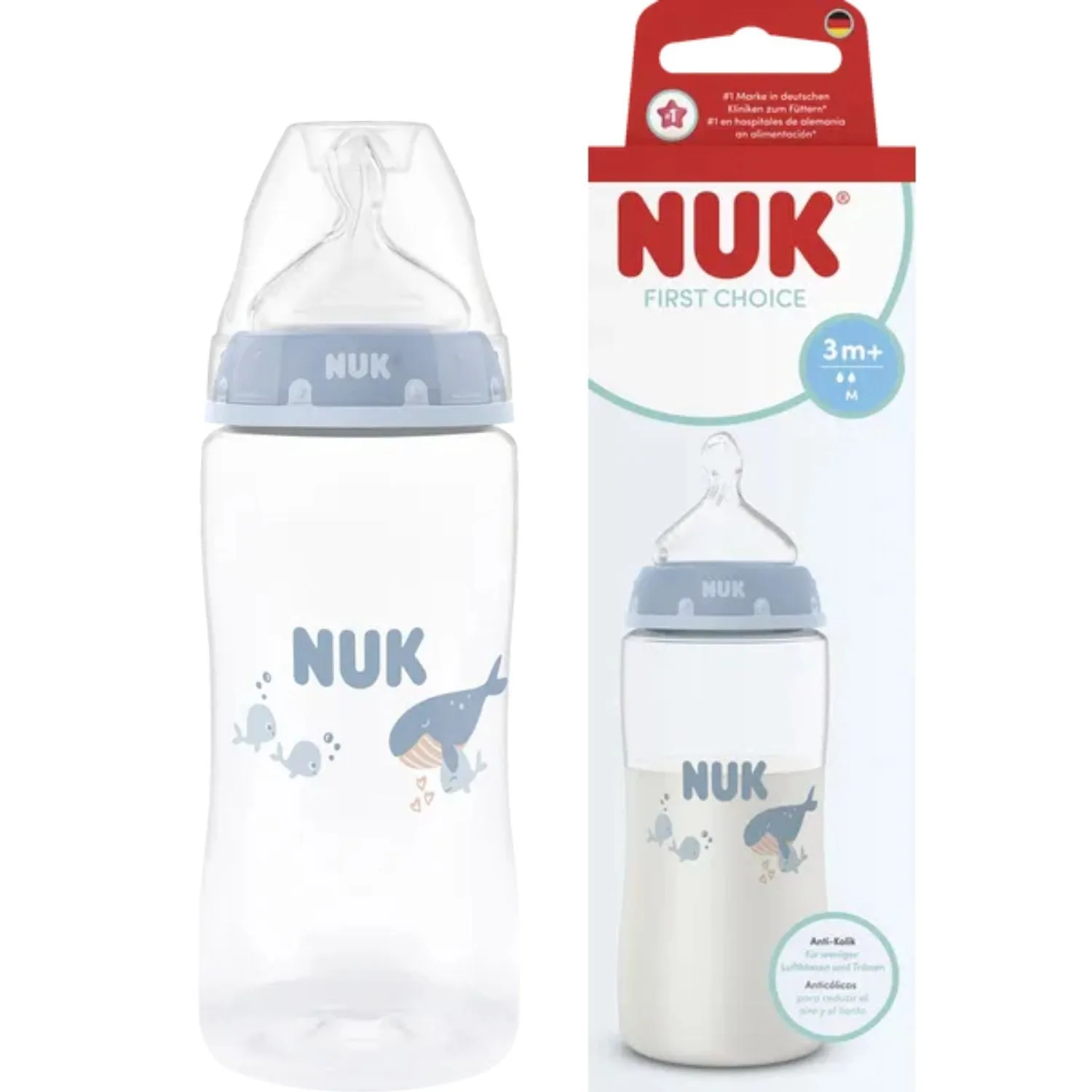
NUK First Choice Anti-Colic Whale Baby Bottle 300ml
-
Nuk PP bottle Perfect Match 260ml silicone teat size M Winnie The Pooh: The NUK Perfect Match Baby Bottle includes an anti-colic vent system that helps minimise air intake, plus a smart temperature indicator and a quick-to-clean four-part construction. The vent system directly addresses gas and discomfort in newborns, while the temperature indicator adds a safety check that busy parents will appreciate.
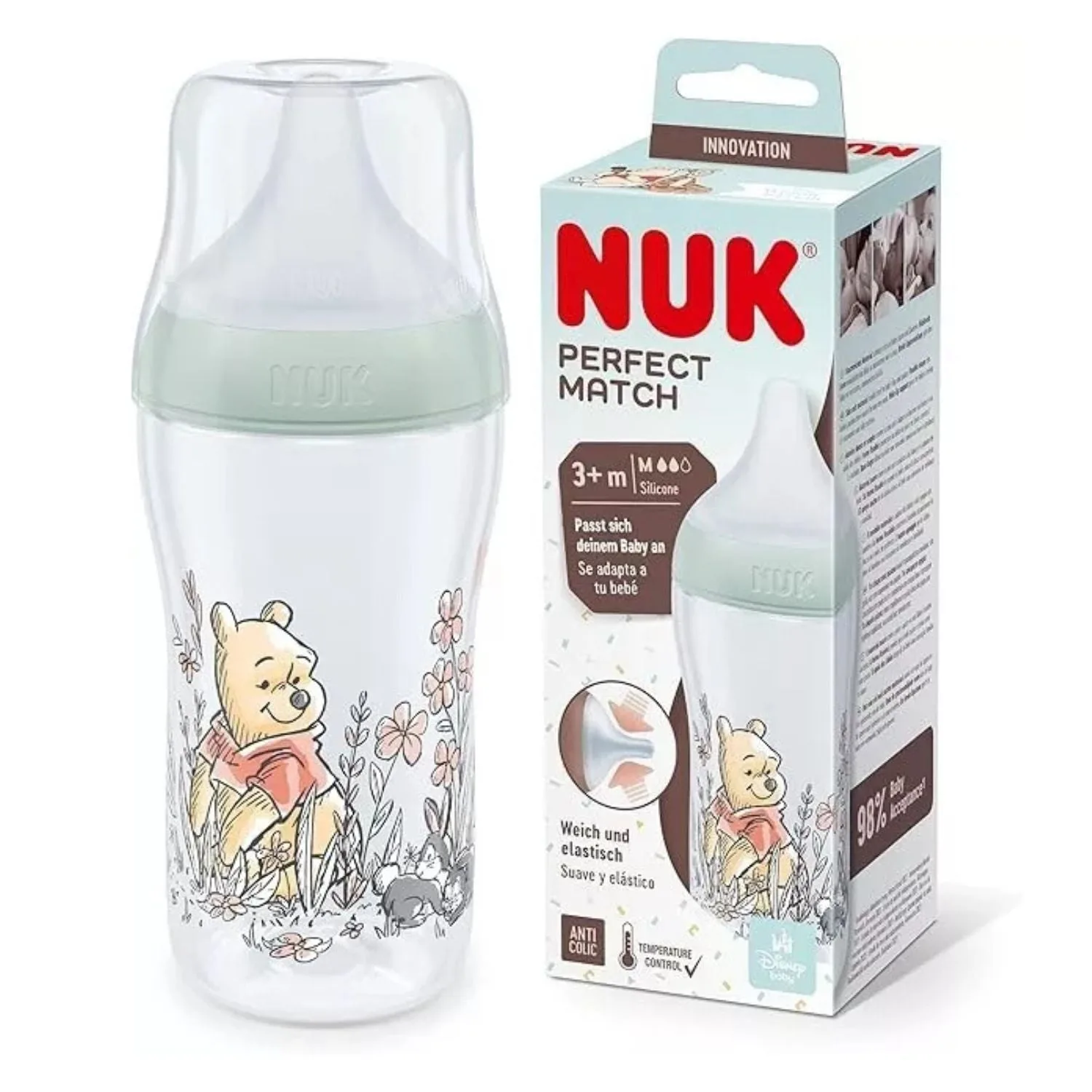
Nuk PP bottle Perfect Match 260ml silicone teat size M Winnie The Pooh
Which bottle is right for your baby?
Best for
- Newborns who are primarily breastfed and need a bottle that feels like the breast
- Parents who want a simple, easy-to-clean bottle with a proven anti-colic system
Not ideal for
- Babies who have already developed a strong preference for a specific teat shape (e.g., a wider, shorter teat)
- Parents who prefer glass bottles for environmental or durability reasons