Quick answer
Choose your bralette size by your band measurement first, then use the bust range to confirm coverage. If you are between sizes, size up for comfort and down only if you need a snugger band. For small busts, a triangle or simple pullover style usually fits best; for larger busts, look for wider bands, fuller cups, or adjustable closures.
Most bralette fit problems come from copying your bra size instead of reading the brand's own size chart. Bralettes are built with different stretch, band tension, and cup coverage, so the same letter size can feel completely different from one style to the next.
This guide walks through the measurements that actually matter, how to match them to your body type, and when to size up or down. You will also see real catalog examples so you can compare numbers before you buy.
Start with your band, not your cup
Your band measurement decides whether a bralette stays put or rides up. Measure snugly around your ribcage, directly under your bust, and keep the tape level. If that number falls at the top of a size range, choose the larger band size so the elastic is not stretched to its limit all day.
Cup letters matter less in bralettes because most styles stretch across the bust. What matters more is the band-to-bust difference. A 2-inch difference usually fits pullover styles, while a 3-inch or larger difference often needs adjustable straps or a closure to stay comfortable.
- Measure at the end of a normal breath, not a deep inhale.
- If your band measurement is exactly between two sizes, go up for daily wear.
- Re-measure if your weight, pregnancy, or training routine has changed recently.
Match the style to your body type
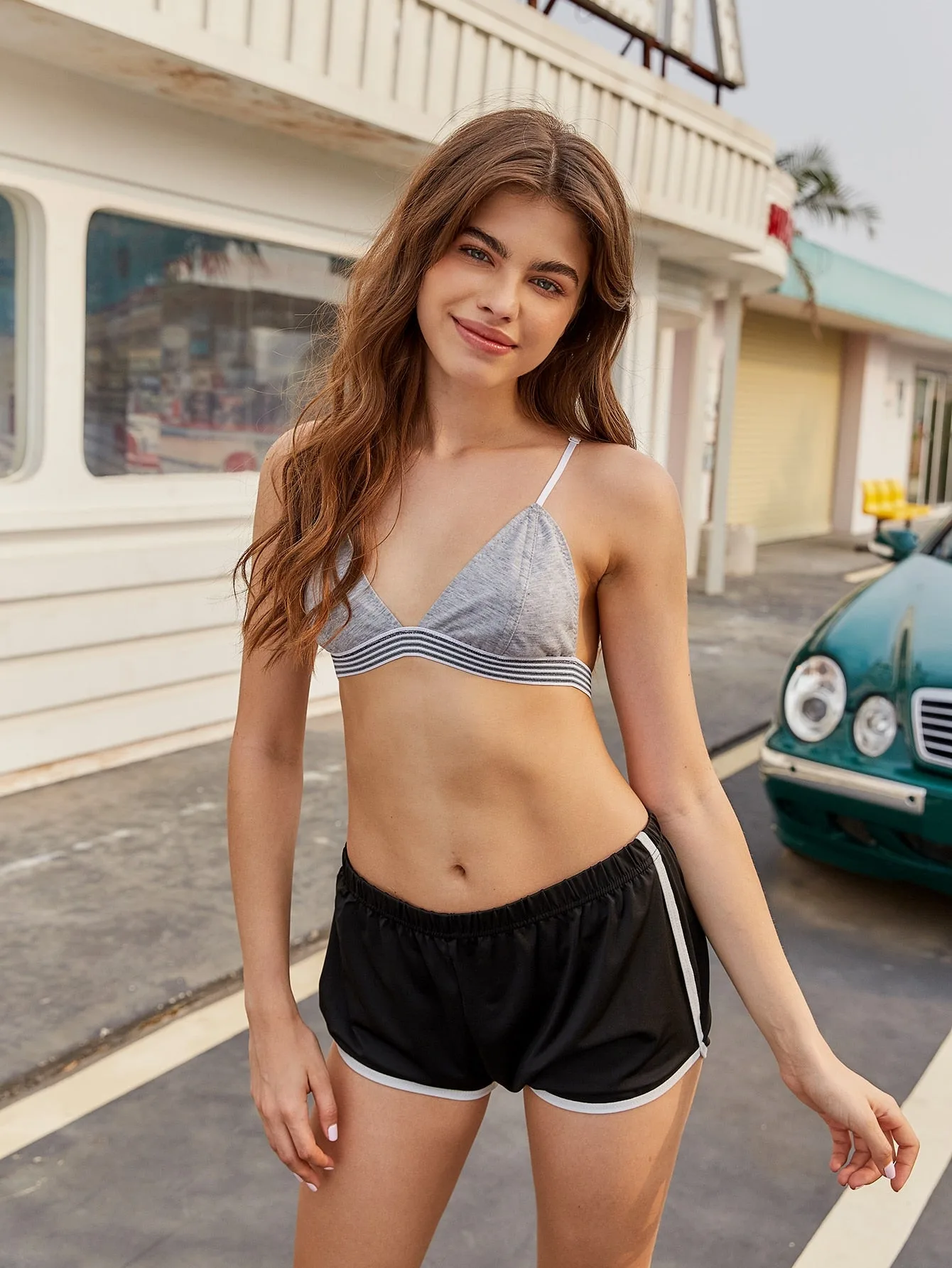
Body type is really about proportions: band size, bust projection, and how much coverage you want. A triangle bralette suits a smaller bust because the fabric does not need to hold much weight. A longline or wide-band style suits a larger bust because the band spreads pressure across more of your ribcage.
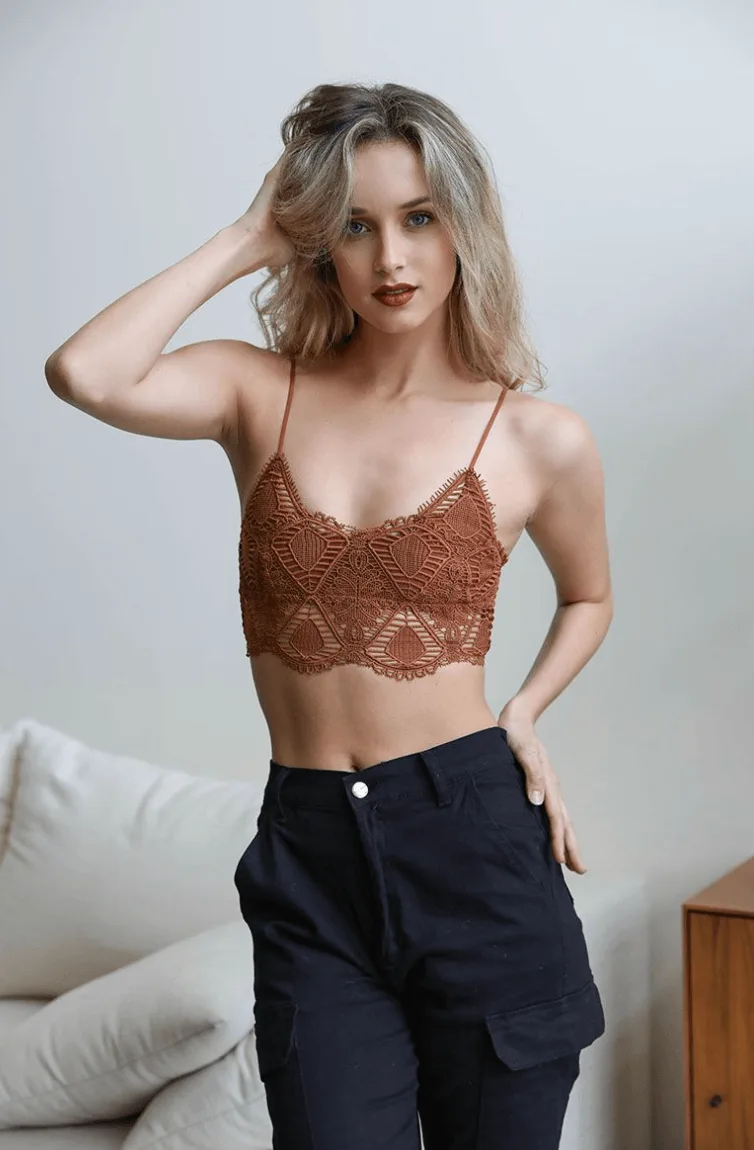
If you have a fuller bust and a smaller band, look for styles with adjustable straps and a wider underband. If you have a smaller bust and a wider band, a simple pullover or crochet style often feels lighter and stays in place without digging.

crochet
- Small bust, narrow band: triangle or simple pullover styles.
- Fuller bust, narrow band: wide band plus adjustable straps.
- Wider band, any bust: check the underbust range before ordering.
Use the size chart numbers, not the label
A size chart tells you two things: the band range and the bust range. Read both. If your band fits the small but your bust fits the medium, the medium is usually the better choice because the band can stretch down but the cups cannot stretch up.
Pay attention to how the chart is written. Some brands list bra sizes like 32A or 34B, while others list US numeric sizes like 4, 6, or 8/10. They are not interchangeable, so convert using the chart on the product page rather than guessing.
- Write down your band and bust measurements before you shop.
- Check whether the chart uses bra sizes or US numeric sizes.
- When two measurements point to different sizes, follow the bust.
Decide when to size up or down
Size up when you want a relaxed, everyday feel, when the band is close to the top of the range, or when the style has no closure. Size down only when the band is at the bottom of the range and you want a snugger hold for a specific outfit.
Never size down to fix gaping cups. Gaping usually means the cup shape is wrong for your bust, not that the size is too big. In that case, switch to a style with more adjustability instead of forcing a smaller band.
- Size up for all-day comfort and easy on-and-off.
- Size down only if the band is already at the smallest end of the range.
- If cups gap, change the style before changing the size.
Check comfort before you commit
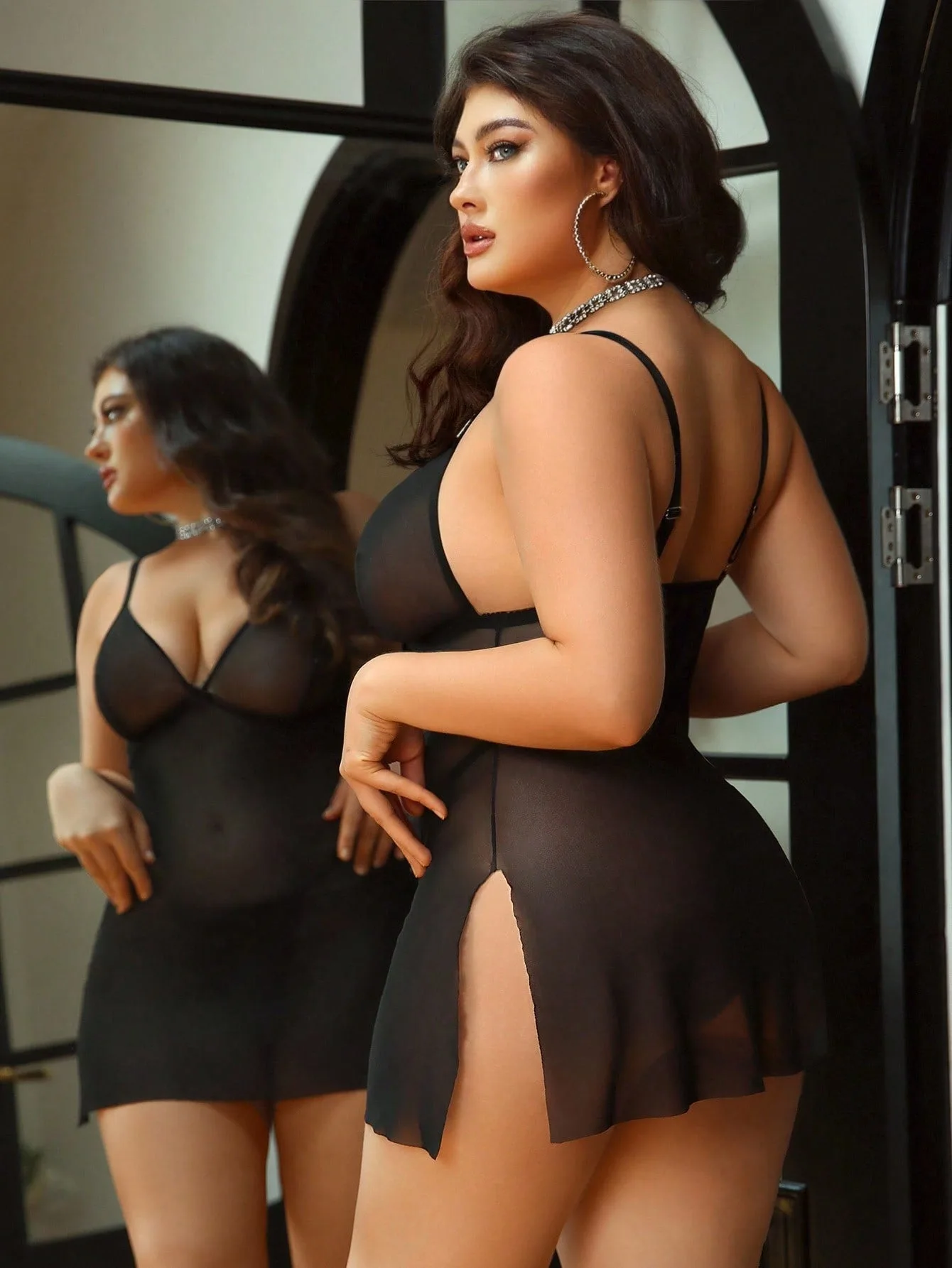
A comfortable bralette fit passes three quick tests: the band stays level when you raise your arms, the straps do not leave deep marks, and the underbust does not roll up. If any of those fail, the size or the style is wrong for you.
your arms
Give a new bralette a short wear test at home before removing tags. Stretch, bend, and sit for ten minutes. Most fit issues show up in that window, and it is much easier to exchange before the first full day of wear.
- Raise your arms and check the band stays level.
- Look for red marks that last more than a few minutes.
- Wear it briefly indoors before committing.
Decision rules for choosing your bralette size
- Band at the top of the range: Choose the next size up so the elastic is not fully stretched. A band that starts tight will only get tighter after washing.
- Band at the bottom of the range: Stay with your usual size, or size down only if you want a snug hold. Do not size down to fix cup gaping.
- Bust measurement crosses two sizes: Follow the bust measurement and choose the larger size. Cups cannot stretch up the way a band can stretch down.
- Chart uses US numeric sizes: Compare your measurements to the listed bust and underbust numbers instead of your bra letter. Numeric sizing and bra sizing are not interchangeable.
- No closure and no adjustable straps: Size up for pullover styles, especially for all-day wear. You cannot tighten a band that has no adjuster.
Real size charts to compare
- Fit Bralette: Sizing runs XS/S for 32A, 32B, 34A, and 34B, with M/L for 36A, 36B, 38A, 34C, and 36C. This is a useful reference if your band sits in the low 30s but your cup varies, because the same size covers several cup letters.
- Jess: S fits 32B, 34A, and 34B; M fits 34B, 36A, and 36B; L fits 36B, 38A, and 38B. The overlapping ranges show why you should follow the bust measurement when two sizes both list your band.
- Simple Triangle Bralette: Listed by US size 4(S), 6(M), and 8/10(L), with bust measurements of 47.2, 48.8, and 50.4 and underbust measurements of 24.4, 26, and 27.6. A numeric-size chart like this is not the same as a bra-size chart, so compare your own measurements to the numbers rather than your usual letter.
- Crushing On You: Sizes run XS through XL with bust ranges from 32.3-33.9 up to 39.4-41.7 and waist ranges from 24.4-26 up to 31.5-33.9. If you are between sizes, the wider range at the top of each size gives you room to size up without losing coverage.
Who each approach fits best
Best for
- Small busts that want a light triangle or pullover bralette
- Larger busts that need a wide band and adjustable straps
- Anyone between sizes who wants a comfortable all-day fit
Not for
- Shoppers who want high-impact support for running or intense workouts
- Anyone looking for a wired, structured bra fit
- People who need a specific cup size rather than a stretch range
Pick your band size first, confirm it against the bust range, and size up when you are between sizes. If a style still gaps or digs, change the style rather than forcing the size, and use the real size charts above as your starting point.