Quick answer
For toddlers (ages 2–3), start with step-up puzzles that have 3–5 large pieces. For preschoolers (ages 3–5), 30-piece puzzles with familiar themes offer a good challenge without causing frustration.
Why piece count matters more than age labels
Age labels on puzzle boxes are a starting point, but your child's experience with puzzles matters just as much. A 3-year-old who has done several puzzles may be ready for 30 pieces, while a 4-year-old new to puzzles might need a step-up set with 3–5 pieces first. The key is matching the challenge to their current skill level, not just their birthday.
Piece count directly affects frustration and engagement. Too few pieces and a child loses interest; too many and they give up. The sweet spot is a set that requires a little effort but ends in success.
Themes and realism: keeping kids interested
Children stay engaged longer when puzzles show subjects they already love. Animals, farm scenes, and fantasy characters like princesses or unicorns are popular choices. Realistic illustrations help older toddlers connect puzzle pieces to real-world objects, while whimsical art sparks imaginative play.
For younger children, bright colors and clear outlines make it easier to spot where a piece goes. For preschoolers, more detailed scenes add visual interest without making the puzzle harder to solve.
How to pick the right puzzle: decision rules
- Age 2–3, first puzzles: Choose step-up puzzles with 3–5 large pieces. Look for sets that increase difficulty within the same box so your child can progress at their own pace. The QUOKKA Step Up Farm Animals set is a good fit because it starts with 3 pieces and goes up to 5.
- Age 3–4, building skills: Move to 20–30 piece puzzles with familiar subjects like animals or vehicles. Make sure pieces are large enough for small hands to grip easily. Check that the puzzle has unique cut lines so no two pieces are the same shape.
- Age 4–5, ready for more challenge: 30–48 piece puzzles with detailed scenes work well. Themed bundles (e.g., animals, fantasy) keep interest high across multiple puzzles. A bundle like the 8-puzzle set gives variety without buying separate boxes.
- When to size up: If your child finishes a puzzle quickly and wants to do it again immediately, try the next piece count up. If they get frustrated after a few minutes, step back to a lower piece count or a step-up set.
Puzzles that fit different ages
-
40 Piece Step Up Puzzles for Toddlers | Farm Animals: QUOKKA Step Up jigsaw puzzles for kids ages 2-5 offer 3 levels of challenge: start with 3-piece, 4-piece, and 5-piece puzzles. This lets a toddler build confidence gradually without needing a new box every week.
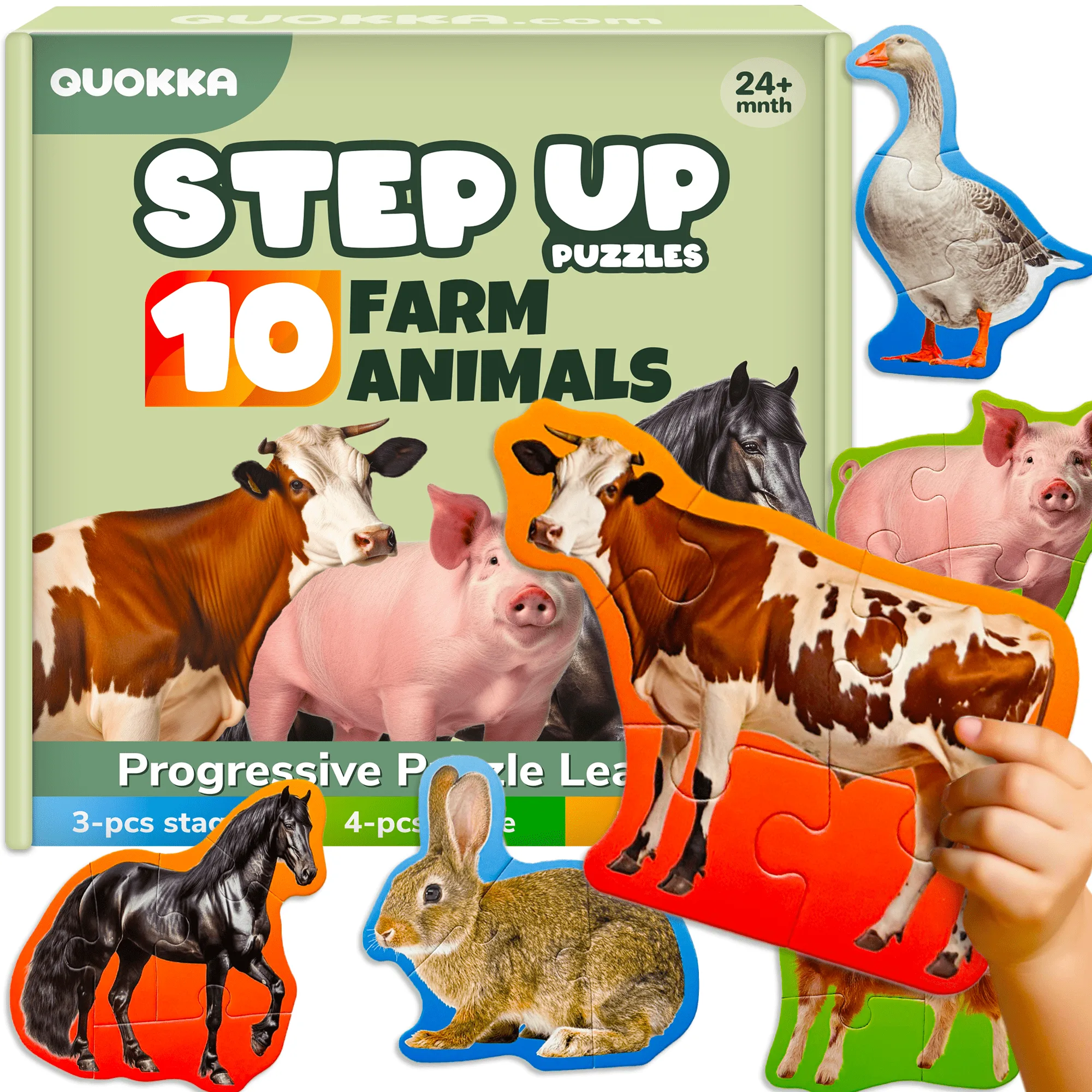
40 Piece Step Up Puzzles for Toddlers | Farm Animals
-
Bundle Set of 8 Puzzles for Kids | Animals, Meadow Girls: This 30-piece puzzle bundle brings fairytale scenes to life with Sister Mermaids, Princesses, Unicorns, and Magical Meadow Maids. The familiar fantasy themes keep preschoolers motivated to complete all four puzzles in the set.
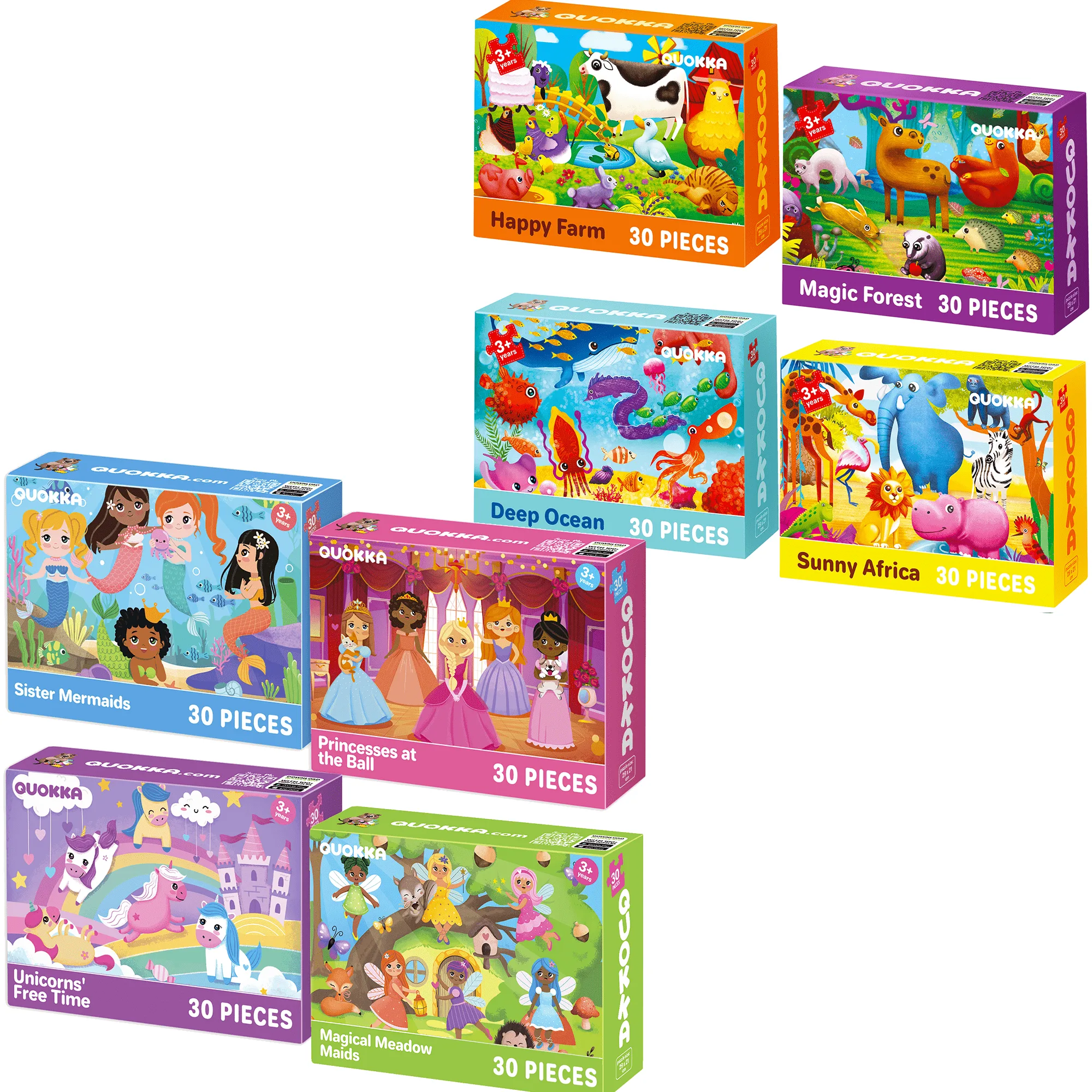
Bundle Set of 8 Puzzles for Kids | Animals, Meadow Girls
Which puzzle is right for your child?
Best for
- Toddlers (ages 2–3) who are new to puzzles and need a gradual challenge
- Preschoolers (ages 3–5) who enjoy themed puzzles with 30 pieces and want variety
Not ideal for
- Children who already master 50+ piece puzzles and need a harder challenge
- Kids who prefer non‑cardboard materials like magnetic or floor puzzles