Quick answer
The best custom ID tag for your dog is one that is clearly engraved, attaches securely to your dog's collar or harness, and is made from a material that withstands your dog's lifestyle—whether that's stainless steel for durability or a lightweight aluminum tag for smaller dogs.
Why material and engraving matter most
A custom ID tag's primary job is to be read. If the engraving wears off or the tag gets damaged, it fails. Stainless steel and anodized aluminum are the most common materials because they resist rust and scratches. Engraving should be deep and clear—shallow laser etching can fade over time, especially on tags that rub against fur or gear.
For dogs that spend time in saltwater or wet environments, stainless steel is the safer bet. Aluminum is lighter and quieter but may show wear sooner. If your dog has sensitive skin, check that the tag material is hypoallergenic and nickel-free.
Attachment security: don't lose the tag
An ID tag that falls off is useless. Look for tags that come with a split ring, S-hook, or a dedicated attachment loop that matches your collar or harness hardware. Tags that attach via a rivet or screw are permanent and cannot be swapped, while split rings allow easy transfer between gear.
EzyDog's ID Tags are designed to work with the ID Tag Ring on several of their collars and harnesses, which keeps the tag flat and silent against the webbing. That reduces the chance of snagging or jingling.
Readability: size and font choice
A tag that is too small or has a fancy font is hard to read in a hurry. Stick with a sans-serif font and at least 8-point text. Your dog's name and your phone number are the essentials. Adding your address or medical info can be helpful but increases the amount of text—make sure the tag size allows for clear, uncrowded engraving.
Round tags typically offer less space than bone-shaped or rectangular tags. If you have a long phone number or multiple lines of text, choose a larger tag shape.
Decision rules for choosing your dog's ID tag
- Match material to environment: Choose stainless steel for dogs that swim, hike in rain, or live in humid climates. Choose aluminum for lighter weight and lower cost if your dog is mostly indoors or on dry walks.
- Prioritize deep engraving over printing: Look for stamped or laser-engraved text that you can feel with your fingertip. Surface-printed tags will wear off within months.
- Test the attachment method: If your dog's collar has a dedicated ID ring (like EzyDog's), use it. If not, use a split ring or S-hook that won't open accidentally. Avoid keyring-style clips that can twist open.
- Confirm tag size before ordering: Measure the available space on your dog's collar or harness. A tag that is too large may dangle or get caught; one that is too small may be unreadable.
- Include only essential info: Your dog's name and your phone number are usually enough. If your dog has a medical condition, add a single medical alert word (e.g., 'DIABETIC') instead of full sentences.
Product facts
-
Customized ID Tags: EzyDog ID Tags attach to the ID Tag Ring on Double Up Collar, Neo Collar, Wide Neo Collar, Checkmate Collar, Quick Fit Harness, Chest Plate Harness, and Convert Harness. This means the tag sits flush against the gear, reducing noise and the risk of snagging on branches or fences.
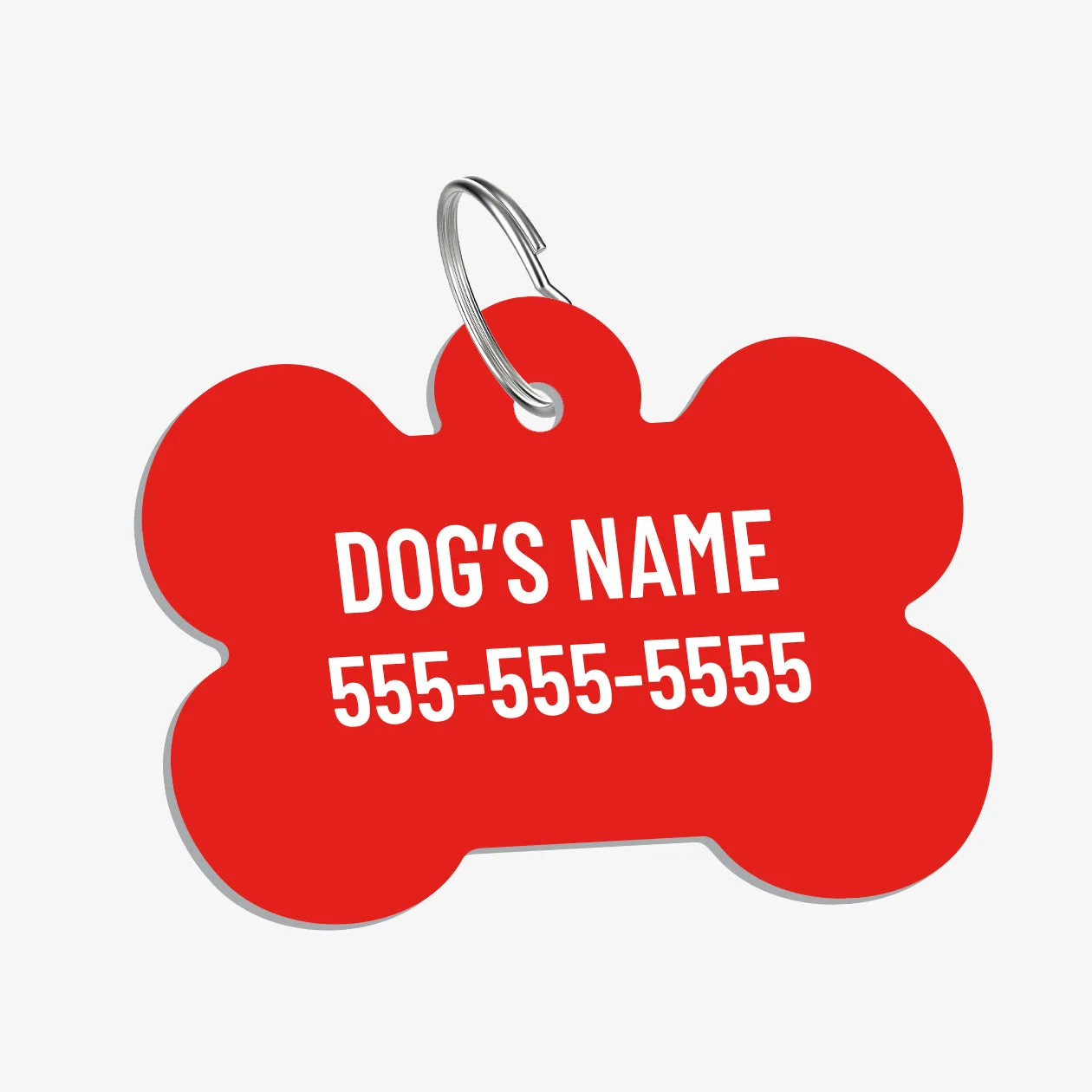
Customized ID Tags
Who should choose what
Best for
- Dogs that wear EzyDog collars or harnesses with an ID Tag Ring (the tag stays silent and secure)
- Owners who want a lightweight, affordable tag that can be personalized in different shapes and colors
Not for
- Dogs that need a GPS tracker built into the tag (the EzyDog ID Tag is a static identification tag only)
- Owners who want a tag that can be updated frequently (the engraving is permanent)