Quick answer
Measure your dog's neck and chest with a soft tape, add two finger widths of space for comfort, then match those numbers to the harness brand's size chart. For an adjustable neck harness, the neck strap should sit high behind the ears without choking, and the chest strap should rest behind the armpits without rubbing.
Why harness sizing matters more than you think
A harness that is too loose lets your dog slip out during a walk, while one that is too tight can chafe or restrict movement. The right fit distributes pressure evenly across the chest and shoulders, protecting the trachea and giving you better control. Because dogs come in every shape—deep-chested, barrel-chested, long-bodied, or stocky—generic small/medium/large labels are unreliable. Always measure your dog and compare to the specific harness's size chart.
How to measure your dog for a harness
Use a flexible measuring tape. Measure the neck at the widest part, where the collar normally sits. Then measure the chest at the deepest point, just behind the front legs. Write both numbers down. If your dog is between sizes, size up and adjust the straps for a snug fit. For an adjustable neck harness, the neck strap should allow two fingers to slide under easily, and the chest strap should not dig into the armpits.
Common sizing mistakes to avoid
Don't rely on your dog's weight alone—a 25-pound terrier and a 25-pound bulldog need very different harness sizes. Also avoid measuring over thick fur or a coat, as this adds inches that lead to a loose fit. Finally, check the fit every few months if you have a growing puppy or a dog that changes weight seasonally.
Decision rules for choosing a harness size
- Measure neck and chest separately: Use a soft tape measure. Neck measurement at the widest part; chest measurement just behind the front legs. Always use both numbers, not just weight.
- Check the two-finger rule: After fitting, you should be able to slide two fingers under the neck strap and one finger under the chest strap. If you can't, loosen it. If more than two fingers fit, tighten it.
- Watch for movement during walks: If the harness shifts sideways or rides up toward the neck, the chest strap is too loose. If the dog stops or scratches, check for rubbing. Re-adjust after the first 10 minutes of walking.
Harness options that make sizing easier
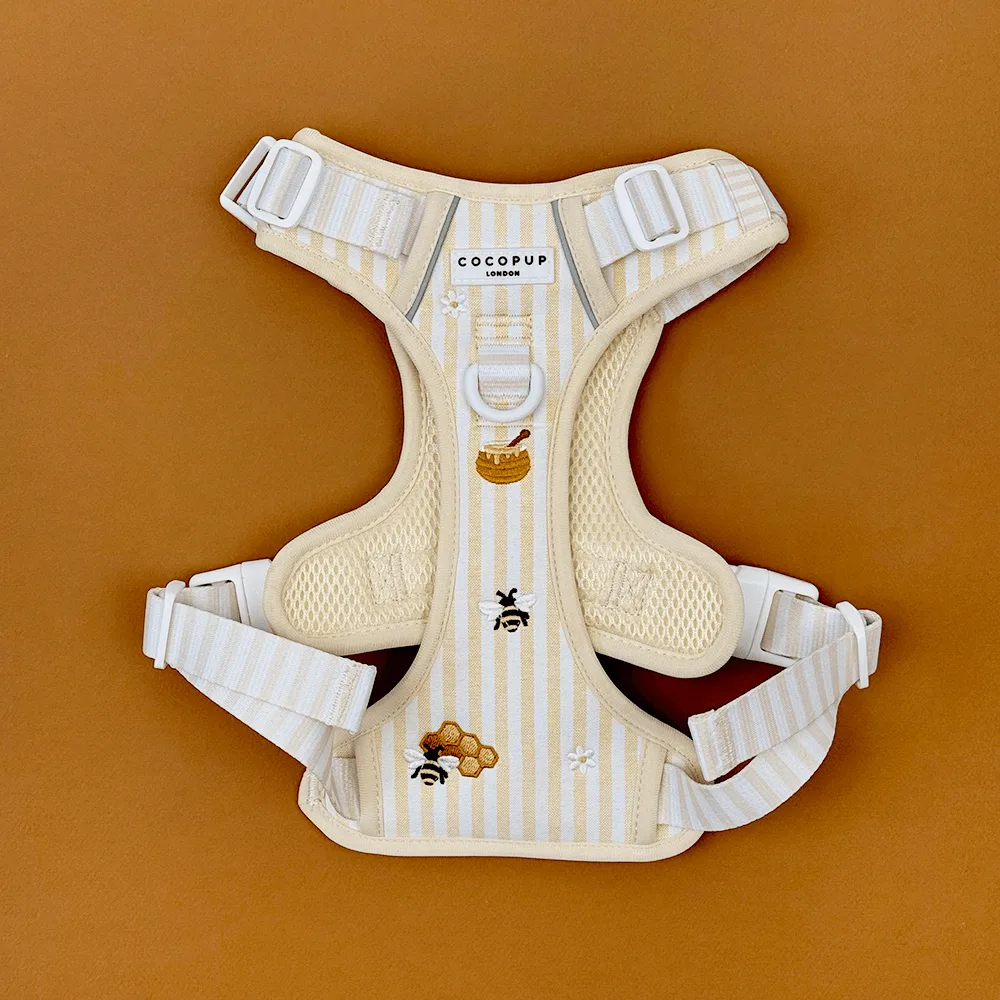
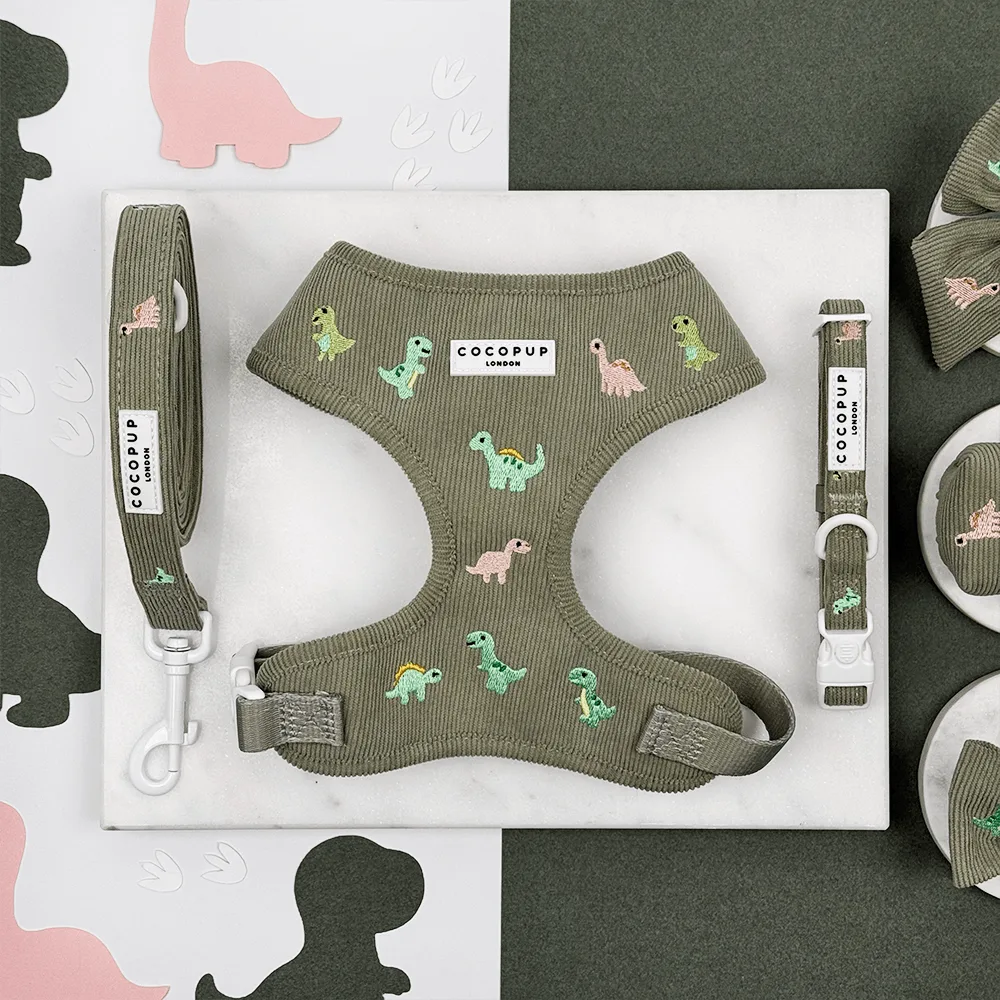
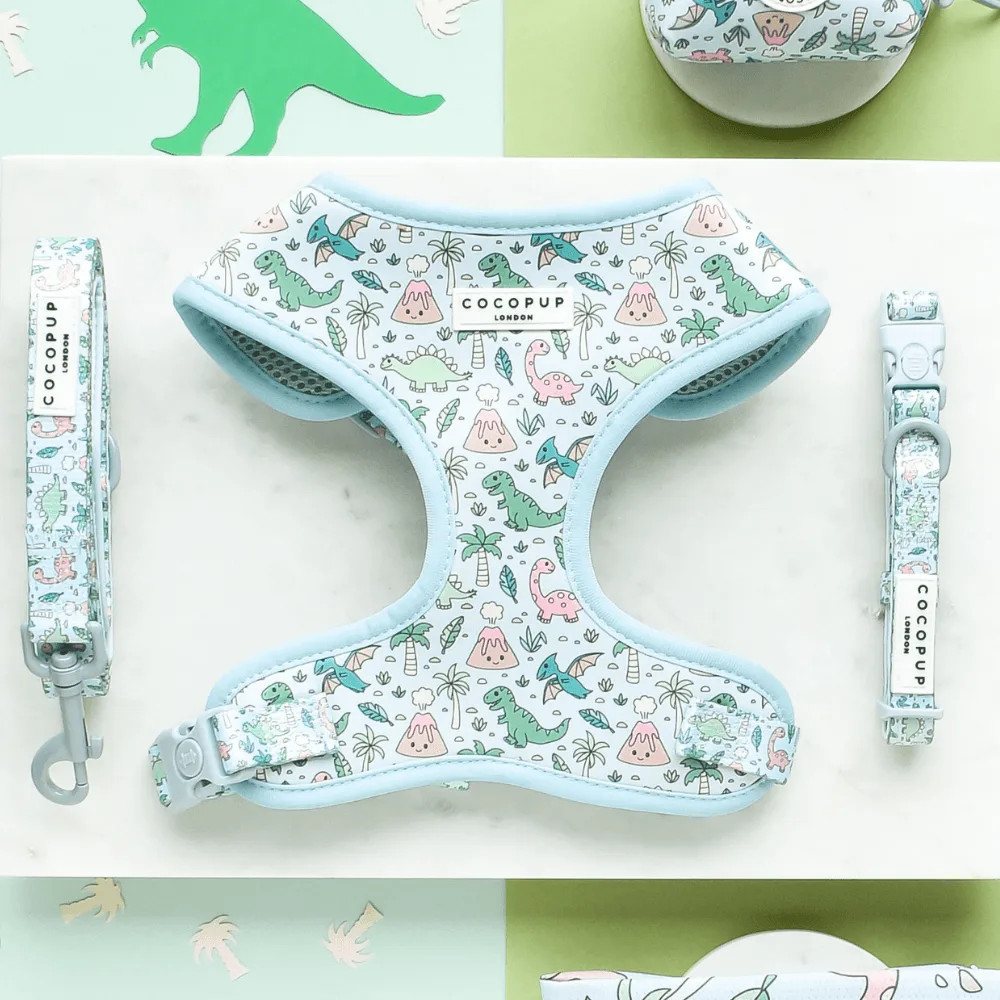
- Ralph & Friends Mocha Teddy Adjustable Neck Harness, Lead & Collar Bundle: Ralph & Friends Mocha Teddy Adjustable Neck Harness Bundle includes an adjustable neck harness, lead, and collar, made from soft, durable materials with an embroidered design. The adjustable neck design lets you fine-tune the fit around your dog's neck, which is especially helpful for breeds with narrow heads or thick necks.
- Doodles the Dinosaur Dog Toy: Doodles the Dinosaur Dog Toy is a cheerful green dinosaur toy made from polyester and PP cotton filling, measuring 26cm x 23.5cm. While not a harness, this toy is a great reward for cooperative dogs during sizing sessions. The soft material is safe for supervised play.
Who should choose an adjustable neck harness
Best for
- Dogs with narrow heads or thick necks that make collar-style harnesses slip
- Owners who want a single harness that adapts as their puppy grows
Not ideal for
- Dogs that pull heavily and need a front-clip or no-pull harness design