Quick answer
Choose a Natursutten pacifier size based on your baby's age and oral development, then match the nipple style to their feeding habits and comfort preferences.
Why size matters for comfort and safety
A pacifier that's too small may slip out or pose a choking risk, while one that's too large can be uncomfortable or interfere with natural sucking. The right size supports safe use and helps your baby self-soothe effectively.
Natursutten offers multiple sizes to match different stages of oral development. Selecting the correct size also helps maintain proper alignment of teeth and gums as your baby grows.
Material: natural rubber vs. silicone
Natursutten pacifiers are made from 100% pure natural rubber sourced from the Hevea Brasiliense tree. This material is soft, flexible, and biodegradable, making it a sustainable choice for eco-conscious parents.
Natural rubber tends to be softer and more pliable than silicone, which many babies find soothing. However, it may wear out faster and requires regular inspection for signs of damage. Silicone pacifiers are more durable and easier to sterilize, but they are firmer and less flexible.
Nipple style: orthodontic vs. round
Natursutten offers both orthodontic and round nipple styles. Orthodontic nipples are flattened to fit the natural shape of a baby's palate, which can help support proper oral development. Round nipples are more symmetrical and may feel more familiar to babies who are used to traditional bottle nipples.
Consider your baby's age and feeding habits. Newborns often prefer a round nipple, while older babies may adapt well to orthodontic shapes. If your baby shows signs of nipple confusion, switching styles may help.
Decision rules for choosing the right size
- Check the age range on the package: Natursutten pacifiers are labeled with age ranges (e.g., 0-6 months, 6-18 months). Use these as a starting point, but always observe your baby's mouth size and comfort. Age ranges are guidelines, not strict rules.
- Observe your baby's sucking behavior: If the pacifier frequently falls out or your baby seems frustrated, the nipple may be too small. If your baby gags or shows signs of discomfort, it may be too large. Watch for cues like gagging or frequent dislodging.
- Match nipple style to feeding habits: For breastfed babies, an orthodontic nipple may support natural latch; for bottle-fed babies, a round nipple might feel more familiar. Choose what your baby accepts most readily. Be open to trying both styles if your baby is picky.
- Inspect regularly for wear and tear: Natural rubber can degrade over time. Check for stickiness, tears, or discoloration, and replace the pacifier every 4-6 weeks or as soon as you notice damage. Regular inspection is key to safety.
Product spotlight: Natursutten Round Shield Pacifier
-
Natursutten Round Shield Pacifier (Set of Two): The Natursutten Round Shield Pacifier is crafted from 100% pure, all-natural rubber sourced from the Hevea Brasiliense tree, with a seamless, one-piece mold that is ultra-hygienic. This design minimizes hidden crevices where bacteria can accumulate, making it easier to keep clean and safe for daily use.
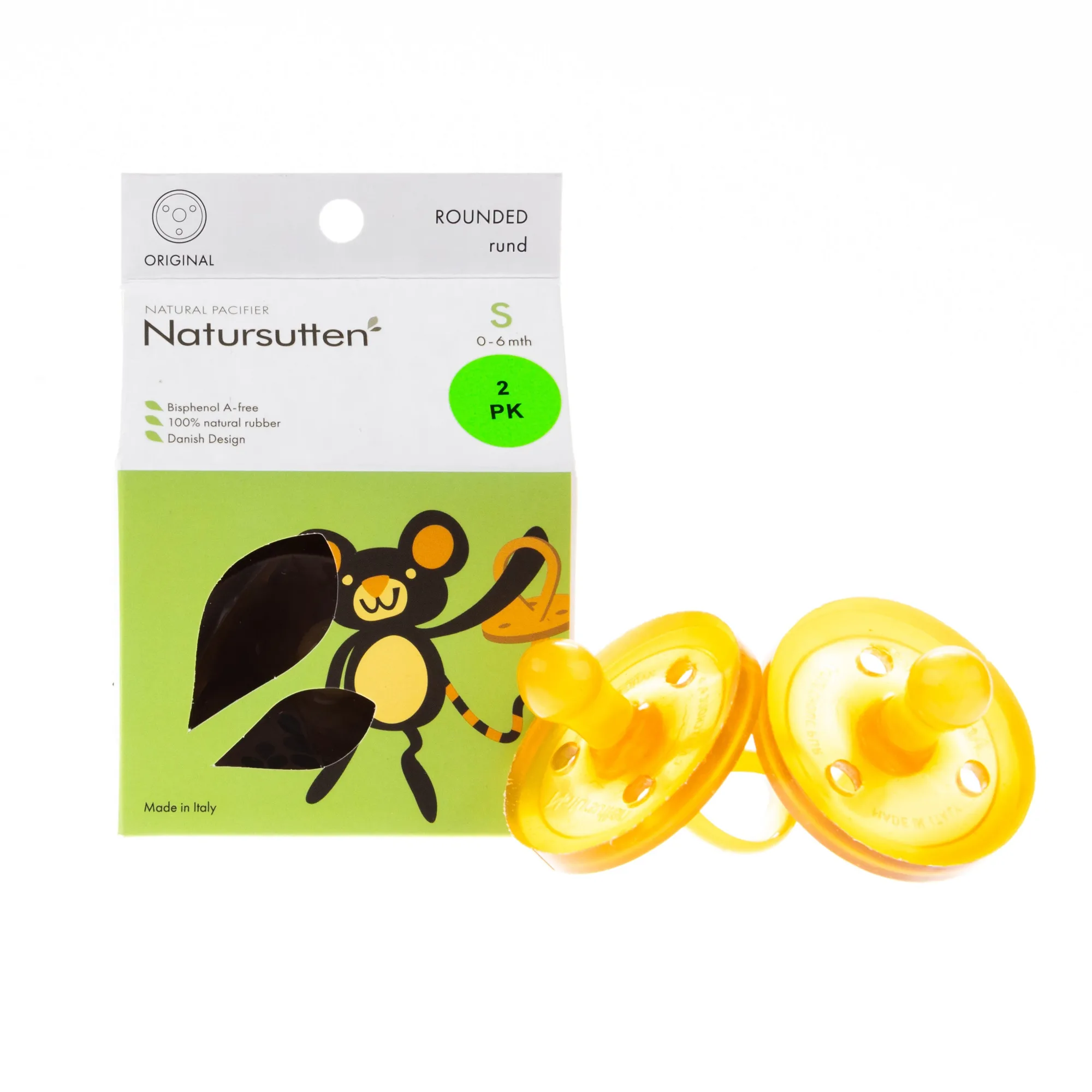
Natursutten Round Shield Pacifier (Set of Two)
Who should choose which size
Best for
- Newborns and young infants who need a soft, flexible pacifier that mimics the breast
- Parents seeking a natural, sustainable pacifier option made from pure rubber
Not for
- Babies who require a firmer, more durable pacifier for aggressive sucking
- Parents who prefer the longer lifespan and easier sterilization of silicone pacifiers