Quick answer
Choose the needle by fabric weight first, then by thread thickness. For most medium woven cotton, a sharp in size 7 to 9 works. For knits, use a ballpoint so it slips between yarns instead of piercing them. For heavy denim or canvas, move to a sharps or tapestry needle in a larger size with a bigger eye. If you only buy one pack, a mixed sharps assortment in sizes 5 to 10 covers the widest range of everyday hand sewing.
The needle you pick decides how the stitch looks, how fast you finish, and whether your thread frays halfway through a seam. Most hand sewing problems, from skipped stitches to bent needles, trace back to a mismatch between needle, fabric, and thread.
This guide gives you decision rules instead of a memorized chart. You will learn how needle sizes work, when a sharp beats a ballpoint, and how eye shape changes what thread you can use. You will also see how two everyday Prym tools, a https://prymamerica.com/products/dritznotseamripg-566a7bfbd0dff8b9402472aa-1316001seam ripper and a ruler handle, support the measuring and correcting that happens around hand sewing.
Start with fabric weight, not the label on the pack
Needle sizing runs opposite to what most people expect: smaller numbers mean thicker needles. A size 3 is heavy and a size 12 is fine. Pick the smallest needle that still passes your thread through the fabric without bending. If the needle bows as you push, it is too fine for the fabric. If it leaves a visible hole, it is too thick.
For light fabrics like batiste, silk, or fine cotton, start at size 9 to 12. For medium cotton, linen, and quilting cotton, size 7 to 9 is the workhorse range. For denim, canvas, and upholstery, size 1 to 5 gives you the strength to push through without flexing.
- Test on a scrap: if the needle needs a thimble and force, go one size larger.
- If the thread shreds at the eye, the eye is too small, not the needle too fine.
Sharp, ballpoint, or tapestry: match the tip to the fabric structure
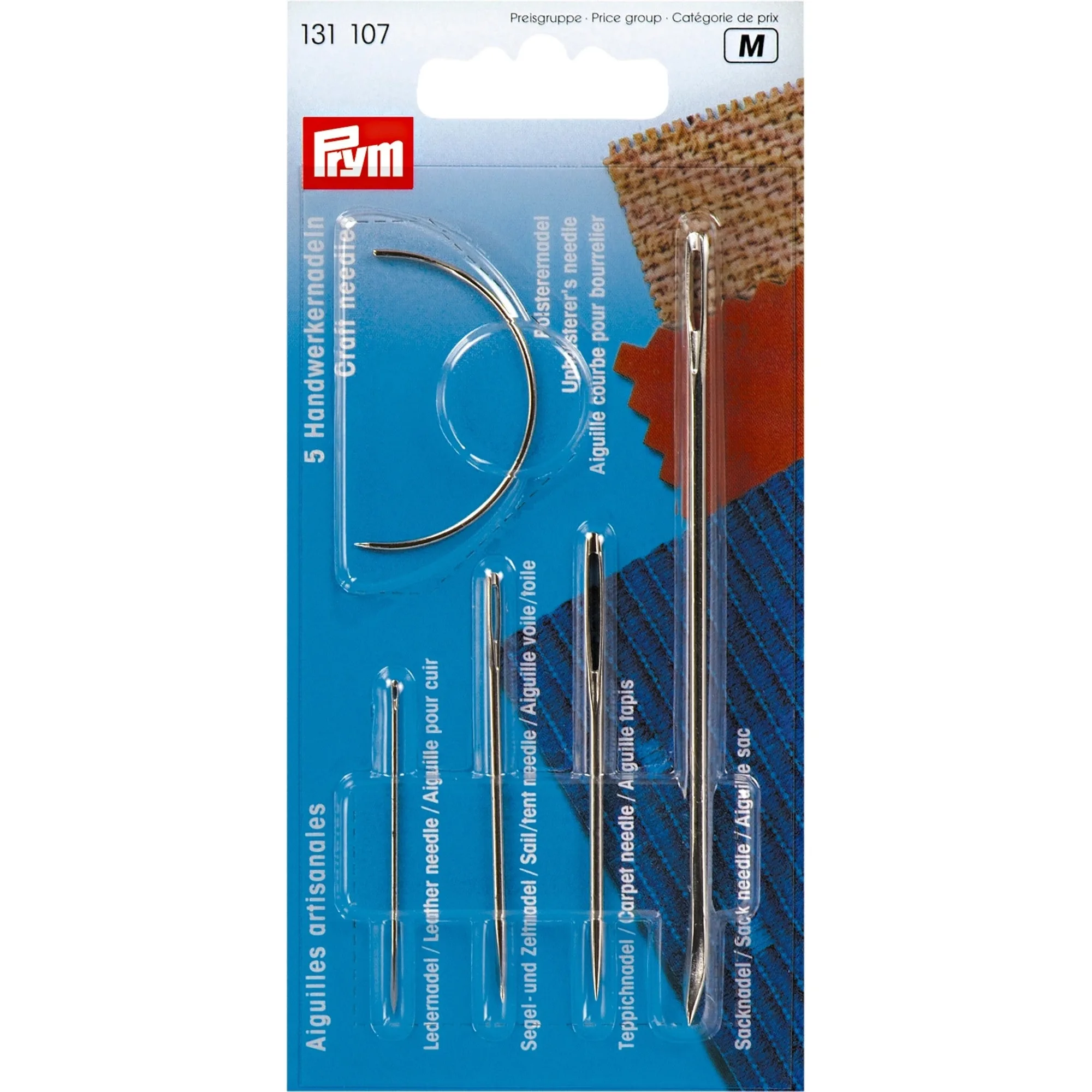
Sharps have a pointed tip for woven fabrics. They separate threads cleanly and are the default for seams, hems, and mending. Ballpoint needles have a rounded tip that pushes between knit loops instead of cutting them, which prevents runs in jersey, ribbing, and sweater knits.
Tapestry needles are blunt with a large eye. They are made for counted cross stitch, needlepoint, and weaving in ends on yarn projects, where you want the needle to follow the hole rather than pierce the fiber. Using a sharp on a knit is the most common cause of a small hole that grows with wear.
- Woven fabric: sharps. Knit fabric: ballpoint. Yarn or canvas grid: tapestry.
- If you are darning a sock, a blunt tapestry needle slides over the yarn instead of splitting it.
Eye shape decides which thread you can actually use
The eye is where most needle frustration happens. A standard eye fits all-purpose thread. A long eye, sometimes called an embroidery eye, takes thicker thread, floss, or ribbon without stripping it. A calyx eye has a slot at the top so you can pop the thread in from the side instead of threading from the back.
If you use thick topstitching thread or embroidery floss, buy needles with a long eye in a size that matches the fabric. If your eyesight or hand steadiness makes threading the hard part, a calyx-eye or self-threading needle removes that step entirely.
- Rule of thumb: the thread should fill about two-thirds of the eye, not squeeze through it.
- Thread that squeaks or frays at the eye is a sign to move up an eye size.
How many needles and which sizes to buy
A mixed pack beats a single size for most sewers. Look for a sharps assortment covering sizes 5 through 10, which handles everything from lightweight cotton to mid-weight linen. Add one pack of ballpoints in sizes 7 to 10 for knits, and one tapestry needle in a size large enough for your yarn.
Buying a single size only makes sense when you sew one fabric type repeatedly, such as quilting cotton or denim. Otherwise you end up forcing a fine needle through heavy fabric, which bends the needle and stresses your hand.
- Replace needles when they feel rough, develop a burr, or bend. A damaged needle snags fabric.
- Keep a separate needle for fusible or adhesive work so residue does not transfer to your good needles.
Tools that make needle work easier
Hand sewing involves measuring, marking, and undoing. A transparent ruler lets you see the fabric underneath for accurate positioning, and a ruler handle keeps the ruler from slipping while you cut or mark. Both reduce the rework that wears out needles and patience.
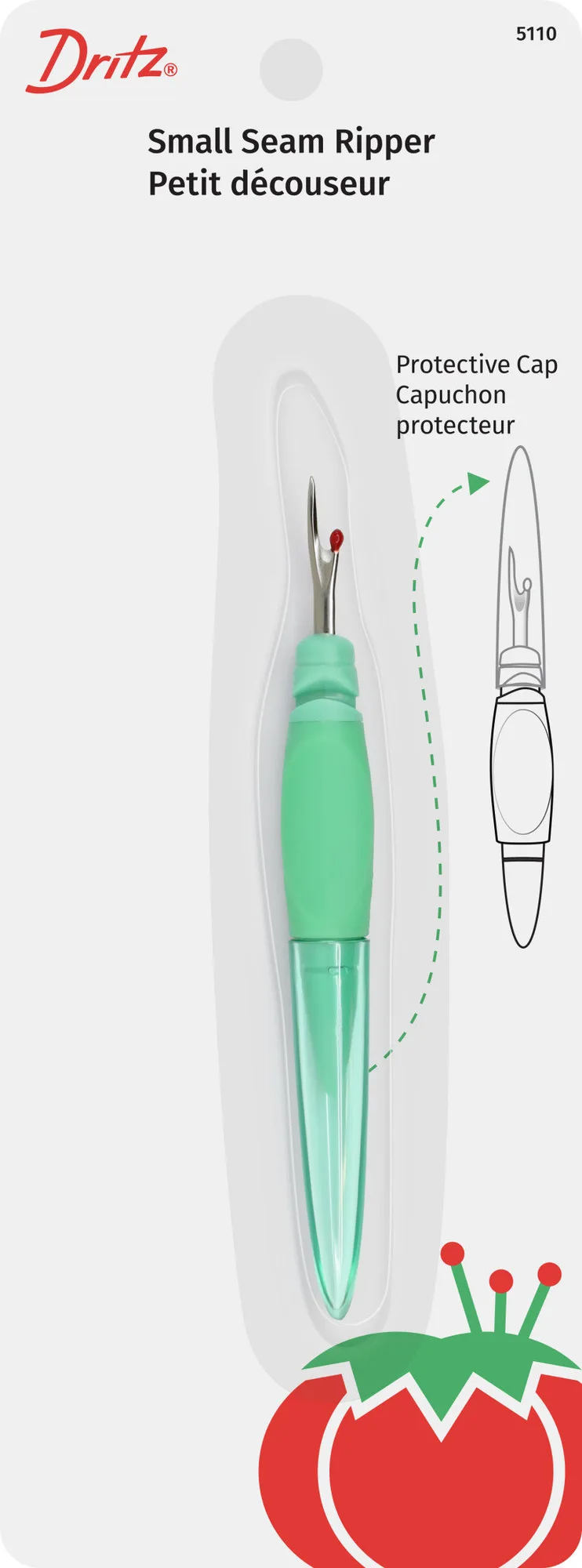
For removing stitches, a seam ripper with a sharp blade and a safety ball saves fabric. The safety ball sits in the seam and prevents the point from cutting through the cloth, which matters when you are unpicking a seam you just sewed.
- Mark seam allowances before you thread the needle, not after.
- Keep the ripper capped when not in use to protect the blade and your fingers.
Decision rules for buying hand sewing needles
- Fabric is woven and light to medium: Buy sharps in sizes 7 to 10. This covers cotton, linen, and most garment mending. If you only stock one type, make it sharps.
- Fabric is a knit or sweater: Buy ballpoint needles in sizes 7 to 10 so the tip pushes between loops instead of cutting them. Never use a sharp on a knit if you want to avoid runs.
- Fabric is denim, canvas, or upholstery: Buy sharps in sizes 1 to 5, or a tapestry needle if you are working with heavy yarn or cord. A larger eye and stronger shaft prevent bending and hand strain.
- Thread is thick, floss, or ribbon: Choose a long-eye or embroidery needle sized to the fabric, not to the thread alone. The thread should fill about two-thirds of the eye.
- Threading is the hard part: Choose a calyx-eye or self-threading needle so you can load the thread from the side. This removes the most common reason people stop hand sewing.
Product facts that support needle selection
- https://prymamerica.com/products/831-2288a94ead82843a3940f92c-1316162See-Thru Ruler: A transparent 2" x 18" ruler with a 1/8" grid and 1/16" outer edge marks, so you can see the project underneath for accurate positioning and marking. Accurate marking before you stitch means fewer seams to rip out, which is where needles and thread take the most abuse.
- Deluxe Ruler Handle: Two soft suction cups attach to quilting rulers and templates to prevent slipping, and the cups will not damage the ruler. A steady ruler keeps your cutting and marking consistent, so you can match needle size to a known fabric weight instead of guessing.
- Deluxe Seam Ripper, Heavy Duty Blade: A large seam ripper with an easy-grip handle, a clear plastic cap, and a safety ball to protect fabric; the hardened steel blade retains its sharpness. When a needle and thread choice goes wrong, a ripper with a safety ball lets you undo the seam without cutting the fabric, so you can re-sew with the right needle.
Who this needle selection approach fits
Best for
- Beginners building a first hand sewing kit who want a small set of needles that covers most projects
- Sewers who mend clothing, sew hems, and do light quilting with woven cotton and linen
- Crafters who switch between yarn, floss, and thread and need to know when to change needle type
Not for
- Machine sewing, which uses a completely different needle system and sizing
- Specialty leather or heavy canvas work that requires dedicated leather needles and awls
- Anyone looking for a single needle size to handle every fabric, since no one size does that well
Buy needles by fabric weight first, then by thread thickness, and keep a mixed sharps pack plus a ballpoint pack on hand. Add a transparent ruler and a seam ripper so measuring and correcting stay accurate. That small, deliberate kit solves most hand sewing problems before they start.