Quick answer
Choose based on how much rain you actually get and how hard you move in it. For steady city rain and commutes, pick a fully waterproof shell with a cinchable hood and zippered hand pockets. For warm, drizzly, high-effort days, pick a lightweight breathable shell you can wear unzipped and still keep on. If you only get occasional showers, one versatile jacket covers nearly everything.
Most rain jacket advice skips the one variable that decides whether you stay dry: your climate. A jacket that's perfect for a cold, sideways-rain city can feel like a plastic bag on a humid summer hike, and an ultralight shell that disappears into a daypack won't help much in a downpour that lasts all afternoon.
This guide walks through a simple order of decisions. Start with your weather, then lock in waterproofing, breathability, hood and pocket details, and finally packability. Do it in that order and you avoid the most common mistake: buying for the label instead of the forecast.
Start with your rain pattern, not the jacket
Before you look at any product, write down two things: how often it rains where you live, and how long you're outside when it does. A 10-minute walk to a train platform is a different problem than a four-hour hike in steady drizzle. Frequency and duration tell you whether you need maximum protection or just enough to get from A to B comfortably.
Then note your temperature range. Warm rain is mostly a breathability problem because you overheat. Cold rain is a coverage problem because wind and wet fabric pull heat away fast. Same word, rain, two completely different jackets.
- Checkpoint: if you can't name your typical rain duration, you'll overbuy protection and underbuy comfort.
Decide how waterproof you need to be
Fully waterproof shells keep rain out and rely on sealed construction and a durable water-repellent finish to shed water. Water-resistant jackets handle light showers and dry fast, but they will wet through in sustained rain. For commutes, travel, and any outing where you can't bail out early, fully waterproof is the safer pick.
Look for the features that actually keep water out in use: a hood you can cinch down, pockets with zippers rather than open slash openings, and cuffs or hem adjustments that seal gaps. The Rayu Rain Jacket - Men's is a good example of a purpose-built city shell: fully waterproof, two zippered hand pockets, and a cinchable hood, with no extra features you won't use on a wet commute.
- Common mistake: assuming a water-resistant jacket will hold up on a long walk. It won't, and you'll be wet by the halfway point.
Match breathability to how hard you move
Breathability matters most when you're active in warm rain. If you're hiking, biking, or walking fast, trapped heat and sweat will soak you from the inside even if the jacket keeps every drop out. Lightweight recycled nylon shells breathe well and pack small, which is why they suit spring wind and breezy summits.
The Pacaya Lite Hooded Jacket - Men's shows how this plays out in practice. It's built entirely from super lightweight recycled nylon, so it breathes on the way up and still offers protection when you need it. The internal sternum snap keeps the jacket on securely while unzipped, so you can maximize airflow without the jacket flapping off your shoulders.
- Checkpoint: if you run hot, prioritize breathability and ventilation over extra insulation.
Check the hood, pockets, and fit details
A hood that doesn't adjust is the most common regret. You want to be able to cinch it so it stays put in wind and doesn't block your vision. Pockets should zip if you carry a phone, transit card, or keys. And the fit should leave room for a light layer underneath without ballooning when you wear it alone.
If you'll wear the jacket over a hoodie or a pack, try it on with those layers. If you'll mostly wear it over a t-shirt, a trimmer fit keeps the fabric from catching wind. Sizing up for layering is fine, but only if the hood and hem still adjust down to your body.
- Common mistake: buying for the coldest day you might encounter. You'll end up with a jacket that's too warm and too bulky for the rain you actually get.
Weigh packability and how you'll carry it
If the jacket lives in a bag, packability decides whether you actually bring it. Lightweight shells fold down small enough to keep in a daypack or tote without a second thought. Heavier shells protect better but take up real space, so they make more sense if you wear them for hours rather than minutes.
This is also where a convertible bag earns its place. The Todo 22L Convertible Tote hops between tote and backpack, with a zippered internal sleeve for a laptop and external mesh pockets for a water bottle or shades. The Del Día version is identical in features and function but uses high-quality remnant fabrics, so each pack is one of a kind.
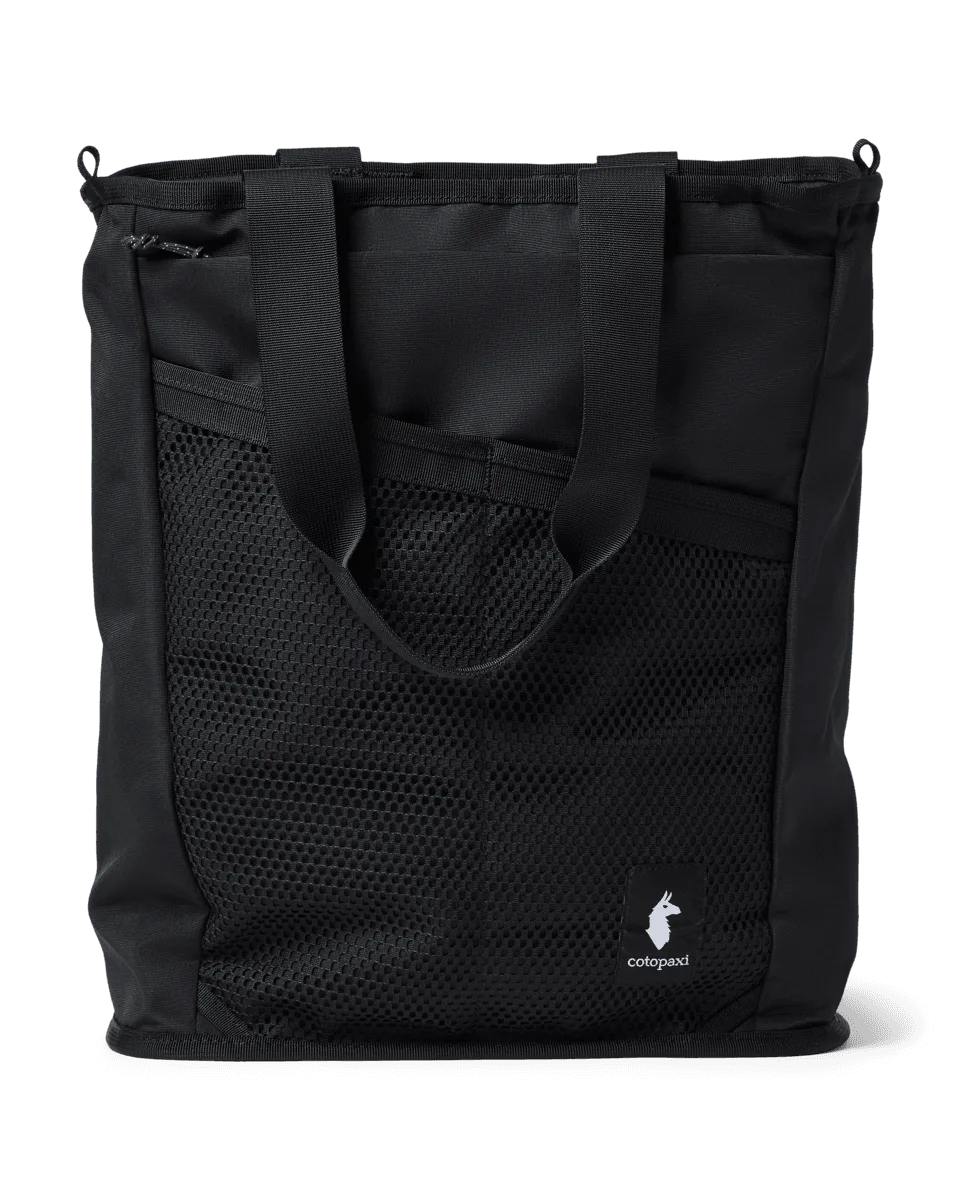
Todo 22L Convertible Tote
- Checkpoint: if you won't carry it, you won't wear it. Pick the jacket that fits your bag, not the one with the most features.
Layer for the shoulder seasons
Rain rarely arrives alone. In spring and fall, a breathable shell over a light technical layer handles cool mornings and warm afternoons without a wardrobe change. The Pulso Tech Hoodie - Men's is built with recycled polyester and spandex, so it's stretchy and moisture-wicking, with a drawcord hood for an extra layer of protection. It works on its own for river floats and sunny hikes, and under a shell when the weather turns.
For warm-weather trips where you want one piece instead of two, a trail-to-town option can simplify packing. The Losdos Romper - Women's uses stretchy, breathable recycled polyester and spandex with spacious cargo pockets, a center front zip for easy on and off, and an adjustable waistline so you can switch up the fit.
- Common mistake: layering cotton under a rain shell. It holds sweat and stays wet, which defeats the jacket.
Your five-step rain jacket decision
- 1. Define your rain: Note how often it rains, how long you're outside, and the temperature range. Write it down before you shop. Checkpoint: if you can't describe a typical wet day, you're guessing.
- 2. Set your waterproofing level: Choose fully waterproof for commutes, travel, and long outings. Choose water-resistant only for light, short showers. Common mistake: expecting a water-resistant jacket to handle sustained rain.
- 3. Match breathability to effort: Active in warm rain means prioritizing a lightweight, breathable shell with ventilation. Standing around in cold rain means prioritizing coverage. Checkpoint: if you overheat easily, don't buy the heaviest shell.
- 4. Verify hood, pockets, and fit: Cinch the hood, zip the pockets, and try the jacket on with the layers you'll actually wear underneath. Common mistake: skipping the hood adjustment test in the store.
- 5. Confirm it fits your carry: Pack the jacket into the bag you use most. If it doesn't fit easily, you won't bring it. Next step: if it doesn't pack, size down or choose a lighter shell.
Product facts that matter for rain
- Rayu Rain Jacket - Men's: Fully waterproof shell with two zippered hand pockets and a cinchable hood. Best for slick city streets and commutes where you need reliable coverage and secure storage, not extra features.
- Pacaya Lite Hooded Jacket - Men's: Built entirely from super lightweight recycled nylon, with an internal sternum snap that keeps the jacket on securely while unzipped. A good match for spring wind and breezy summits, and for warm, high-effort days when you want airflow without the jacket slipping off.
- Todo 22L Convertible Tote: Converts between tote and backpack, with a zippered internal laptop sleeve and external mesh pockets. Lets you carry a packed shell and water bottle hands-free, so the jacket you bought actually leaves the house with you.
- Pulso Tech Hoodie - Men's: Lightweight, breathable stretch-woven tech hoodie in recycled polyester and spandex, moisture-wicking with a drawcord hood. Works as a standalone layer in warm weather or under a rain shell when temperatures drop.
Buy for the rain you get, not the storm you imagine. Nail waterproofing, breathability, hood and pocket details, and packability in that order, and one well-chosen shell will cover most of your wet days.